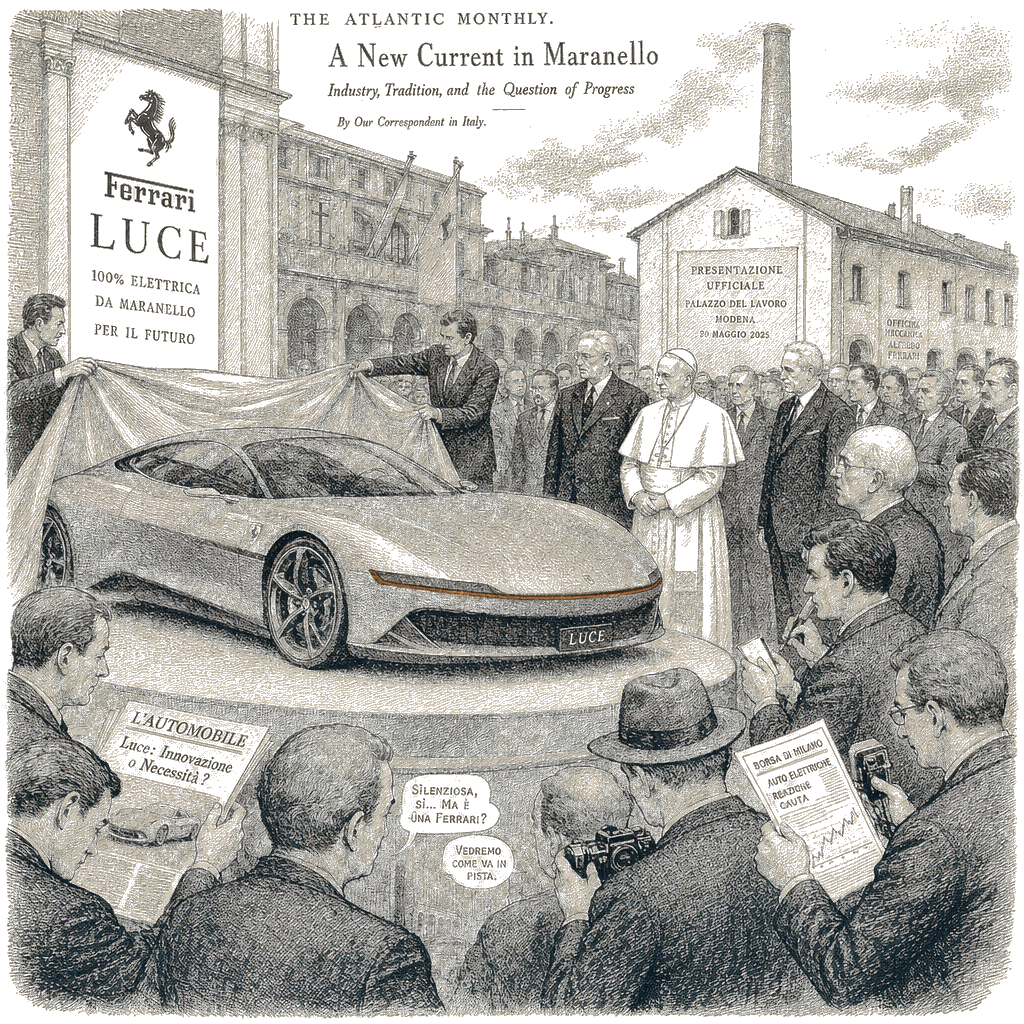
Ferrari unveils first fully electric car, but skeptics question demand
Ferrari on Monday unveiled its first fully electric vehicle, the all-new Luce EV, positioning it as a new chapter for the Italian automaker even as some luxury rivals adjust their electrification ambitions amid mixed demand. The rollout came with high ceremony at Castel Gandolfo, where Ferrari’s top executive, John Elkann, showed the car to Pope Leo XIV.
Elkann and the Pope met at the pope’s summer residence just south of Rome, with Ferrari test driver Raffaele De Simone joining the presentation and explaining controls in English. During the demonstration, Pope Leo XIV asked Elkann whether it was the first four-door Ferrari, and Elkann replied that it was the first five-seater.
Ferrari says the Luce EV is designed to deliver performance associated with the brand while switching to battery power. The company describes the car as producing 1,000 horsepower, accelerating from 0 to 100 kilometers per hour in 2.5 seconds, and offering a range of more than 530 kilometers. Ferrari also said the vehicle has four electric motors, one for each wheel.
Market reaction followed the unveiling quickly. Ferrari stock plunged 8.4% on Tuesday in Milan trading, and U.S.-listed shares fell 5.3%. The skepticism extended beyond the trading floor, with internet commenters and auto critics questioning whether the Luce matches what buyers expect from Ferrari’s design and identity.
Matt Prior, editor-at-large of the U.K. auto review site Autocar, said the internet response to the Luce was not universally positive, even though he described the interior as well done. Prior said the exterior design does not “shout Ferrari,” and he pointed to packaging constraints that place the battery under the floor, which he said can affect the car’s proportions compared with an engine-based layout.
Other analysts also raised doubts about the fit between the vehicle’s pricing and its audience. Robby DeGraff, manager of product and consumer insights at AutoPacific, described the Luce as potentially the most controversial model bearing the “stallion” emblem and questioned whether a car at that price level is necessary, while adding that Ferrari may want to remain competitive in markets with strict emissions requirements.
Ferrari’s electrification push is arriving as automakers face broader uncertainty about how quickly consumers will adopt EVs. The company has invested billions of euros in electrification but has adjusted its earlier targets, according to the report, reducing its goal for fully electric models from 40% of its lineup by 2030 to 20%. The Luce’s launch also follows a global picture in which EV sales reached about 20 million vehicles worldwide last year, according to the International Energy Agency, representing about one in four new cars sold globally.
Even with policy support for electric vehicle adoption, critics said the path to mainstream demand has been uneven. The report cited the European Union’s mandate for a 90% reduction in tailpipe emissions by 2035, while also noting that some automakers have dialed back electrification plans and lost billions on the technology. In Europe, the car market is described as becoming more competitive as Chinese brands increase pressure with lower prices, and in the U.S., the report said changes under the current administration have influenced EV policy.
As the Luce enters a challenging market backdrop, attention will likely remain fixed on whether luxury EV buyers will accept the tradeoffs of battery-only design and a premium price point. Ferrari previously sold hybrid electric vehicles as part of its powertrain strategy, but the Luce marks the company’s first fully electric model. In the near term, analysts and consumers will be watching to see whether the company can convert its EV announcement into sustained demand.
The report said media outlets put the Luce’s Italian sticker price at 500,000 euros, while U.S. pricing had not been announced. In a statement, Elkann said Ferrari was not simply unveiling a new car but “inaugurating a chapter” meant to turn its vision into reality and strengthen the brand’s tradition of anticipating and shaping the future.