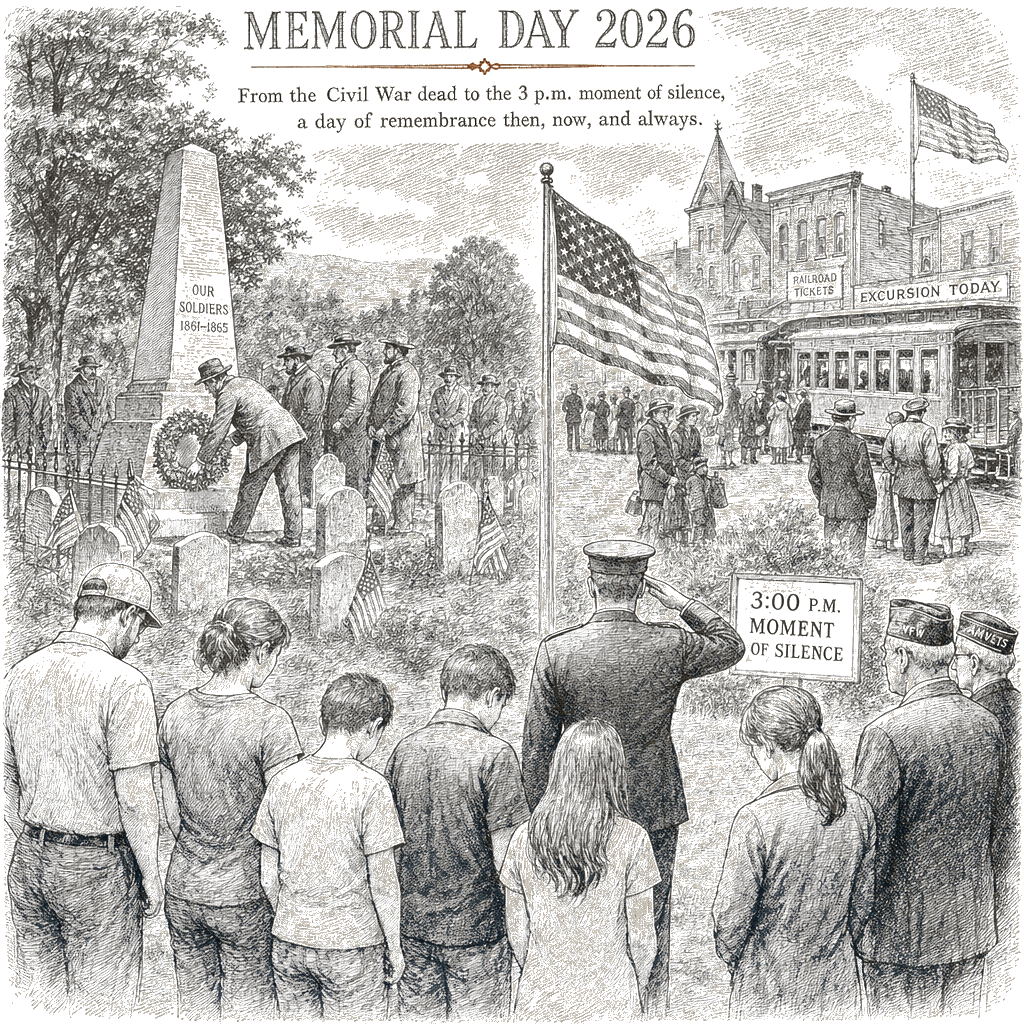
The Memorial Day holiday that Americans observe on May 25, 2026, carries two distinct identities: it is first a somber federal commemoration of the more than one million service members who have died in the nation’s wars, and second a cultural gateway to summer, marked by barbecues, road trips, and deep discounts on everything from mattresses to lawn mowers. The day falls on the last Monday of May, a schedule fixed by federal law in 1971, and its official purpose is set out by the Congressional Research Service as a day of “reflection and remembrance of those who died while serving in the U.S. military.”
The origins of the holiday reach back to the years immediately following the Civil War. In dozens of towns — North and South — women and families began the practice of decorating soldiers’ graves with flowers, a ritual so widespread that the observance was long known as Decoration Day. Historians including David Blight and Richard Harmond have documented how those local, often spontaneous acts of mourning coalesced into a national tradition. By the late 19th century, Decoration Day had become an annual fixture, and after World War I it expanded to honor the dead of all American conflicts.
Today, the National Moment of Remembrance, established by Congress, invites every American to pause wherever they are at 3 p.m. local time for a moment of silence. The gesture is designed to restore a focus on the fallen amid the holiday’s more celebratory rhythms — rhythms that have grown louder as the long weekend became entrenched as the de facto start of the summer season.
This year, that seasonal ritual is shadowed by the ongoing U.S. military engagement in Iran. The war has driven gasoline prices to levels that, as MSI has reported, are reshaping vacation plans for millions of families. Still, across the country, red, white and blue bunting adorns porches and storefronts, and the crowds at parades and cemetery ceremonies suggest that, even under the strain of a distant war and fuel-cost anxiety, the need to gather and remember endures.
The tension between Memorial Day’s official gravity and its consumer-facing lightness is not new. President Grover Cleveland, a century and a quarter ago, was criticized for skipping a Decoration Day ceremony in favor of a fishing trip. The holiday has always been tugged between the impulse to honor sacrifice and the human urge to welcome the summer. In 2026, amid new names being added to the rolls of the fallen, that old tension feels close to the surface.