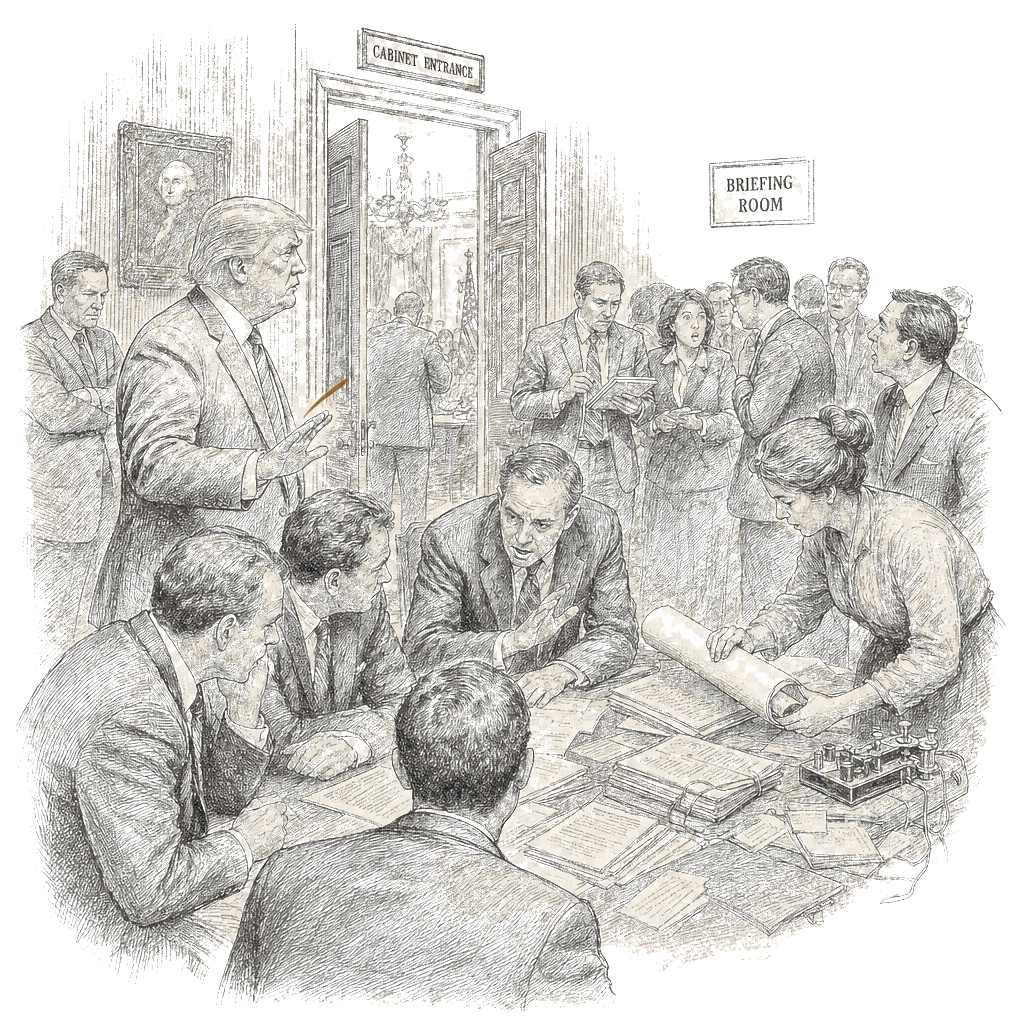
President Donald Trump called off plans to sign a new executive order on artificial intelligence hours before an expected White House ceremony, a decision that officials linked to worries that the measure could slow U.S. progress in the technology.
Trump postponed the Oval Office event with tech industry executives, telling reporters that he was worried about what he saw in the order’s text. “We’re leading China, we’re leading everybody, and I don’t want to do anything that’s going to get in the way of that lead,” Trump said as he spoke to reporters about the cancellation.
The order that Trump called off would have created a framework for the government to vet national security risks of the most advanced AI systems before their public release, according to a person familiar with White House deliberations with the tech industry but not authorized to speak publicly. The directive was being described as a voluntary collaboration with participating U.S.-based companies, including Anthropic, OpenAI and Google, the person said.
The White House decision arrived amid broader attention to the cybersecurity risks posed by increasingly capable AI models. The AP report said the push for some government role in reviewing advanced systems follows growing concern in the banking industry and other institutions about how AI can accelerate the search for cybersecurity vulnerabilities in software.
In April, Treasury Secretary Scott Bessent and outgoing Federal Reserve Chair Jerome Powell convened an urgent meeting with Wall Street CEOs at the Treasury Department, warning them about cybersecurity risks posed by Anthropic’s AI model, Claude Mythos. Bessent said at CNBC’s “Invest in America Forum” in Washington in April that the model “is very powerful,” and he said banks needed a clearer view of best practices for cybersecurity.
According to the AP report, some allies of the Republican president argued for ways to get advanced AI tools into the hands of “trusted cybersecurity experts.” The same report described competing factions within the administration over how to handle the issue, noting that some advisers wanted additional review while others worried that government scrutiny could burden developers and slow innovation.
Serena Booth, a computer science professor at Brown University and a former AI policy fellow in a Democratic-led Senate committee, said the administration’s public course changes reflected internal fractures. “We do see this kind of public fighting,” Booth said, describing a pattern of moving toward an executive order and then backing away. She said the whiplash came as “we’re seeing these fractures.”
The AP report also described why the administration’s interest in working with Anthropic on cybersecurity has been complicated by an ongoing legal fight involving the company. In February, Trump ordered U.S. agencies to stop using Anthropic’s chatbot Claude after an unusually public dispute between the Pentagon and Anthropic CEO Dario Amodei. Dean Ball, described in the AP report as a former White House tech policy adviser and lead author of Trump’s AI policy road map, said the disagreements likely reflect what he called “healthy tension” in an administration that has been wary of regulating so-called “frontier AI” companies.
At the White House, Vice President JD Vance characterized the administration’s approach as aiming to be pro-innovation while also addressing cybersecurity threats and privacy concerns. Speaking at a press briefing Tuesday, Vance declined to discuss specifics of the canceled order, but he said the president wants the country to “win the AI race” while also “protecting people.” When asked about models that could pose security risks, Vance said the administration was pursuing a collaborative approach with tech companies, and he acknowledged that there were “some downsides” that required balancing safety and innovation.
While the administration signaled an emphasis on collaboration rather than direct regulation, the AP report said similar screening efforts have continued through other channels, including agreements the Commerce Department said it signed earlier this month with Google, Microsoft and xAI to evaluate powerful AI models before public release. The AP report said an announcement about those deals later disappeared from the Commerce Department website, and it noted that the agreements built on steps taken during the Biden administration with Anthropic and OpenAI.
For all the administration’s focus on speed, the AP report said political concerns also loomed. It described Trump’s broader goal to expand the economy by promoting the AI sector, while noting that voters’ fears about impacts on daily life, jobs and electricity bills have complicated that push. Republicans, the report added, have divided over whether to embrace the AI industry or side more closely with voters skeptical of its effects.