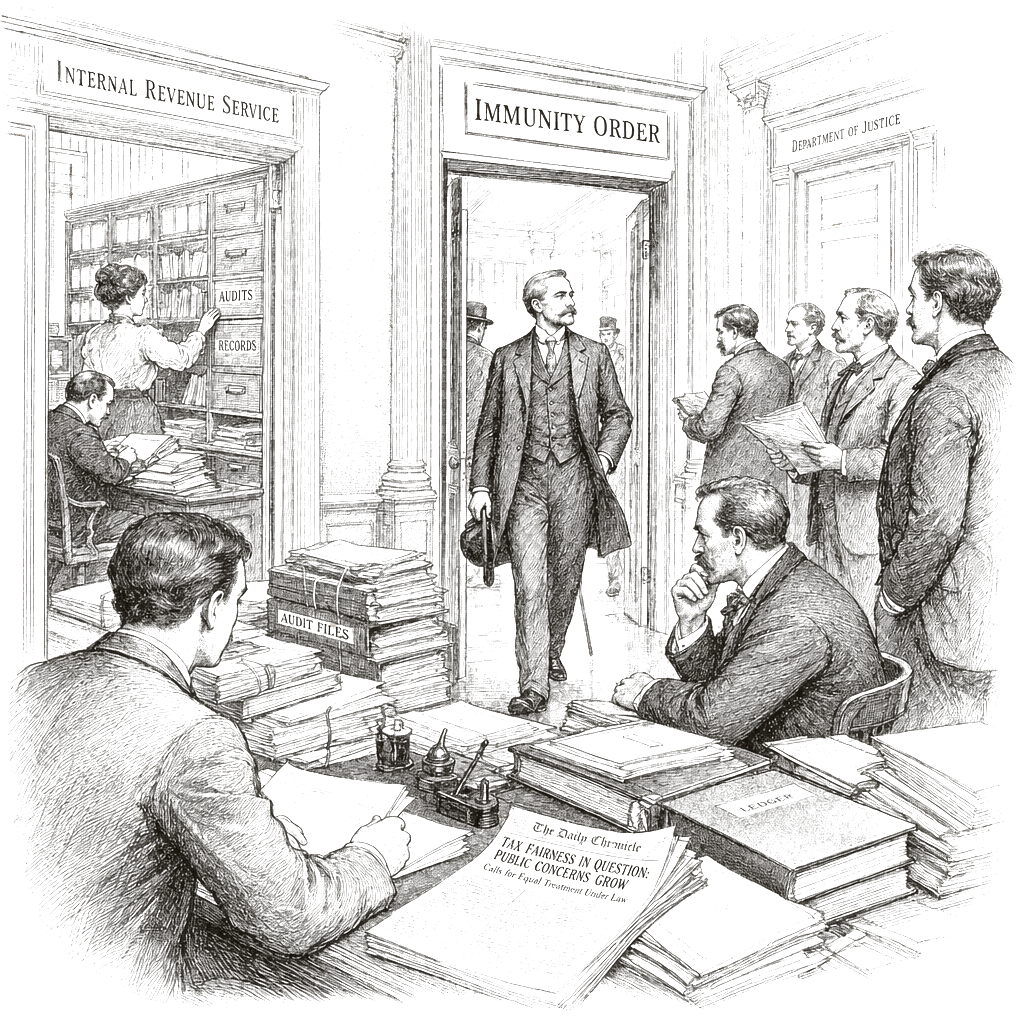
The Justice Department’s decision to shield the former president from IRS scrutiny marks an unprecedented legal remedy that could reshape expectations of tax fairness in the United States. By granting blanket immunity, the settlement not only ends the specific lawsuit but also signals that a sitting president may be able to avoid standard tax enforcement mechanisms.
The IRS audit that was dropped centered on a technique Trump allegedly used to double‑dip losses from his Chicago skyscraper—an approach that, if audited, could have resulted in a bill exceeding $100 million in back taxes and penalties. The settlement’s language states that the government is “forever barred and precluded” from examining or prosecuting Trump, his sons or the Trump Organization’s current tax filings.
Tax policy experts expressed alarm over the breadth of the immunity. Daniel Werfel, who served as IRS commissioner, said the move “is an unprecedented remedy” and emphasized that ordinary citizens expect consistent application of tax laws. Brandon DeBot, policy director at New York University’s Tax Law Center, added that the immunity “gives the president and his affiliates completely different set of rules than everyday taxpayers,” calling it an “extraordinary action” in the message it sends to the country.
Legal scholars note that the settlement applies only to existing audits and does not shield Trump from future examinations of later tax returns. Nonetheless, the precedent could influence how future administrations handle disputes with the Treasury, potentially altering the balance of accountability that the tax system traditionally imposes on powerful individuals.
The controversy also raises broader questions about the separation of powers. By allowing the president to sue his own department and receive a settlement that includes both monetary compensation and a sweeping immunity clause, the Justice Department has set a rare—and possibly unprecedented—example of a president challenging and then shielding himself from a federal agency he oversees. Critics warn that such actions could undermine the principle that no one is above the law, a cornerstone of democratic governance.