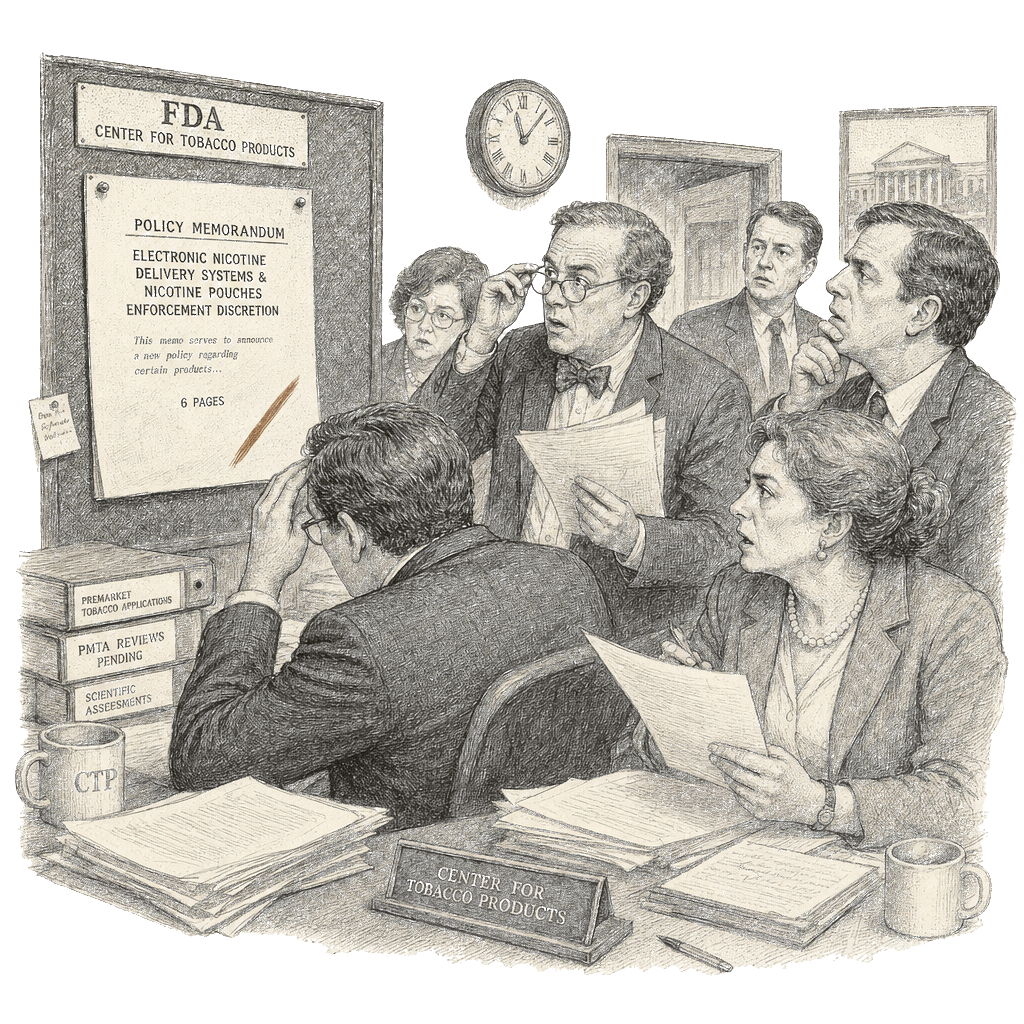
FDA staff learn of policy shift at the last minute
Senior officials in the FDA’s tobacco center discovered the new vaping guidance only after it was posted online. Two staffers who spoke to the Associated Press on condition of anonymity said they learned of the draft the night before the agency released it, a delay that “blindsided” the regulators tasked with enforcing vaping rules. The six‑page memo breaks with a longstanding FDA requirement that new nicotine products undergo scientific review to prove health benefits for adult smokers before they can be marketed.
Marty Makary, who had resigned as FDA commissioner amid complaints from industry lobbyists close to the White House, left the agency just days before the guidance appeared. The timing has raised concerns about whether the policy was authorized by senior officials outside the tobacco‑center staff.
“It begs the question of whether the true subject‑matter experts may have actually opposed this policy and were ordered to do it anyway,” said Mitch Zeller, who retired as the FDA’s tobacco director in 2022. Zeller’s comment underscores the internal confusion that staffers felt when they saw the policy jump the usual scientific vetting step.
Andrew Nixon, a spokesperson for the Health and Human Services department, defended the guidance, stating, “This approach strengthens protections against youth nicotine addiction while supporting evidence‑based alternatives for adult smokers seeking to move away from combustible tobacco products.” The agency framed the move as a balance between protecting young people and offering adult smokers a less harmful alternative.
Former FDA tobacco director Brian King, now with the Campaign for Tobacco‑Free Kids, warned that the policy signals a “broader opening up and responsiveness to flavored products by the agency both in terms of a stronger appetite for authorization but also less appetite to take enforcement action against flavored products.” Under the new “enforcement discretion” language, the FDA could publish a list of e‑cigarettes and nicotine pouches that are not yet authorized but would be allowed to stay on shelves, effectively legalizing many currently illegal flavored vapes.
The U.S. market has long been saturated with unauthorized disposable vapes—flavors such as mango, gummy‑bear, and strawberry dominate store shelves. Juul, once a market leader, now sells only FDA‑authorized tobacco and menthol flavors, while Chinese‑manufactured disposables account for an estimated 80 % of U.S. sales. The new policy could cement that reality, allowing those products to remain legally available without targeted FDA enforcement.
Industry observers note that the shift aligns with a broader political push to “save” the vaping sector. President Donald Trump, who took office last year promising to protect the industry, approved a plan to fire Makary, and his administration has repeatedly emphasized deregulation as a priority. Major tobacco firms such as Reynolds American and Altria have poured millions into political action committees supporting those policies.
The policy’s departure from the FDA’s usual science‑first approach, combined with the timing of Makary’s resignation and the alleged lack of staff input, raises questions about the influence of industry lobbying on public‑health regulation. As the FDA moves forward, it remains to be seen how enforcement will be prioritized and whether youth‑focused protections will survive the new “discretion” framework.