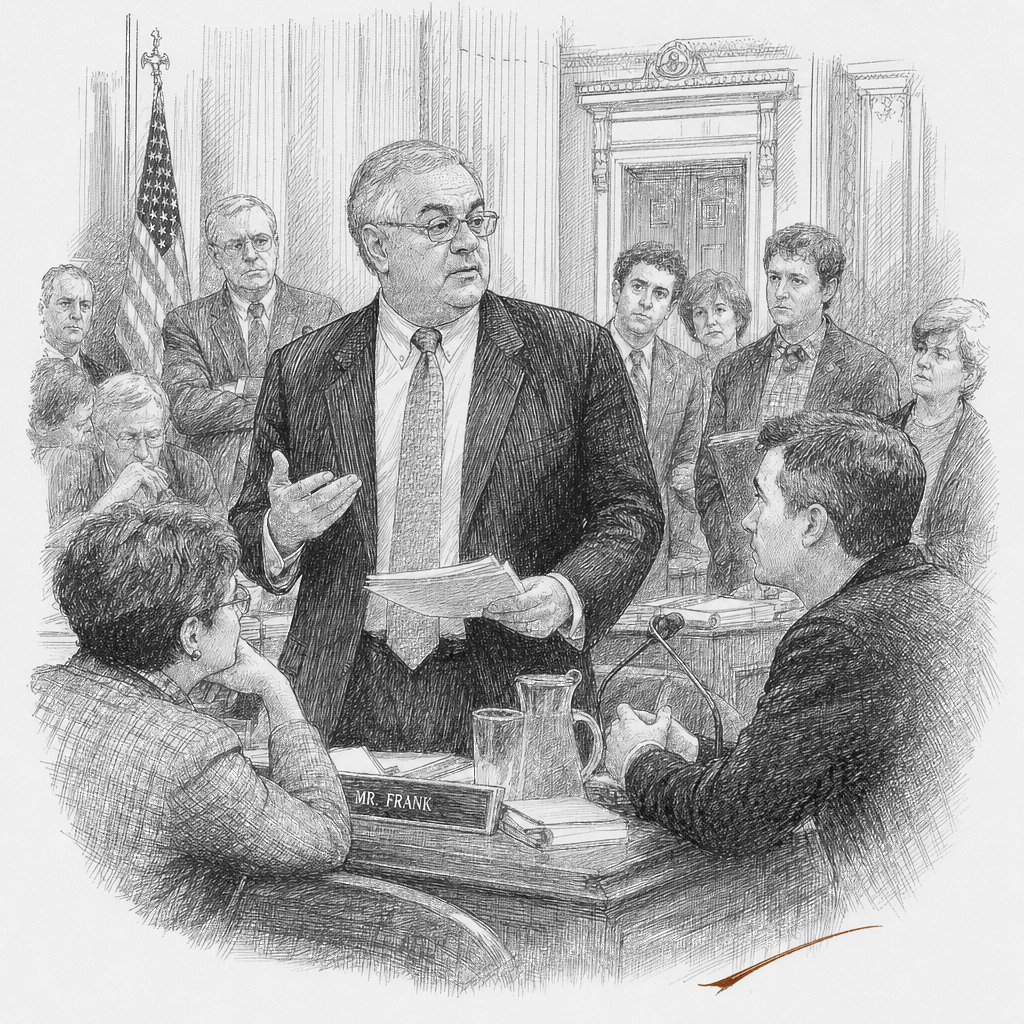
Barney Frank, a longtime Democratic congressman and prominent liberal whose career helped reshape both LGBTQ rights and U.S. financial policy, died Tuesday at age 86, according to Jim Segel. Segel, Frank’s former campaign manager and close friend, said Frank died late Tuesday.
Frank spent 32 years representing parts of Boston’s suburbs in Congress before he and his husband, Jim Ready, moved to Ogunquit, Maine. The article said Frank entered hospice in April after being diagnosed with congestive heart failure, and he was survived by Ready, along with sisters Ann Lewis and Doris Breay and brother David Frank.
Segel and others described Frank as a combative lawmaker known for acerbic wit and an unusually direct focus on marginalized communities. He saw himself as a “left-handed gay Jew,” and he often backed the party’s left wing while maintaining close relationships with Democratic leaders who sometimes frustrated progressives, the article said.
In an April interview, as he entered hospice, Frank said he hoped he would be remembered for a style of politics that embraced progressive ideals while not forcing them “on voters prematurely.” Frank said Democrats needed “conventional political methods” to make further progress and to blunt populism, and he cautioned that mainstream Democrats would have to clearly oppose the “politically unacceptable” parts of the left’s agenda. He added, “You should not take the most unpopular parts of your agenda and make them litmus tests,” arguing that members of the left had been doing so.
Frank’s national visibility for LGBTQ issues came from his decision to come out publicly in 1987, when he became the first member of Congress to do so voluntarily, according to the article. It also said that when he and Ready married in 2012, Frank became the first incumbent lawmaker on Capitol Hill to marry someone of the same sex.
Before his public coming out, the article described how Frank had lived much of his life in private while socializing in gay circles in Washington. It said the media at the time rarely reported someone was gay unless it was tied to scandal, and it described Frank’s own approach when he invited a reporter in 1987 to ask whether he was gay—responding, “yeah, so what?”
Frank also faced public setbacks. The article recounted that in 1987 the House voted overwhelmingly to reprimand him for what it described as poor judgment involving a male prostitute he hired in 1985, and it said the punishment did not rise to censure despite pressure from Republican then-House whip Newt Gingrich. In the 1990s, it added, he drew the attention of some conservatives for his political prominence and his sharp quips, including a reference by House Majority Leader Dick Armey in 1995 that Armey later said he had misspoken and apologized for on the House floor.
In Congress, Frank’s record extended well beyond LGBTQ advocacy. The article said he became chairman of the House Financial Services Committee by 2007 and left a lasting mark as the U.S. economy moved toward collapse. It said he worked with the Republican administration of George W. Bush on a rescue package and later helped develop the Dodd-Frank Act with then-Senate Banking Committee Chairman Chris Dodd of Connecticut, legislation the article described as the most significant reform to the financial system since the New Deal.
After the law’s passage, the article said, Frank also saw the legislation come under pressure in the years that followed, noting that during President Donald Trump’s second term, Republicans sought to roll back provisions by arguing they were too onerous. It also said Frank faced a difficult reelection campaign in 2010 during the tea party wave and decided not to run again in 2012, though he remained active in politics after leaving Congress.
The article closed with comments from colleagues and a final note on Frank’s own view of what he wanted his legacy to be. It quoted Nancy Pelosi, who called him an “idealist to the nth degree,” and it included recollections from Dodd and other Democrats, including Elizabeth Warren, Steny Hoyer and comments from Frank himself about how progress depended on Democrats choosing achievable political tactics rather than treating certain left-leaning proposals as demands for instant agreement.