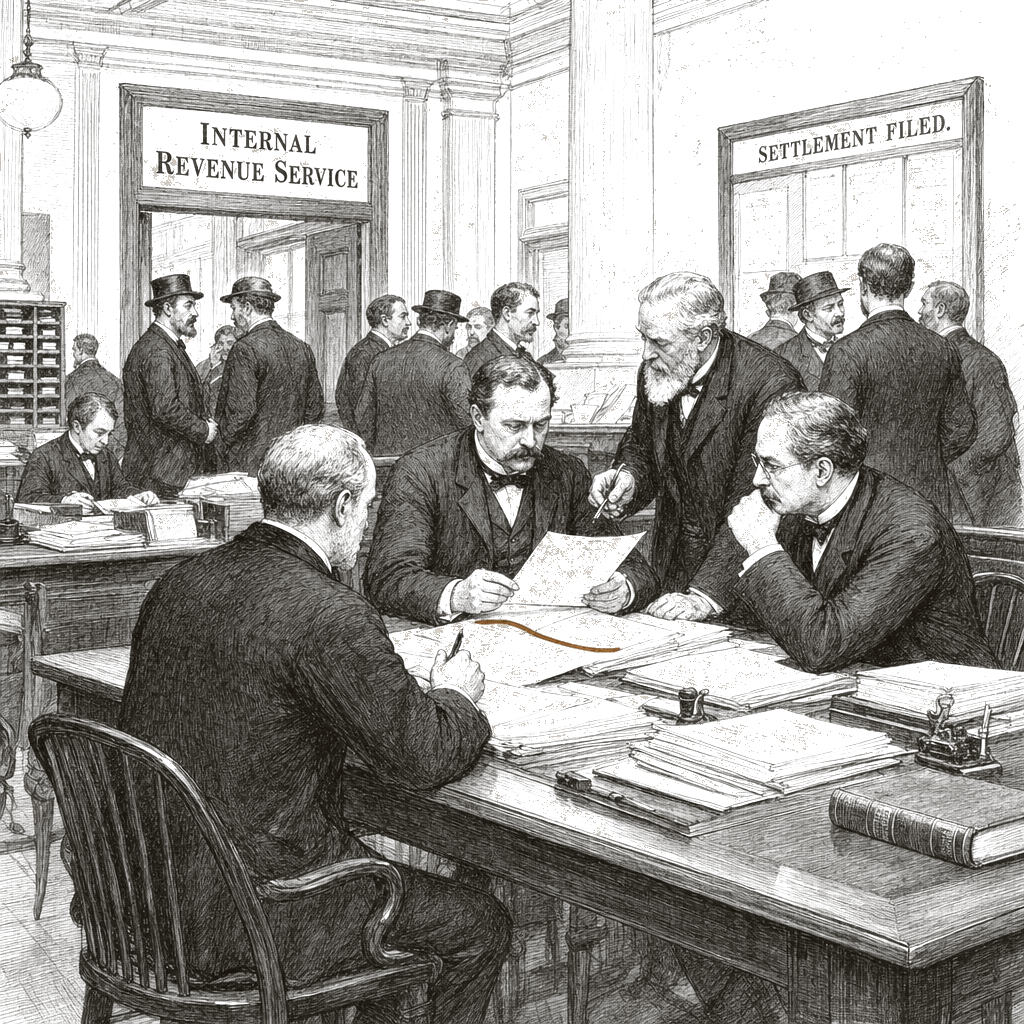
The IRS’s decision to abandon all pending tax audits of President Donald Trump has drawn sharp criticism from tax law experts, who say the settlement is without recent precedent and risks eroding trust in the agency’s impartiality. The agreement, announced Tuesday, ends a legal dispute that began when Trump sued the IRS for $10 billion over the leak of his tax returns, and it effectively shields the sitting president from investigations into whether he met his tax obligations.
The case put Trump in an extraordinary position: suing an agency overseen by the executive branch he leads, then obtaining a favorable settlement from that same agency. Experts interviewed by the Associated Press described both the lawsuit and the resolution as highly unusual, and several said they could not recall a similar instance in modern American history. The IRS commissioner, Daniel Werfel, was appointed by Trump and reports to the Treasury Department, an arrangement that critics say creates the appearance of a conflict of interest when the president is simultaneously the agency’s target and its ultimate supervisor.
At the center of the settlement is a long-running audit into a tax strategy Trump reportedly used years ago to minimize his federal tax liability. The Associated Press reported that the technique, the details of which remain confidential under taxpayer privacy laws, could have exposed Trump to roughly $100 million in additional taxes and penalties if the IRS had concluded that the strategy violated tax law. By dropping all pending probes, the IRS has foreclosed that potential liability — without a public finding on whether the underlying conduct was proper.
Trump has repeatedly denied any wrongdoing and has characterized the IRS investigations as politically motivated, though he has not provided evidence to support that assertion. His posture echoes his response during the 2016 presidential campaign, when Hillary Clinton criticized him for paying little in federal income taxes. “That makes me smart,” Trump said at the time.
The settlement has alarmed tax experts who argue that every taxpayer — including the president — should be subject to the same audit scrutiny. “The IRS must be seen as an independent enforcer of the tax code, and when the head of the executive branch obtains a blanket walk from audit, it sends exactly the wrong message,” one former IRS official told the AP. A tax policy analyst with the Urban-Brookings Tax Policy Center, Brandon DeBot, told the news service that the deal “blurs the line the agency is supposed to maintain between political influence and impartial tax administration.”
The IRS declined to discuss the specifics of the settlement, citing restrictions on revealing individual tax information. The case also drew attention for the unusual way it was resolved: Trump sued the agency in his personal capacity, and the Justice Department, which represents the IRS in court, agreed to a settlement that granted the president immunity from further audit action. Legal experts noted that while private parties occasionally settle cases with the IRS, a sitting president securing such a broad release of tax claims is virtually unheard of.
The fallout could extend beyond the immediate case. Tax law scholars warn that the settlement sets a precedent that a future president of either party could invoke to escape audit scrutiny, potentially weakening the IRS’s ability to police the tax code for high-income filers. “When you create a special class of taxpayer who can litigate his way out of audits, you’ve started to tear down the voluntary compliance system that the entire U.S. tax structure depends on,” one expert told the AP.
The White House did not immediately respond to a request for comment. The settlement agreement itself has not been made public, leaving questions about its exact terms and whether any conditions were attached to the IRS’s decision to drop the probes. As the news reverberated through Washington, watchdog groups called for the agreement to be released and for congressional oversight of the IRS’s handling of the case. The Senate Finance Committee has not yet indicated whether it will investigate.