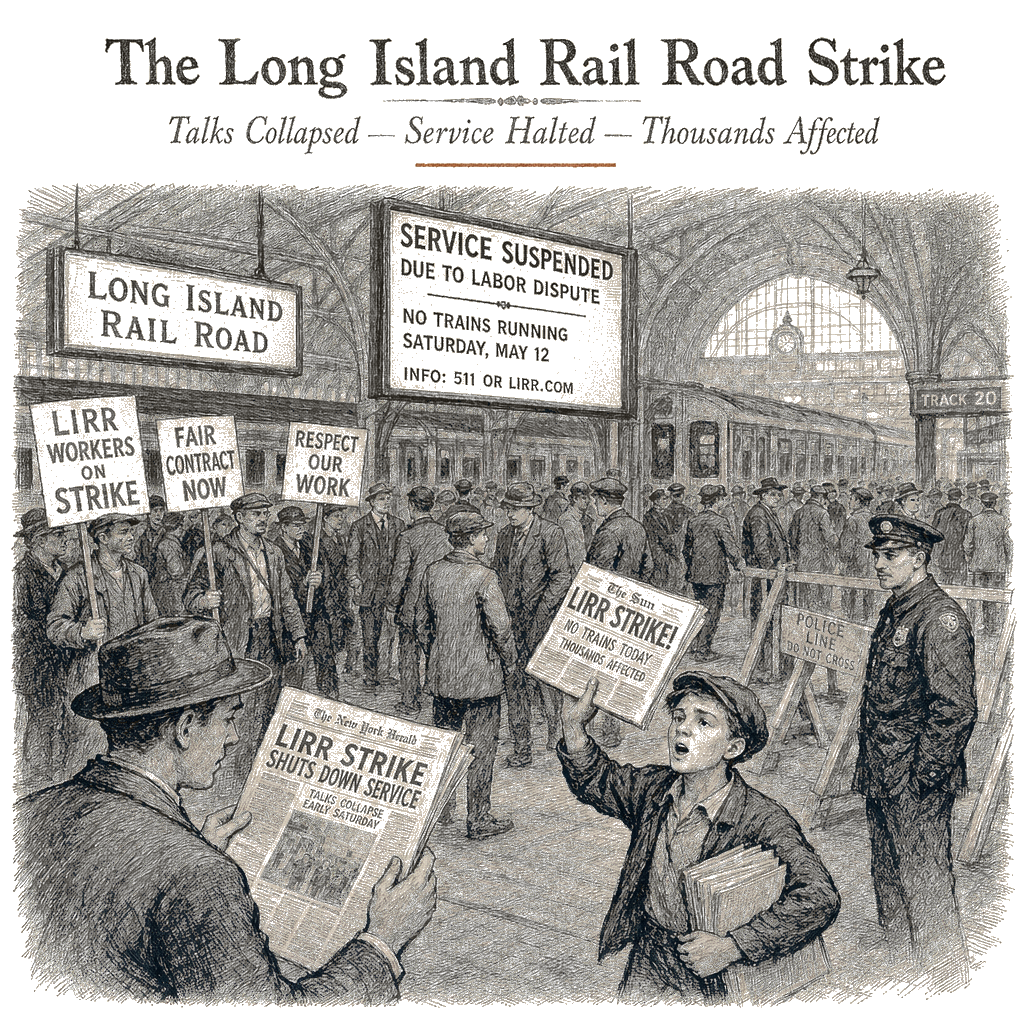
The walkout by five unions representing about half of the system’s 7,000 employees — including locomotive engineers, machinists and signalmen — began after marathon negotiations at the Metropolitan Transportation Authority headquarters broke down Friday evening without a new contract. Kevin Sexton, national vice president of the Brotherhood of Locomotive Engineers and Trainmen, said no new bargaining sessions were scheduled. “We’re far apart at this point,” Sexton said. “We are truly sorry that we are in this situation.”
The unions had demanded a total raise of 16% over four years to help workers keep pace with inflation. Lieber said the MTA had met those pay terms. “We gave the union everything they said they wanted in terms of pay,” Lieber said, adding that he believed the unions had always planned to walk off the job. The conflict then pivoted to health care costs: the MTA proposed requiring new hires to pay higher premiums, a concession the unions rejected.
The strike immediately thrust more than 250,000 weekday riders into uncertainty. Rob Udle, an electrician who rides the LIRR into Manhattan at least five days a week, said he would probably burn vacation days rather than navigate what he called “such a nightmare trying to get in.” “But they shouldn’t hold everybody hostage to do it,” Udle said. “There’s a better way. You’re affecting a lot of other people.” Susanne Alberto, a personal trainer, had already moved her Manhattan clients to virtual sessions. “The MTA is going to cave, and they know that,” Alberto said. “Why don’t they just do it now instead of waiting until virtually millions of people get inconvenienced?” Officials warned that highway congestion would worsen as commuters turned to cars.
Governor Kathy Hochul placed the blame squarely on union leaders. “Commuters are dealing with unnecessary dysfunction and thousands of union LIRR workers are being forced to go without a paycheck because of decisions made by a small group of union leaders,” Hochul said in a statement. “I stand with LIRR riders and will fight to preserve the long term stability of the MTA.” She urged riders to work from home. The MTA planned to run free shuttle buses during morning and evening rush hours, though the service would be limited and “geared toward essential workers.”
The strike is the first at the LIRR since a two-day walkout in 1994. A strike was temporarily averted last September after the Trump administration agreed to help mediate negotiations, but those talks ended without a deal, triggering a 60-day cooling-off period that expired at midnight Friday. Last year, workers on New Jersey Transit, the commuter rail linking Manhattan to New Jersey, went on strike for three days.