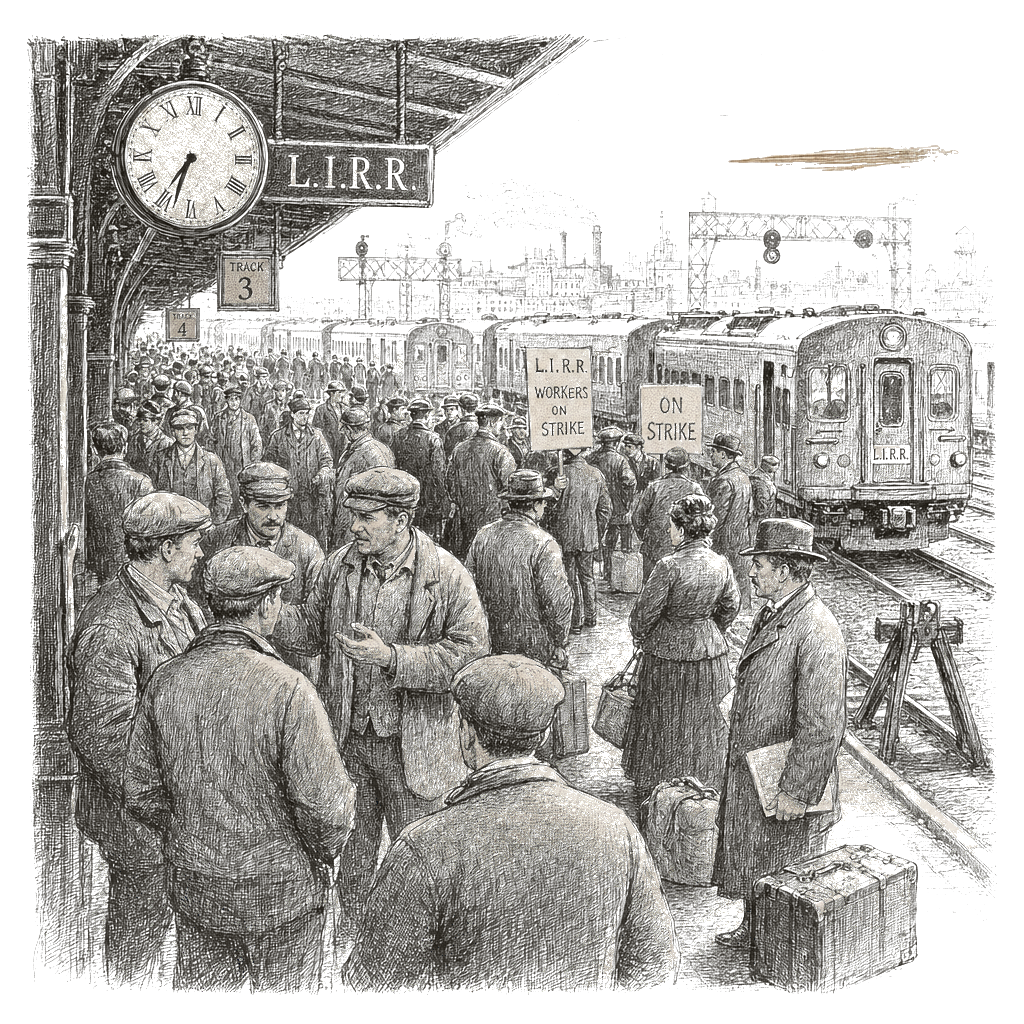
Workers on New York’s Long Island Rail Road went on strike early Saturday, union officials said, halting the busiest commuter rail system in North America after contract talks with the Metropolitan Transportation Authority ended Friday without a new agreement. The work stoppage began after the unions reached a legal time for a walkout at 12:01 a.m., according to the union representatives.
Labor unions representing about half of the system’s workforce announced the strike after the negotiations wrapped up. The five unions represent about half of the LIRR’s roughly 7,000 workers, including locomotive engineers, machinists and signalmen, and union leaders said no new negotiations have been scheduled.
Kevin Sexton, a National Vice President of the Brotherhood of Locomotive Engineers and Trainmen, said the sides were “far apart” and that the union was “truly sorry that we are in this situation.” He added that there had been no new negotiations scheduled.
The Metropolitan Transportation Authority’s chairman, Janno Lieber, said the agency “gave the union everything they said they wanted in terms of pay” and that he believed the unions intended to walk out regardless of what was offered. Lieber’s comments framed the conflict as a breakdown in willingness to reach an agreement rather than a failure to meet pay-related demands.
Both sides said the dispute centered on wage increases and health care premiums. The unions had entered negotiations seeking a total raise of 16% over four years, saying the increase was needed to help workers keep up with inflation, while Lieber said the authority had met the pay demands and instead sought changes in health care premium costs for new hires.
With the strike expected to disrupt weekday service, the walkout is likely to force riders to choose alternative routes into New York City or adjust plans to work from home, according to the state and transit officials involved in the dispute. The impact could also worsen traffic on Long Island highways and lengthen commutes for people who typically rely on the rail line, as the strike limits the LIRR’s ability to move passengers during peak hours.
Gov. Kathy Hochul urged LIRR riders to work from home during the walkout and said the state would back the MTA’s plan for free but limited shuttle buses during rush hours aimed at essential workers. In a statement, she blamed the strike on union leadership, saying “thousands of union LIRR workers are being forced to go without a paycheck because of decisions made by a small group of union leaders,” and said she would “fight to preserve the long term stability of the MTA.”
Riders also described uncertainty and inconvenience at the start of the strike. Rob Udle, an electrician who takes the LIRR at least five days a week into Manhattan, said the shutdown would be “such a nightmare trying to get in,” and later said he planned to use vacation days rather than risk navigating disruptions. Susanne Alberto, a personal trainer from Long Island, said she had already made plans with Manhattan clients to hold virtual sessions if service shuts down.
In the background of the walkout, the sides previously avoided a strike in September, when President Donald Trump’s administration agreed to help with negotiations, but those efforts ended without a deal. The agreement gave both sides 60 days ending at 12:01 a.m. Saturday to resolve differences before the unions are legally allowed to strike again or the agency could lock out workers, according to the account of the bargaining timeline.
A strike on the LIRR is the first since 1994, when workers walked off the job for about two days, and it comes after another commuter rail system in the region experienced a strike last year. New Jersey Transit’s commuter rail system went on strike last year for three days, highlighting how labor disputes in rail corridors can quickly spill into broader regional travel plans.