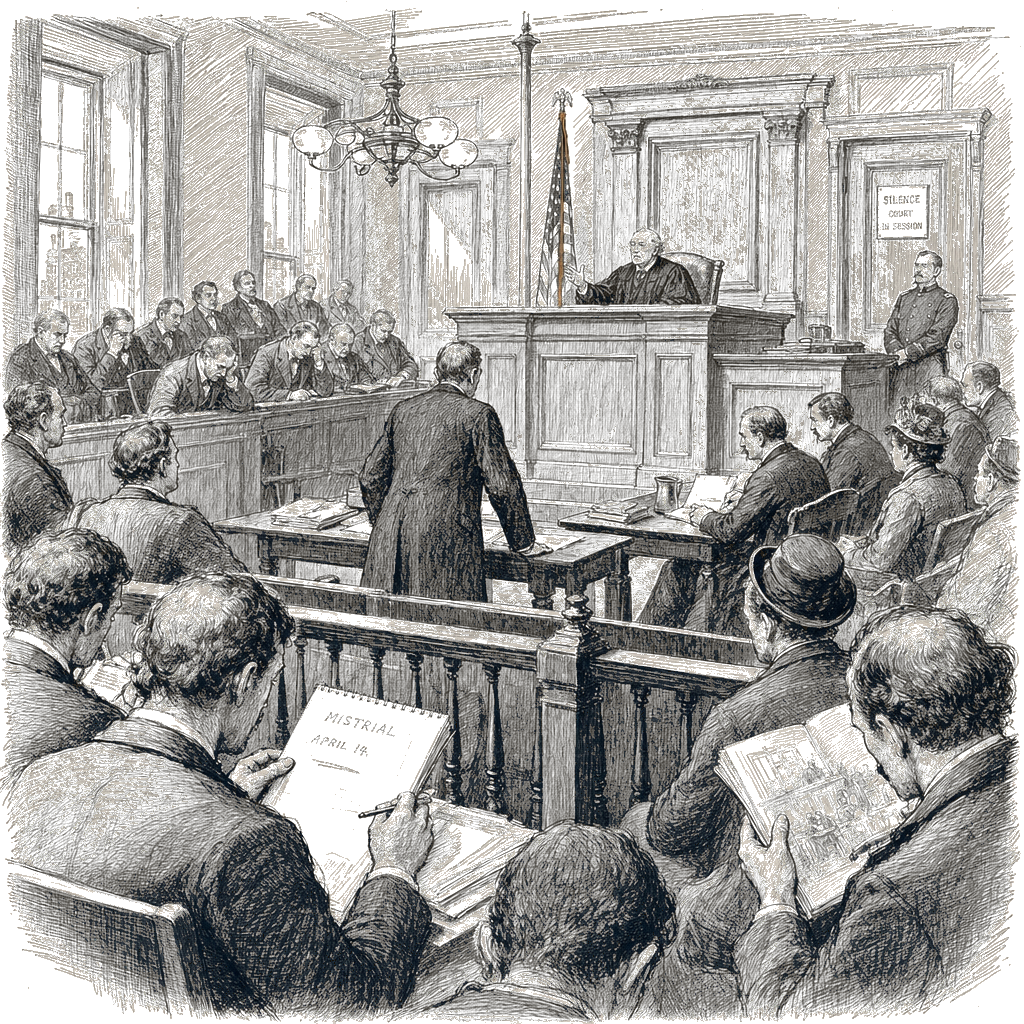
A Manhattan jury deadlocked Friday in the rape retrial of Harvey Weinstein, forcing Judge Curtis Farber to declare a mistrial and leaving the New York charge against the former film producer unresolved for the third time. Weinstein, 74, showed little reaction as he was led from the courtroom, while his attorneys said afterward that he regarded the outcome as a partial victory.
The majority-male jury weighed whether Weinstein raped Jessica Mann, a hairstylist and actor, in a Manhattan hotel room in March 2013. Weinstein’s lawyers argued the encounter was consensual and part of a complicated, years-long relationship between the then-married Weinstein and Mann, who was decades younger. Deliberations lasted roughly two and a half days before the jury sent Judge Farber two notes within 90 minutes Friday indicating it was hopelessly divided.
After the mistrial was declared, some jurors told reporters that nine of the panel’s twelve members had wanted to acquit Weinstein. Juror Josh Hadar, 57, said the prevailing view among jurors was that Mann’s testimony contained too many inconsistencies to overcome reasonable doubt. “I don’t come to that easily,” Hadar told the Associated Press, “but it just seemed that there was enough reasonable doubt.” Another juror, Sarae Perez, 25, said she studied feminism and was well versed in the #MeToo movement, but she, too, could not resolve uncertainties in Mann’s account.
Mann, now 40, stated that the mistrial “doesn’t in any way detract from the truth I told,” adding, “I deserve justice, which is why I stand up and face unbearable public scrutiny in the name of a greater good.”
Manhattan District Attorney Alvin Bragg praised Mann’s “perseverance and bravery” and said his office would consult with her before deciding how to proceed. Prosecutors are expected to announce next month whether they will retry the case a fourth time. Weinstein attorney Marc Agnifilo said the defense believes it has “outstanding” prospects if a retrial occurs. “Maybe it’s not the win that he wanted, but it’s a win, and we’re going to keep fighting,” Agnifilo said.
The deadlocked charge is the last unresolved piece of the sprawling criminal case that followed the avalanche of sexual harassment and sexual assault allegations against Weinstein in 2017. A jury convicted him of raping Mann in 2020, but an appeals court later overturned that verdict, and a 2025 retrial also ended in a hung jury, setting the stage for this year’s proceeding. Weinstein has separately been convicted of sex crimes in Los Angeles and remains imprisoned; he has said he was unfaithful to his then-wife and “acted wrongly, but I never assaulted anyone.”
During the trial, Mann testified that she repeatedly told Weinstein “no” and tried to leave the hotel room, and that he slammed the door, grabbed her arms, ordered her to undress, and ultimately raped her. Defense attorneys highlighted a private note Mann wrote herself two days after the alleged assault that discussed her conflicted feelings about a nonexclusive relationship but made no mention of a rape. They also introduced emails and testimony showing that Mann continued to see and communicate with Weinstein for years afterward, at times seeking his emotional and professional support. In one February 2017 email, she wrote, “I love you, always do. But I hate feeling like a booty call.”
Mann never sued Weinstein, though after his 2020 conviction she received approximately $500,000 from a sexual misconduct settlement fund established during his company’s bankruptcy proceedings.
The Associated Press does not typically identify people who say they have been sexually assaulted unless they choose to make their names public, as Mann has done.