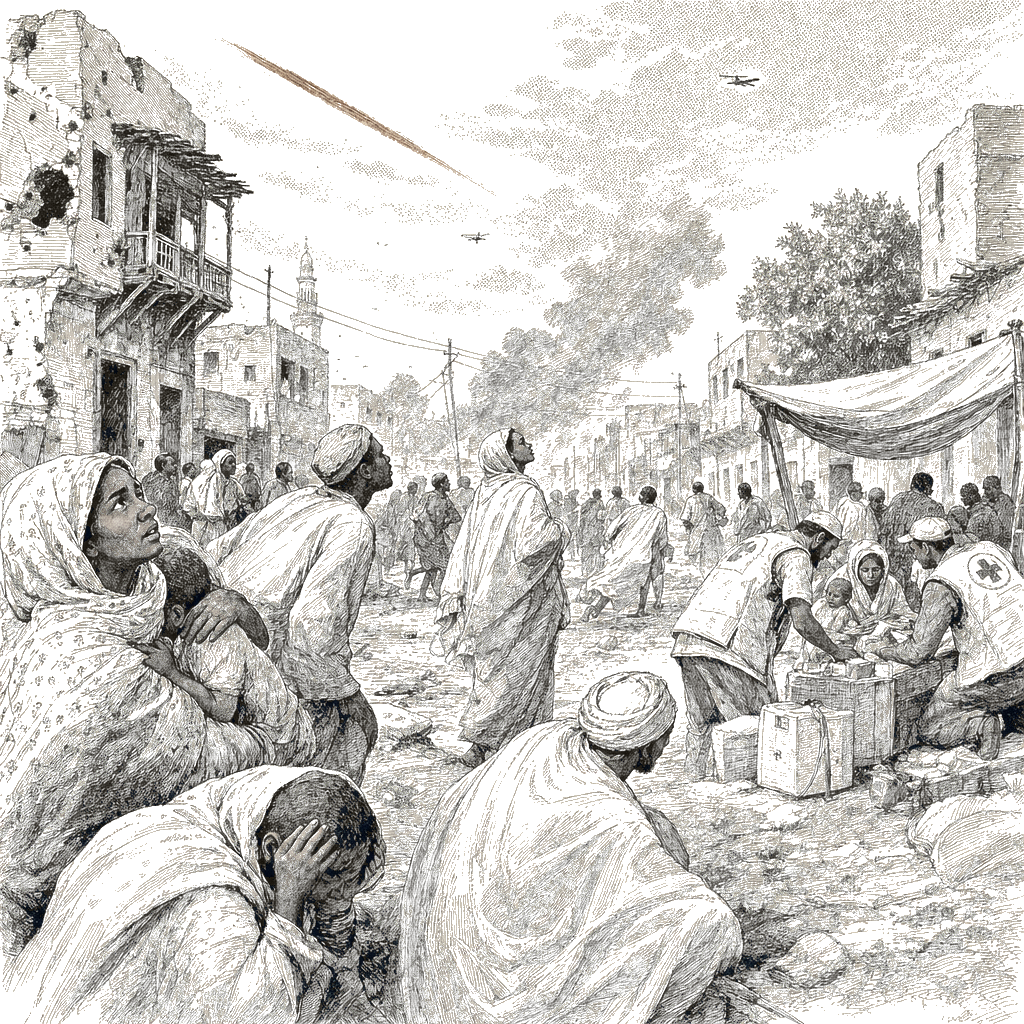
Drone strikes have emerged as the single deadliest threat to civilians in Sudan’s brutal civil war, according to the United Nations human rights chief. Armed drones now account for more than 80 percent of conflict-related civilian deaths, Volker Türk said this week, calling the toll “overwhelming” and urging measures to halt the transfer of such weapons to Sudan. Between January and April alone, drone attacks killed at least 880 civilians, according to his office.
Both the Sudanese military and the rival paramilitary Rapid Support Forces have dramatically expanded their use of drones, supplied by a network of foreign powers. The conflict, which began in April 2023, has already killed at least 59,000 people, forced 13 million from their homes, and tipped parts of the country into famine. In recent weeks, the RSF has carried out drone strikes on Khartoum International Airport and other areas near the capital, which the army recaptured last year.
“On the battlefield, drones have emerged as a force multiplier, enabling ground offensives and weakening enemy defenses,” said Jalale Getachew Birru, East Africa senior analyst at the Armed Conflict Location & Event Data project. Both sides use the technology to secure contested territory, disrupt mobilization and spread insecurity, he said.
ACLED recorded at least 2,670 people killed in drone strikes in 2025, a 600 percent increase in drone-related deaths and an 81 percent increase in drone attacks compared with the previous year. Drone strikes have hit hospitals, dams, schools, markets and displacement camps, the data shows.
The RSF began using drones widely only last year, said Gabriella Tejeda, a research associate at The Soufan Center. The force has been modifying drones and “increasingly competing to acquire newer, more sophisticated models,” she said, adding that the United Arab Emirates is likely supplying them. The UAE denies the allegation.
Nathaniel Raymond, executive director of the Humanitarian Research Lab at the Yale School of Public Health, said satellite imagery indicates the RSF is using Chinese-made CH-95 and FH-95 drones, roughly the size of small aircraft. In el-Fasher, a city in North Darfur where at least 6,000 people were killed over three days last year, the RSF employed a layered, “hunter-killer” drone operation that cut communications and targeted civilians who tried to call for help, Raymond said. The RSF could not have seized the city without those capabilities, he added. U.N. experts have described the violence in el-Fasher as bearing the “hallmarks of genocide.”
The army’s drone technology has also been blamed for hitting civilian infrastructure. An army drone strike on Al Daein Teaching Hospital in East Darfur killed at least 64 people, according to reports. The army officially denied responsibility, but two military officials at the time said the intended target was a nearby police station. Raymond said the army has sharply increased strikes on protected infrastructure such as schools and markets in the past four to six months; the military maintains it does not target civilians.
ACLED has documented that the army receives drone technology from Turkey, Russia, Iran and Egypt, while the RSF is supplied via networks linked to the UAE through regional transit points in Ethiopia, Chad and Libya. This month, the Sudanese government accused Ethiopia of being behind recent drone attacks on sites including the Khartoum airport, and accused the UAE of supplying the drones. Both countries denied the allegations. Tejeda said the claims were “not unfounded” and reflected an attempt by the UAE to influence the war’s outcome.
Birru and Raymond cautioned that cross-border drone activity is difficult to independently confirm. But the analysts agreed that the growing firepower and foreign investment signal a grim trajectory. “Both the warring parties’ battle tempo only increasing, and their backers actively still investing in the war, makes it clear that neither side is interested in a resolution,” Tejeda said.