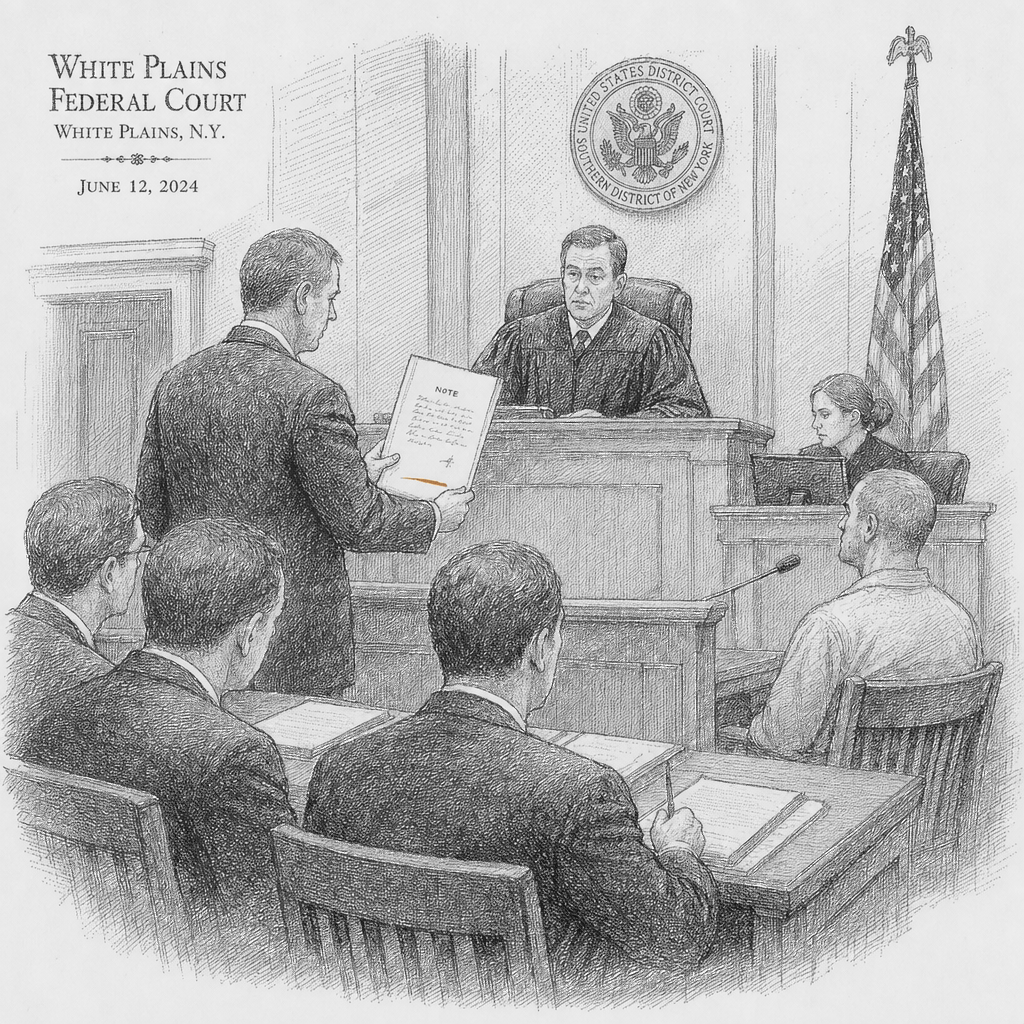
A federal judge has ordered the release of a previously sealed note that a former cellmate of Jeffrey Epstein said he found after Epstein’s first suspected suicide attempt in July 2019, according to a written ruling.
U.S. District Judge Kenneth Karas in White Plains, New York, issued the order after The New York Times asked him last week to unseal the note and other documents in a case tied to Nicholas Tartaglione, a former police officer serving a life sentence for killing four people. The Times’ request sought public access to the note that had been sealed and placed inside a courthouse vault as part of an unrelated legal dispute, and federal prosecutors did not oppose unsealing.
The note itself is associated with Tartaglione’s account of what happened in the Manhattan federal jail where Epstein was held. Tartaglione previously said he discovered the note in a book after Epstein was found on the floor of the cell they shared on July 23, 2019, with a strip of bedsheet around Epstein’s neck. About three weeks later, Epstein was found dead in his cell, authorities said, in what they concluded was a suicide.
According to the ruling account of what the note says, the message was difficult to read in some places. The note includes lines such as “They investigated me for month — found nothing!!!” and “It is a treat to be able to choose” the “time to say goodbye,” along with “Watcha want me to do — Bust out cryin!!” before concluding with “NO FUN,” and “NOT WORTH IT!!” underlined.
Karas’ decision addressed why the note had remained sealed and why it could be disclosed despite privacy interests for third parties, including Epstein. In his written order, Karas said privacy interests of a deceased person “are vastly reduced,” and that disclosure of the deceased’s information was unlikely to “work a concrete harm.”
Tartaglione, according to the account in court, became the first person widely identifying the note publicly in later years. Few people had known about it until Tartaglione mentioned it last year on writer Jessica Reed Kraus’ podcast. In that recounting, Tartaglione described finding the note after the July 23 incident.
The note’s authorship was not clear in the court summary of the record. The note was not mentioned in the longer government reports examining the circumstances of Epstein’s death, and it also did not surface in the Justice Department’s recent release of files on Epstein. The court account also states that Tartaglione’s chronology said he told his lawyer about the note four days after the suspected July 23 attempt, and that the note was later submitted as evidence in Tartaglione’s criminal case.
Court records described how jail personnel responded around the July 23 incident. According to the same account, Epstein had friction marks and skin irritation on his neck from the suspected attempt; jail officers reported he was breathing heavily but responsive. One officer said Epstein told staff he believed Tartaglione tried to kill him, referencing a memo included in Justice Department files. Jail officials placed Epstein on suicide watch for 31 hours after the incident before downgrading him to psychiatric observation, which the account says was his status when he later killed himself.
The account also says that Epstein denied trying to harm himself, telling a jail psychologist that suicide was against his Jewish religion and that he was a “coward” who didn’t like pain. Both Epstein and Tartaglione were interviewed by jail personnel on July 31, 2019, according to the jail records referenced in the ruling account.
The judge’s release decision therefore adds a document associated with Tartaglione’s account to a set of court materials that had been kept out of public view. The release comes even though authorities at the time of Epstein’s Aug. 10, 2019, death said they found a handwritten note in his cell that did not appear to be a suicide note and instead described grievances about jail conditions, including food, showers and bugs.
If you or someone you know needs help, the U.S. national suicide and crisis lifeline is available by calling or texting 988, and there is also an online chat at 988lifeline.org.