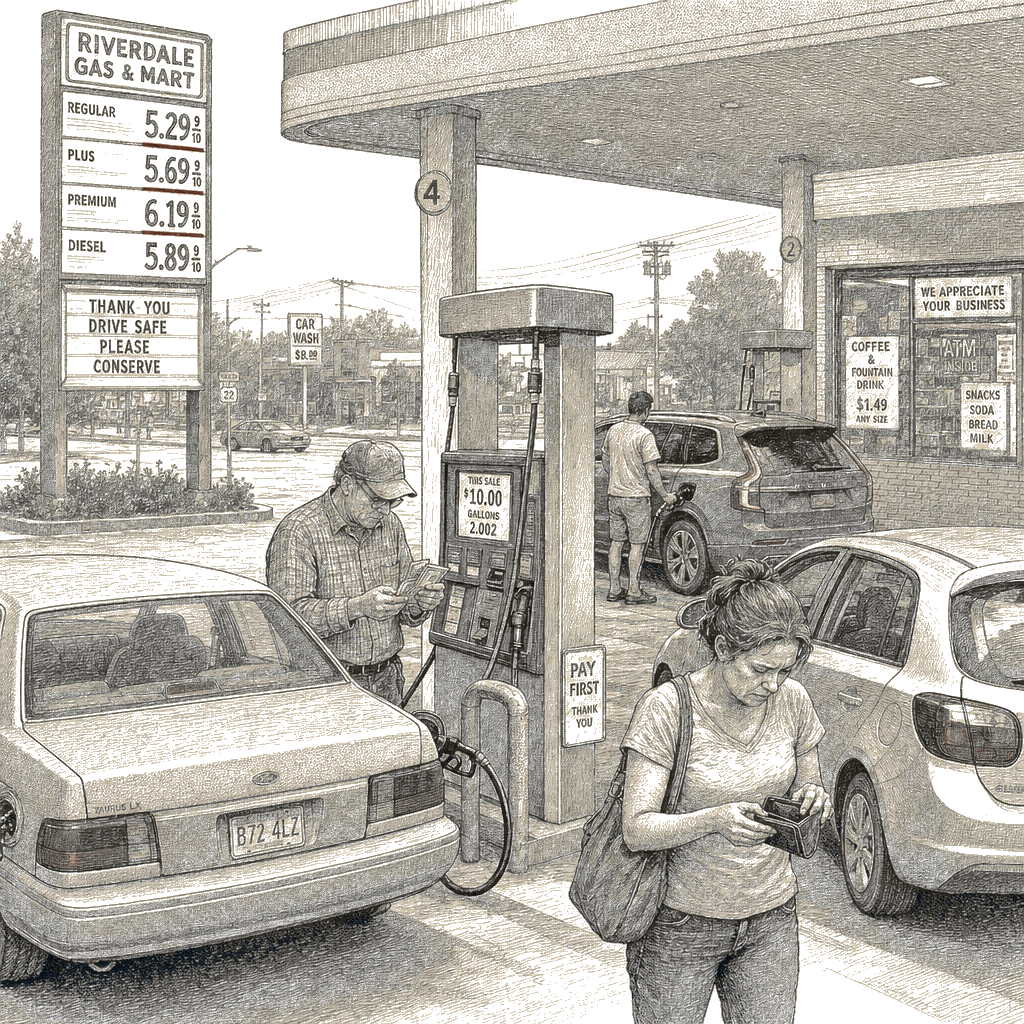
The gasoline price shock triggered by the Iran war is carving deeper economic fault lines across American households, new research from the Federal Reserve Bank of New York reveals, with the poorest drivers cutting back on driving just to afford the pump. The report, released Wednesday, found that lower-income households — those earning under $40,000 a year — slashed their fuel consumption by 7% in March but still spent 12% more on gas than the month before. Households earning $125,000 or above, by contrast, ramped up their gas spending by 19% while barely reducing their driving.
“We find that households had very different experiences with gasoline spending,” the New York Fed researchers wrote. “With the sharp increases in gasoline prices in March, a K-shaped pattern in gasoline consumption emerged — showing faster consumption growth for high income households relative to low-income households.”
The Iran war began on Feb. 28, and by the end of March gasoline prices had jumped roughly 25%, according to government consumer price data. As of May 6, prices have climbed about 50% since the conflict started. Overall gasoline consumption fell 3% in March, the New York Fed said, but the burden was distributed unevenly across income brackets.
The report found that the divide between rich and poor in how they responded to the gas spike was larger than after the 2022 price shock that followed Russia’s invasion of Ukraine. Wealthier households have seen the value of their stocks and homes climb sharply since then, the Fed noted, while lower-income households — who leaned on government stimulus programs four years ago — had less of a buffer this time.
Separate data released last week by the Bank of America Institute, which compiles spending information from its customers’ anonymous accounts, showed that in the poorest third of U.S. households, one in ten now devotes 10% of their income to gasoline. For the highest-income households, that share is just 2.7%. The increase in pump spending has redirected money from discretionary purchases: annual growth in discretionary spending by poorer households decelerated in March from February, while it picked up for middle- and upper-income groups.
The New York Fed estimated that total spending at gas stations nationwide jumped 15% in March from the previous month. If sustained, the extra cost will siphon money from other forms of spending, reducing inflation-adjusted consumption and slowing the broader economy — though so far there are only limited signs of that happening. Consumer spending, adjusted for price changes, ticked up 0.2% in March, slightly below February’s 0.3% gain, the government reported last week.
The report’s authors said the findings suggest lower-income Americans have responded by driving less — perhaps carpooling, using public transit, or combining errands into fewer trips — while richer households have been able to absorb the higher prices with few, if any, lifestyle changes. For millions of households with tight budgets, the gas-price spike is deepening a pattern in which affluent Americans continue to prosper while the poorest fall further behind.