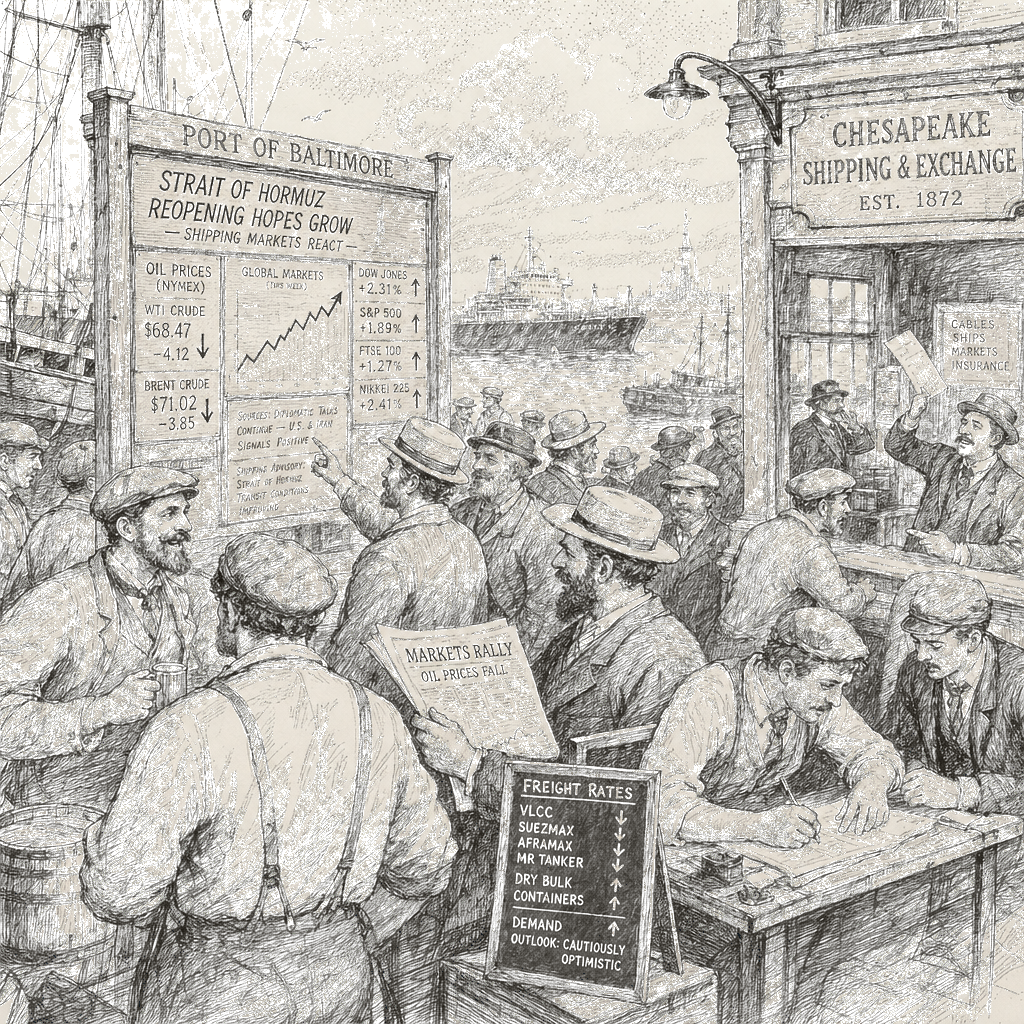
On Wednesday, oil prices sank while markets rose worldwide as investors looked for signs that the United States and Iran were moving closer to reopening the Strait of Hormuz to commercial shipping. The Strait of Hormuz has been a flash point for global energy flows because the Iran war has blocked tankers from using it to exit the Persian Gulf, a bottleneck that has fed pressure on inflation. A reopening would allow oil to flow more freely again and potentially reduce some of that upward pressure, according to how traders framed the developments.
In the oil market, the price for a barrel of Brent crude oil fell 7.8% to $101.27. The decline followed remarks by President Donald Trump that the strait could be “OPEN TO ALL” if Iran accepts a reported agreement that he did not detail. Earlier in the week, Brent had been above $115, but on Wednesday it also briefly dropped below $97 before recovering above $100 after Trump threatened to begin bombing “at a much higher level and intensity” if Iran does not accept the agreement.
Stocks rose as traders treated the shift as a potential easing of the conflict risk. On Wall Street, the S&P 500 climbed 1.5% for its best day in nearly a month and reached another record. The Dow Jones Industrial Average jumped 612 points, or 1.2%, and the Nasdaq Composite rose 2% to its own record, extending a run of momentum driven by large-cap performance and expectations for corporate results.
Abroad, trading gains were even steeper in some markets. The Seoul index rose 6.5%, while Paris gained 2.9% and London rose 2.1%. The move echoed the market’s history of reacting to intermittent signals on Iran, even as earlier hopes have sometimes been dashed.
The bond market also joined the day’s rally as falling oil prices reduced pressure on inflation expectations. The yield on the 10-year Treasury fell to 4.35% from 4.43% late Tuesday. Lower yields can reduce borrowing costs for mortgages and other loans, and they can also support prices for stocks and other investments, market participants said, though the 10-year yield remained well above its 3.97% level from just before the war.
In company results, big U.S. earnings beat expectations and helped anchor the equity gains despite the uncertainty around the Strait of Hormuz. AMD surged 18.6% after it joined big-name companies topping expectations for both profit and revenue. CEO Lisa Su said the chip company benefited from continued artificial-intelligence-related growth that is driving demand for computing power from data centers, and AMD also said its revenue growth could accelerate in the current quarter to roughly 46% from a year earlier.
Super Micro Computer rose 24.5% after reporting stronger earnings than analysts expected, while Nvidia gained 5.7%. Nvidia was described as the single strongest force lifting the S&P 500 because of its size. CVS Health climbed 7.6% after results for the first quarter beat analyst expectations and after it raised its financial forecasts for the full year, and the Walt Disney Co. gained 7.5% after it said its “Zootopia 2” movie helped draw people to its streaming business, parks and cruise ships while delivering a better-than-expected profit.
Other companies with earnings-driven gains included Uber Technologies, which rose 8.5% after it offered a bookings forecast for the spring that was higher than analysts expected. Outside tech, companies with larger fuel bills jumped on hopes that oil prices will keep easing, including United Airlines, Carnival and Royal Caribbean, each posting gains that tracked the day’s oil-price outlook.
In stock markets abroad, South Korea’s Kospi pushed above the 7,000 level for the first time and closed at a record, boosted by gains for AI-related winners including Samsung Electronics and SK Hynix. Investors also appeared to weigh how quickly market sentiment could reverse if the U.S.-Iran deal signals fade; past bursts of optimism about ending the war have repeatedly given way to disappointments, the report noted, and that pattern could repeat.
All told, the S&P 500 rose 105.90 points to 7,365.12, the Dow rose 612.34 points to 49,910.59, and the Nasdaq Composite climbed 512.82 points to 25,838.94.
Figures discipline note
No verified FRED figure series was referenced in the prose body beyond market-index levels that were directly stated in the source material.