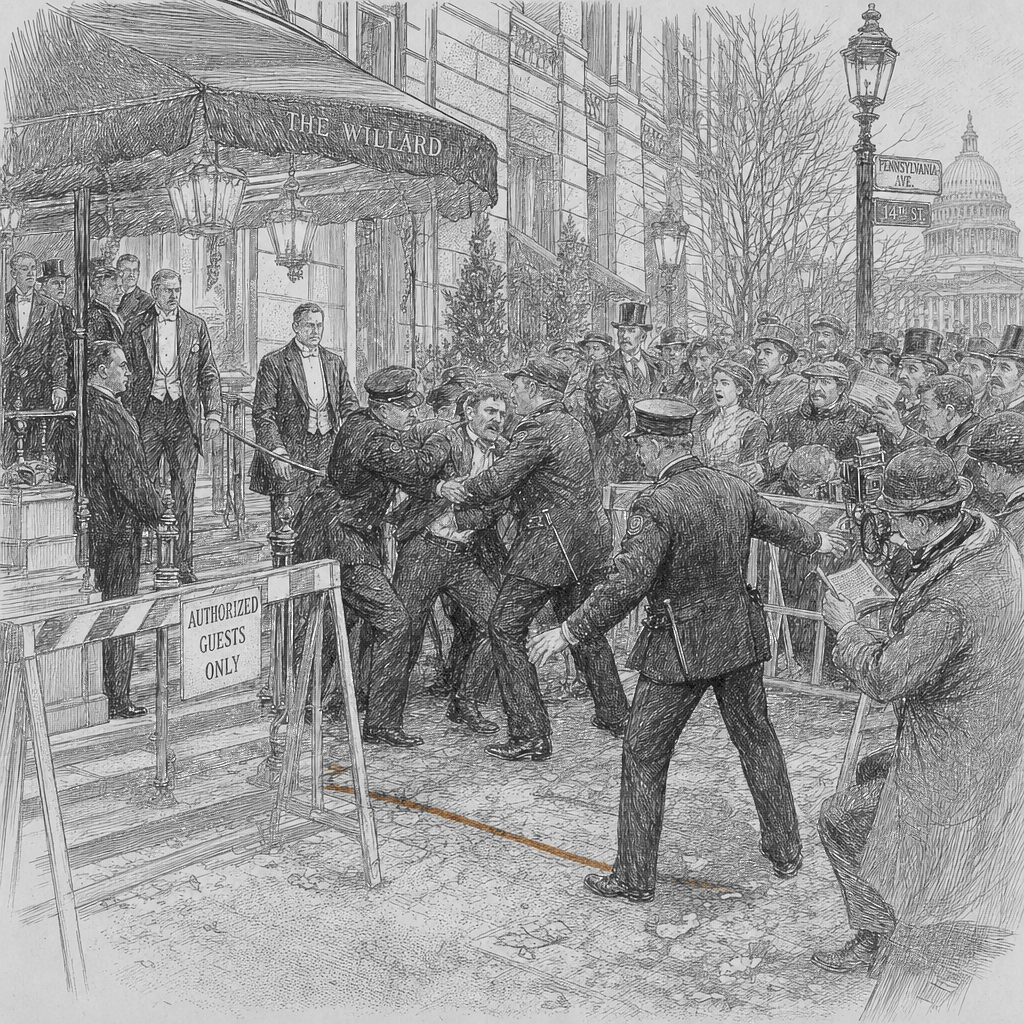
Allen’s new indictment comes after prosecutors charged him last month based on a complaint alleging he tried to storm the White House Correspondents’ Association dinner and to kill President Donald Trump, according to the federal filing described in court proceedings. The Tuesday indictment by a grand jury in Washington, D.C., adds an assault charge while keeping the other counts the same, the Associated Press reported.
Prosecutors allege the April 25 attack at the Washington Hilton involved a Secret Service officer being shot once in a bullet-resistant vest. The incident disrupted and ultimately prompted an early end to one of the highest-profile annual events in the nation’s capital, the Associated Press said, and authorities said the officer was struck during the confrontation.
Allen was armed with guns and knives, prosecutors said, and he ran through a security checkpoint and pointed his weapon at the officer, who fired five times without hitting anyone, according to authorities. The newly added count stems from prosecutors’ view that the shotgun shot fired during that exchange struck the officer’s vest.
The indictment also renewed the earlier accusations against Allen, including an attempted-assassination-related charge and two additional firearms counts. As described by the Associated Press, Allen initially faced those counts via a complaint and, if convicted of the attempted assassination charge alone, faces a maximum sentence of life in prison.
Acting Attorney General Todd Blanche signaled last week that investigators wanted to review more ballistics evidence before making a determination about whether Allen fired the shot that struck the officer. After that review, prosecutors returned to a grand jury with the added assault charge, framing the latest count as confirmation of their determination on the cause of the officer’s injury.
Allen’s attorneys have disputed key aspects of the government’s case. In court filings described by the Associated Press, they questioned the strength of the government’s theory that Allen intended to kill Trump or that he fired a shot that struck the officer, writing that the government’s argument “is based upon inferences drawn about Mr. Allen’s intent that raise more questions than answers.”
The Associated Press also reported details about Allen’s confinement after his arrest. Allen, 31, of Torrance, California, was injured but not shot, was placed on suicide watch after his arrest, and jail officials removed him from that status over the weekend; his attorneys previously complained about his treatment, including confinement in a padded room with constant lighting and repeated strip searches and restraints outside his cell.
Allen’s indictment means the case will proceed in federal court with prosecutors arguing not only that he took aim at the event and the president, but also that he assaulted a federal officer with a deadly weapon during the April 25 confrontation. The defense remains focused on intent and the evidentiary basis for linking any specific shot to the officer’s injury.