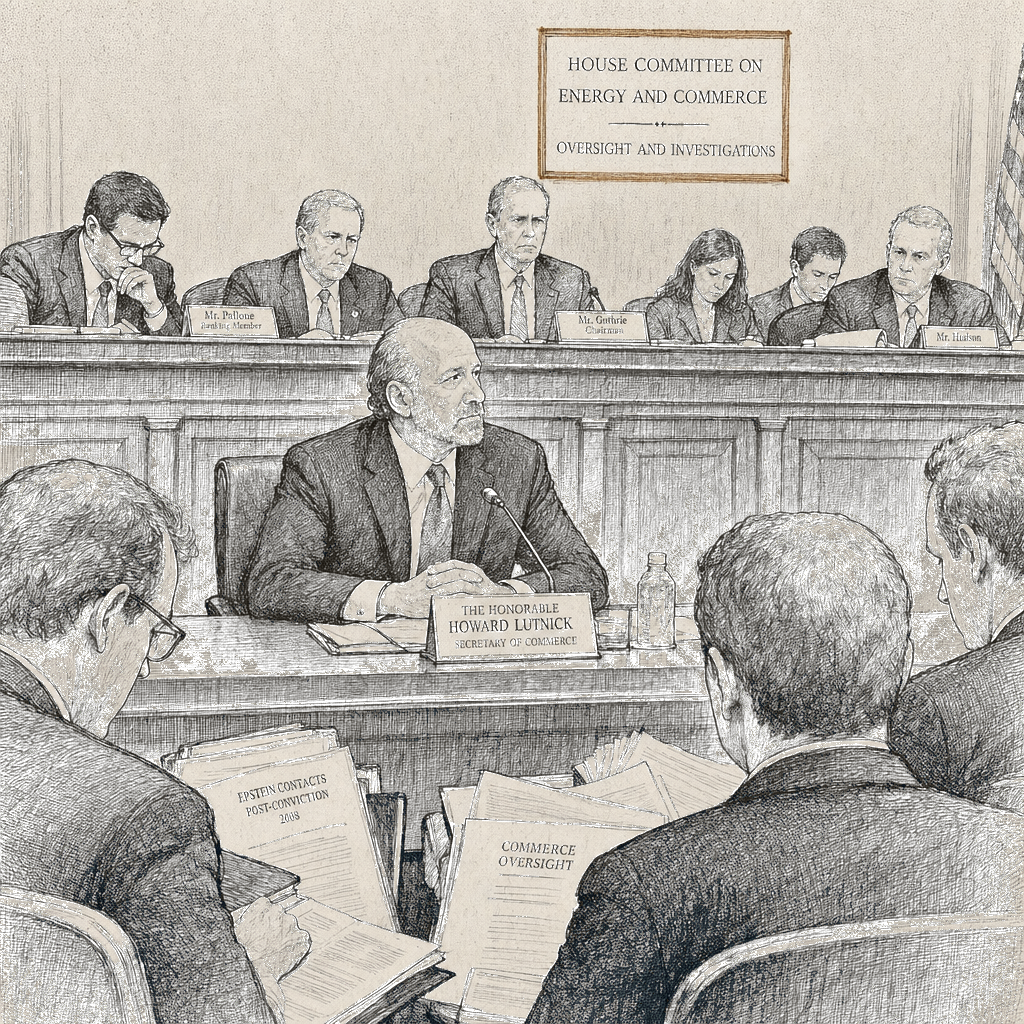
Lutnick, President Donald Trump’s commerce secretary, appeared Wednesday before the House Oversight Committee as lawmakers pressed him to explain his contact with Jeffrey Epstein after Epstein’s 2008 conviction for soliciting prostitution involving an underage girl. The committee framed the closed-door session as an opportunity to assess how much scrutiny lawmakers will apply to senior officials who had ties to Epstein even after the conviction, at a time when the administration has sought to move past the issue.
After the interview, House Republicans portrayed Lutnick’s answers as limited and responsive. Rep. James Comer of Kentucky, the committee chairman, said the Cabinet member was “forthcoming” about what he described as limited interactions with Epstein, and he also said committee members planned to later release the transcript for public review.
Democrats left the meeting with a different assessment and raised concerns about inconsistencies in Lutnick’s account of his relationship with Epstein. Rep. Suhas Subramanyam, D-Va., said Lutnick was “evasive, nervous” and “dishonest,” adding that Lutnick would not admit to lying despite Democrats’ view that he contradicted himself. Democrats said repeated questions about Epstein’s private island left them frustrated and unconvinced by Lutnick’s answers.
Lutnick told lawmakers he had done nothing wrong and welcomed the closed-door format, according to the interview reporting. Democrats said that in earlier descriptions, Lutnick had said their contact was confined to a handful of emails and two meetings in 2011 and 2012, while also pointing to other statements that they said suggested his account had shifted over time.
One focus of the dispute was the island visit and how it fit into Lutnick’s previous claims. Democrats described the visit as a point where Lutnick’s memory was incomplete and where they said his responses did not raise concerns in a way that matched their understanding of the record. During a break in the interview, Rep. James Walkinshaw, D-Va., said Lutnick “claims that when he said, ‘I would never be in a room again with Jeffrey Epstein,’ he meant only him and Jeffrey Epstein.”
Lutnick has also been described as having downplayed his ties to Epstein, who was his neighbor in New York City. In earlier testimony to senators in February, Lutnick said, “I did not have any relationship with him. I barely had anything to do with him.” In the House interview coverage, lawmakers also pointed to documents described in the federal Epstein case files indicating contact by email, including a 2018 message about a proposed expansion of a museum in their neighborhood and other acknowledgments described as ties in 2013, 2015 and 2017.
Comer said the committee did not see wrongdoing in the email correspondence, while also saying his view that Lutnick’s credibility had been damaged or not would be determined by the later release of the transcript. Democrats, by contrast, argued that the island visit and other statements went beyond what Lutnick characterized, including criticism related to a description of Epstein as a “greatest blackmailer ever” that Democrats said Lutnick later walked back.
The closed-door nature of the session also became a point of disagreement. The committee did not record the interview on video, and Democrats criticized the decision as allowing Lutnick to avoid the level of scrutiny they said other witnesses faced in video-recorded depositions. Rep. Yassamin Ansari, D-Ariz., said the lack of video enabled what she described as “the level of the lies that are taking place inside that room without video is unbelievable and part of this egregious cover-up,” while Comer said Democrats were trying to score political points rather than pursue the facts.
Comer argued that the committee’s practice reflects how subjects can choose to participate. He said that when witnesses consent to interviews, it becomes less necessary to video them, and he said the process was structured to make the inquiry easier.
The White House continued to support Lutnick, who has also been identified as a prominent supporter of Trump’s tariff strategy and a longtime fundraiser for Trump’s campaigns. The committee is also scheduled to hear testimony next from Pam Bondi on May 29, the AP reported. Epstein died in a New York jail cell in 2019 while awaiting trial on sex trafficking charges.