London was thrust into heightened alert Friday after a man was charged with attempted murder in a brazen daylight stabbing spree targeting Jewish men in the heart of the city’s largest Jewish enclave, an attack authorities swiftly labeled terrorism and which followed a string of arson assaults on synagogues. Essa Suleiman, a 45-year-old Somalia-born British citizen, appeared in Westminster Magistrates’ Court on three counts of attempted murder, ordered held without bail as the country’s official threat meter was jacked to its second-highest level.
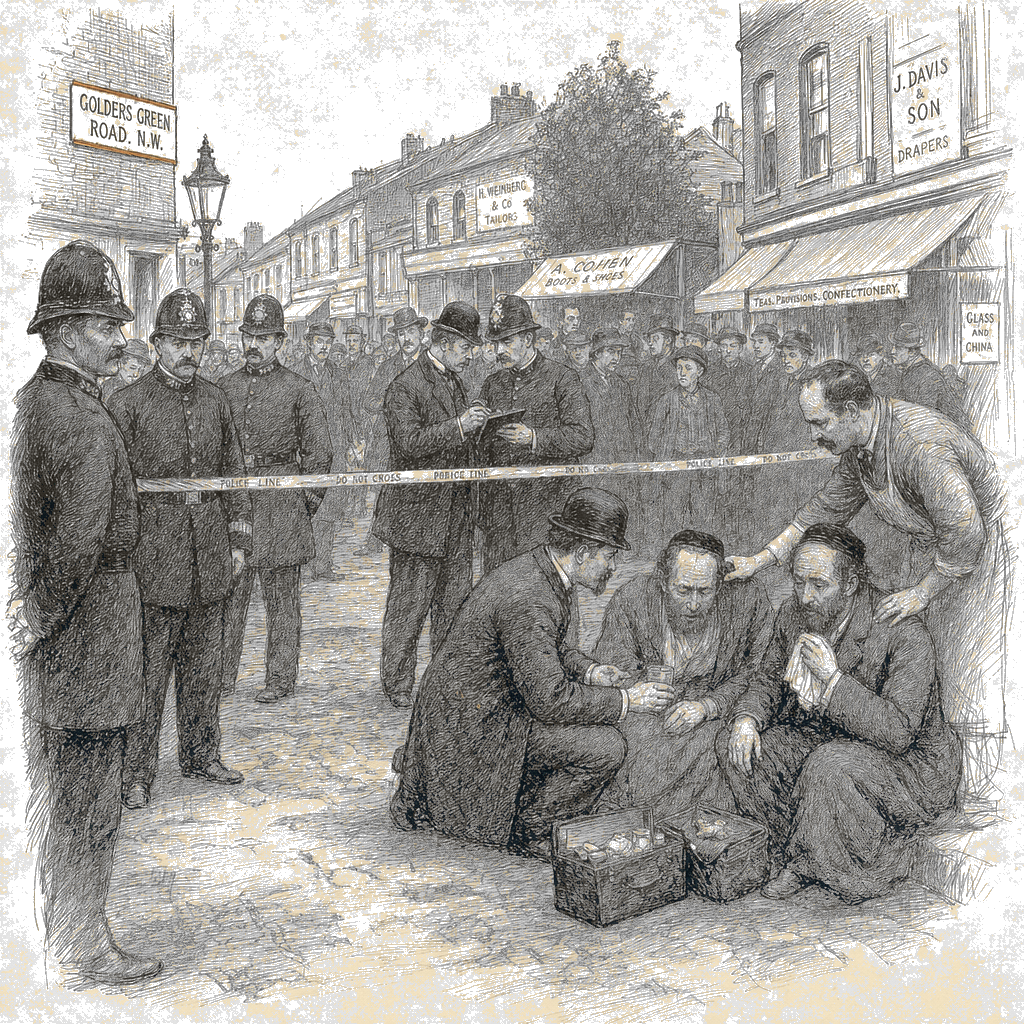
Prosecutor Emma Harraway laid out the sequence of violence in court, describing how Suleiman first attacked Ishmail Hussein, his friend of two decades, in south London before boarding a train hours later to Golders Green — a district in north London that is a central hub of Britain’s Jewish community. There, Harraway said, he stabbed Shloime Rand, 34, in the chest outside a synagogue, puncturing his lung, and then turned on Norman Shine, 76, at a bus stop.
“As Mr. Shine adjusted his kippah, Suleiman ran towards him and set upon him, launching a series of aggressive blows,” Harraway told the court, detailing how Shine was targeted while wearing a traditional Jewish skullcap. Rand was later discharged, while Shine remains hospitalized in stable condition.
Suleiman did not enter a plea. The case was transferred to the Central Criminal Court for a May 15 hearing.
Police disclosed that Suleiman had been referred in 2020 to Prevent, the government’s voluntary counter-extremism program designed to steer individuals away from radicalization. His file was closed later the same year, and authorities declined to specify why. The referral, combined with his alleged trajectory from a personal dispute to what prosecutors described as a targeted antisemitic rampage through one of London’s most identifiable Jewish neighborhoods, raised immediate questions about the program’s reach and monitoring.
Prime Minister Keir Starmer said his government would increase security for the Jewish community and “do everything in our power to stamp this hatred out.” The commitment came as Britain’s terror threat level was increased from substantial to severe, a change that intelligence officials said reflected not only the Golders Green attack but also a broader rise in risk “from Islamist and extreme right-wing terrorist threat from individuals and small groups based in the U.K.” Severe is the second-highest rung on a five-point scale and signals that an attack is considered highly likely within the next six months.
The stabbings occurred amid a surge in antisemitic violence in the capital. Authorities have recorded a series of arson attacks on synagogues and other Jewish sites in London in recent weeks, compounding the trauma felt by a community that has long viewed Golders Green as a sanctuary. The attack on Rand and Shine — struck as one prepared to enter a place of worship and the other stood waiting on a public street — has amplified calls for both enhanced physical protection and a reckoning with the roots of militant antisemitism in Britain.