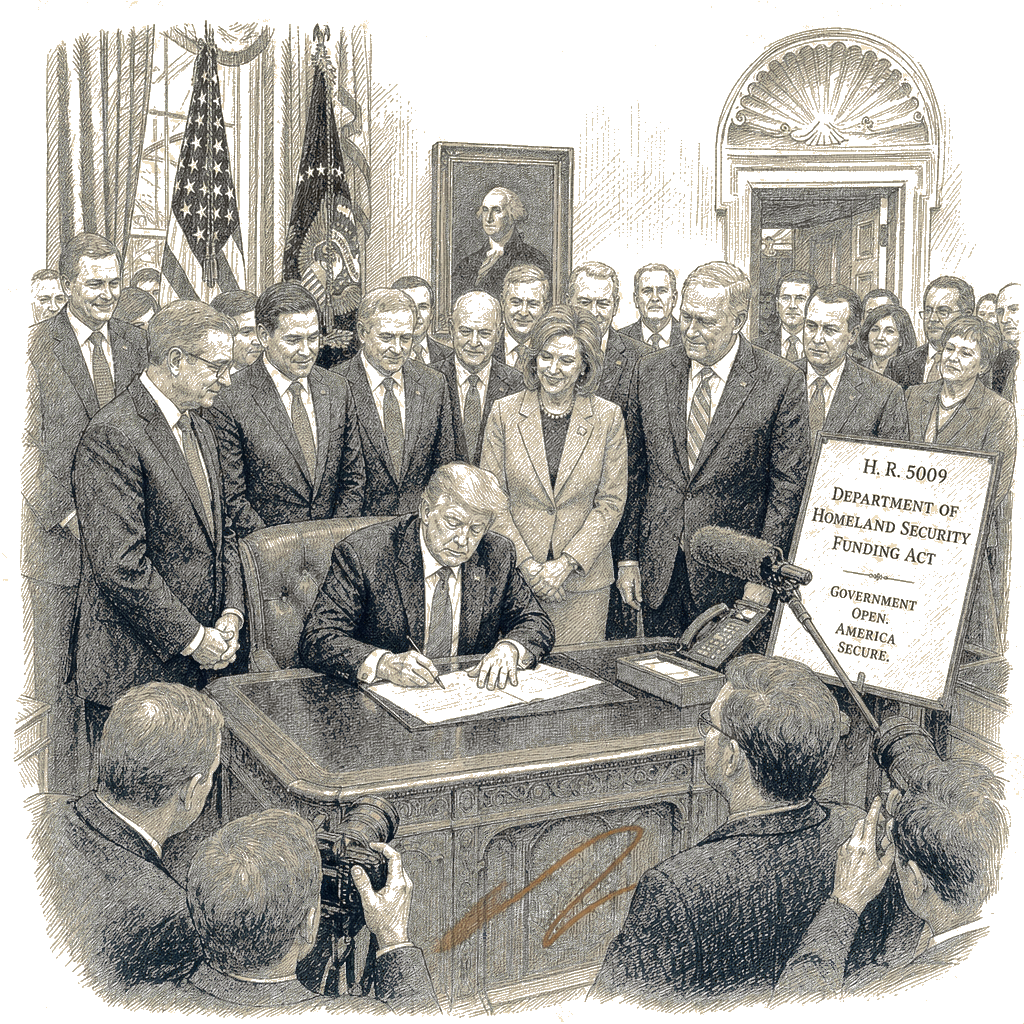
The Associated Press reported that Trump signed the legislation shortly after the House approved it by voice vote, capping a political saga that began when he ordered an immigration enforcement surge in Minneapolis. During that operation, federal agents shot and killed Renee Good and Alex Pretti, both U.S. citizens, prompting Democrats to withhold funding for ICE and Border Patrol unless the departments’ practices were reformed. Republicans, led by House Speaker Mike Johnson of Louisiana, refused to fund the rest of DHS — including TSA, the Coast Guard and FEMA — without the immigration enforcement money, insisting those operations must not be zeroed out.
The resulting shutdown, the longest ever for a single federal agency, stretched 75 days beyond February 14, the date routine funding lapsed. More than 260,000 DHS employees faced repeated turmoil, with potential furloughs and pay lapses. “It is about damn time,” said Rep. Rosa DeLauro of Connecticut, the top Democrat on the House Appropriations Committee, who had proposed the bipartisan fix more than two months earlier.
The Senate unanimously passed the same package in a middle-of-the-night vote a month ago, but it languished in the House after Johnson derided it as a “joke.” The logjam broke when House Republicans adopted a budget resolution late Wednesday that will provide $70 billion for immigration and deportation operations through the remainder of Trump’s term in 2029. Separating the immigration money on its own track — a process known as budget reconciliation — allowed Johnson to advance the broader DHS funding measure without Democratic-backed restrictions on enforcement.
Johnson acknowledged his earlier hostility to the bill but defended the strategy. “We threw a fit,” he said Thursday. “We had to.”
Not all in his party were satisfied. Rep. Chip Roy of Texas said isolating immigration enforcement on a separate path is “offensive to the men and women who serve in ICE and Border Patrol, and are serving this country every single day.”
White House officials had warned that temporary funding Trump had tapped to pay TSA and other workers was running out. Newly installed DHS Secretary Markwayne Mullin, who replaced Kristi Noem during the shutdown, said recently that payroll costs topping $1.6 billion every two weeks were draining available cash. “This shutdown NEVER should have happened,” Mullin wrote on social media Thursday. More than 1,000 TSA officers have quit since the shutdown began, according to Airlines for America, the U.S. airlines trade group.
Everett Kelley, president of the American Federation of Government Employees, said workers are relieved but frustrated. “Federal employees are not political pawns. They are not leverage. They are Americans -– and they deserve to be treated with dignity and respect,” he said.
With the DHS funding secured, lawmakers will now draft the actual $70 billion bill for ICE and Border Patrol, with votes expected in May and a June 1 deadline set by the president. The budget reconciliation process is the same mechanism Republicans used to pass Trump’s tax cuts last year without Democratic support.