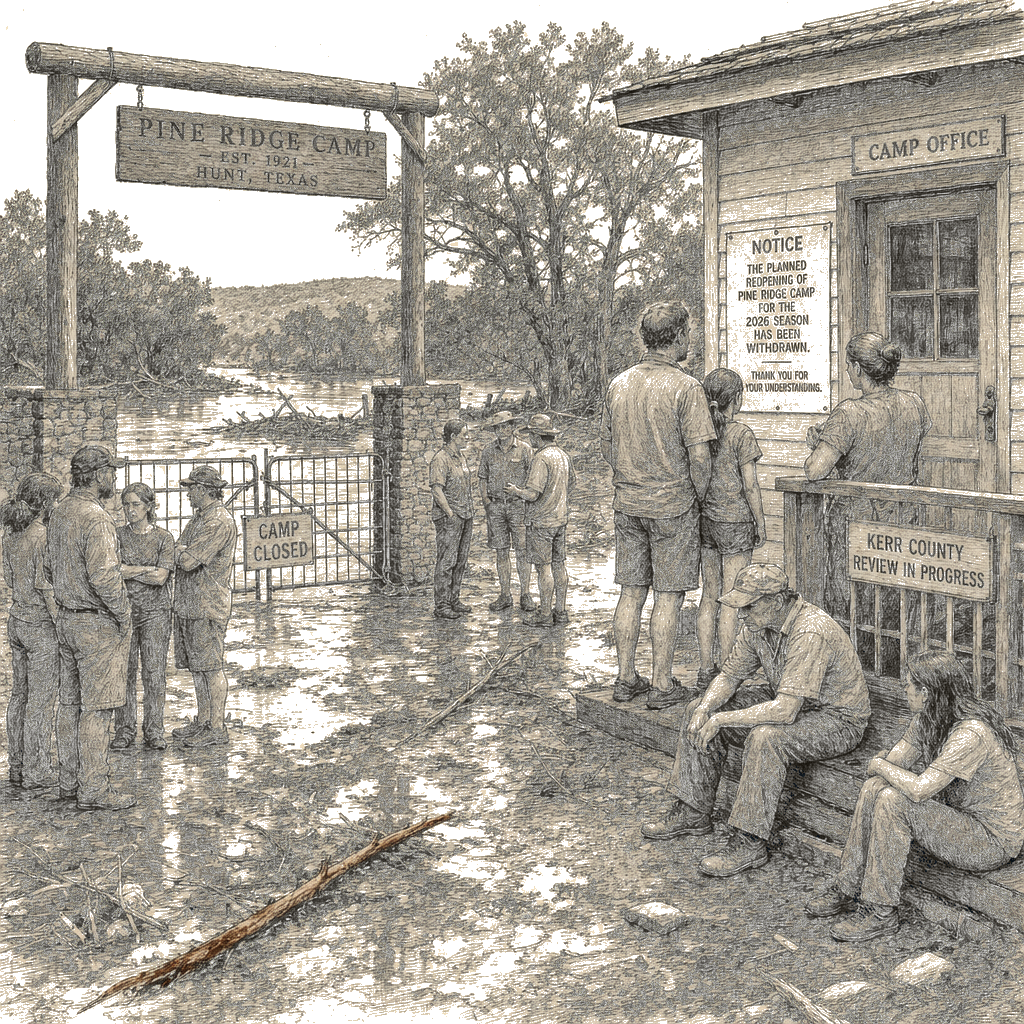
Camp Mystic, the all-girls Christian camp on the Guadalupe River where a July Fourth flood killed 27 people, will not open this summer after all. The Eastland family, which owns the camp, withdrew its application for a 2026 license on Thursday, reversing a defiant push to receive nearly 900 campers by May 30. The announcement came hours after a cascade of criticism from families, state lawmakers and the same regulators who had found “nearly two dozen deficiencies” in the camp’s emergency-operations plan for this year.
“No administrative process or summer season should move forward while families continue to grieve, while investigations continue and while so many Texans still carry the pain of last July’s tragedy,” the camp said in a statement. The decision was confirmed by a spokesperson for the Texas Department of State Health Services.
Lt. Gov. Dan Patrick, a vocal opponent of the reopening, called the withdrawal “the correct decision to protect Texas campers and to allow time for all investigations to be completed.” Gov. Greg Abbott, who had not previously weighed in on the matter, noted in a statement Thursday that the results of ongoing probes by DSHS and the Texas Rangers “will be made public as soon as possible.”
The families of the victims — many wearing “Heaven’s 27” pins bearing photos of their daughters — had packed court and legislative hearings for weeks. There they heard testimony detailing how camp staff missed flood warnings, failed to evacuate and left the girls in their cabins as the Guadalupe surged. Video played in a hearing captured a girl screaming for help in the dark as water roared past. Cici and Will Steward, whose 8‑year‑old daughter Cile remains the only victim still missing, said the hearings proved the camp was unprepared then and unprepared now.
“Let there be no confusion about what happened today,” the Stewards said in a statement. “Camp Mystic did not withdraw its application out of grace. It withdrew because the state of Texas was about to deny it.”
The camp’s owners had appeared determined just days earlier. On Tuesday, camp director Britt Eastland told state lawmakers that the camp would be ready and that the community would ultimately be grateful it had reopened. That remark prompted several grieving parents to walk out. Edward Eastland, another director, offered a tearful apology to the families. “We tried our hardest that night. It wasn’t enough to save your daughters … I’m so sorry,” he said.
Public records show that regulators last week detailed 22 specific problems in the camp’s 2026 emergency plan, among them faulty flood‑warning evacuation steps, inadequate public‑address gear, a lack of staff alert‑monitoring and a failure to train campers on what to do in an emergency. While hundreds of other Texas camps were also found to have gaps under the tougher statewide standards adopted after the flood, the concentration of problems at Mystic drew intense scrutiny in Austin. The Texas Rangers are investigating neglect allegations, and DSHS has fielded hundreds of complaints against the owners. Civil lawsuits have been filed by multiple families.
Matthew Childress, whose 18‑year‑old daughter Chloe was a counselor who died in the flood, said no administrative step could undo what happened. “We never imagined a world without our daughters,” Childress said, “and no decision made now can change that.” The Eastlands’ patriarch, Dick Eastland, also perished in the flood.
The reversal marks an end, for now, to a drama that divided Mystic alumni and the tight‑knit Texas camp community. The camp had invited journalists and legislators to inspect safety improvements, insisted that 850 families had signed up to return, and argued that generations of Texans cherished the place. In the end, the weight of testimony, the live regulatory deficiencies and the raw anger of families forced a retreat that the camp’s own leaders had refused until Thursday.