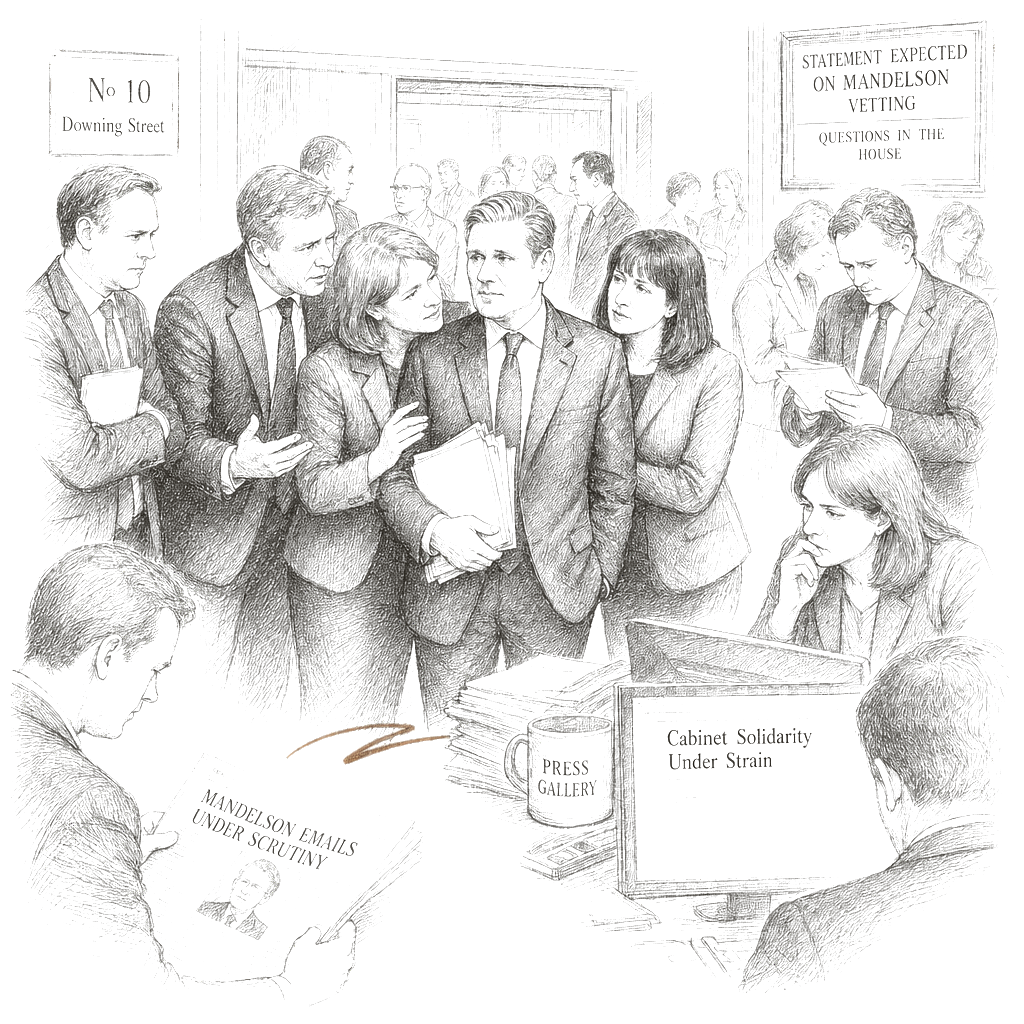
U.K. Prime Minister Keir Starmer’s leadership faced fresh pressure on April 19 after revelations that the Foreign Office appointed Peter Mandelson to the critical position of U.S. ambassador despite intensive security vetting that recommended against the appointment in January 2025. Senior Cabinet ministers moved to support Starmer ahead of a Monday parliamentary confrontation where he is expected to defend his position.
The crisis marks another blow to Starmer, whose government faces deteriorating election prospects and questions about his judgment in top appointments as opposition parties and some Labour lawmakers call for his resignation.
Starmer faced a critical test of his political survival on April 19 as senior Cabinet ministers moved to shore up his support following revelations that the Foreign Office had appointed Peter Mandelson as U.S. ambassador despite security vetting that recommended against the appointment.
The prime minister told colleagues he was “furious” that he had not been informed when the appointment was made in January 2025 that an intensive vetting process had recommended Mandelson not receive security clearance. The Foreign Office cleared Mandelson for the post anyway, without alerting Starmer to the failed vetting.
Deputy Prime Minister David Lammy said that had Starmer known of the vetting failure, “he would never, ever have appointed him ambassador.” Technology Secretary Liz Kendall told Sky News on Sunday that Starmer “is a man of integrity and there is no way he would have proceeded” with the appointment had he been informed.
The Vetting Breach
Olly Robbins, the top civil servant in the Foreign Office, was forced to resign on Thursday following the revelations. Robbins is expected to testify before the House of Commons Foreign Affairs Committee on Tuesday, offering his account of how the vetting recommendation reached the Foreign Office but not Starmer’s office.
Simon McDonald, who held Robbins’s post until 2020, said on the BBC that Robbins had been “thrown under the bus.” McDonald argued that vetting information was highly sensitive and “would never be shared” with the prime minister or his staff, suggesting Robbins was not at fault for the information gap.
Opposition Pressure
All main opposition parties called on Starmer to resign. Conservative Party leader Kemi Badenoch said the prime minister’s position was “untenable.” Liberal Democrat leader Ed Davey stated that the government was “in perpetual crisis, and I don’t think they can get out of that unless Keir Starmer moves aside.”
Yet one fact shields Starmer: his Labour Party holds a large parliamentary majority, meaning only his own lawmakers can remove him. Some Labour members expressed concern that removing Starmer during a period of global instability—with ongoing wars in Ukraine and the Middle East—would damage the party. Others argued that changing leaders three years before a national election could prove destructive.
Mandelson’s Collapse
Mandelson’s tenure in the ambassador role lasted less than nine months. Starmer fired him in September 2025 after evidence emerged that he had misrepresented the extent of his links to Epstein, the deceased financier.
In January 2026, the U.S. Department of Justice released millions of pages of documents related to Epstein. Those documents showed that Mandelson’s relationship with Epstein had continued after Epstein’s 2008 conviction for sexual offenses involving a minor. Emails suggested that Mandelson had passed sensitive, and potentially market-moving, government information to Epstein in 2009 following the global financial crisis.
British police launched a criminal investigation and arrested Mandelson on February 23 on suspicion of misconduct in public office. He has been released without bail conditions as the investigation continues. Mandelson has not been charged and has previously denied any wrongdoing. He does not face allegations of sexual misconduct.
Broader Political Context
The Mandelson appointment represents one of several serious missteps for Starmer since he led Labour to a landslide election victory in July 2024. The government has struggled to deliver promised economic growth, repair deteriorating public services, and ease costs of living pressures. Starmer has been forced into repeated policy reversals.
The government faces potential leadership turbulence after local and regional elections scheduled for May 7, in which Labour is expected to perform poorly. While some Labour members consider a leadership change at this moment inadvisable given international instability, others expressed frustration with what they view as a pattern of poor judgment by the prime minister.
This work is released under Creative Commons Zero (CC0) — it is free for reuse, modification, and republication by any outlet.