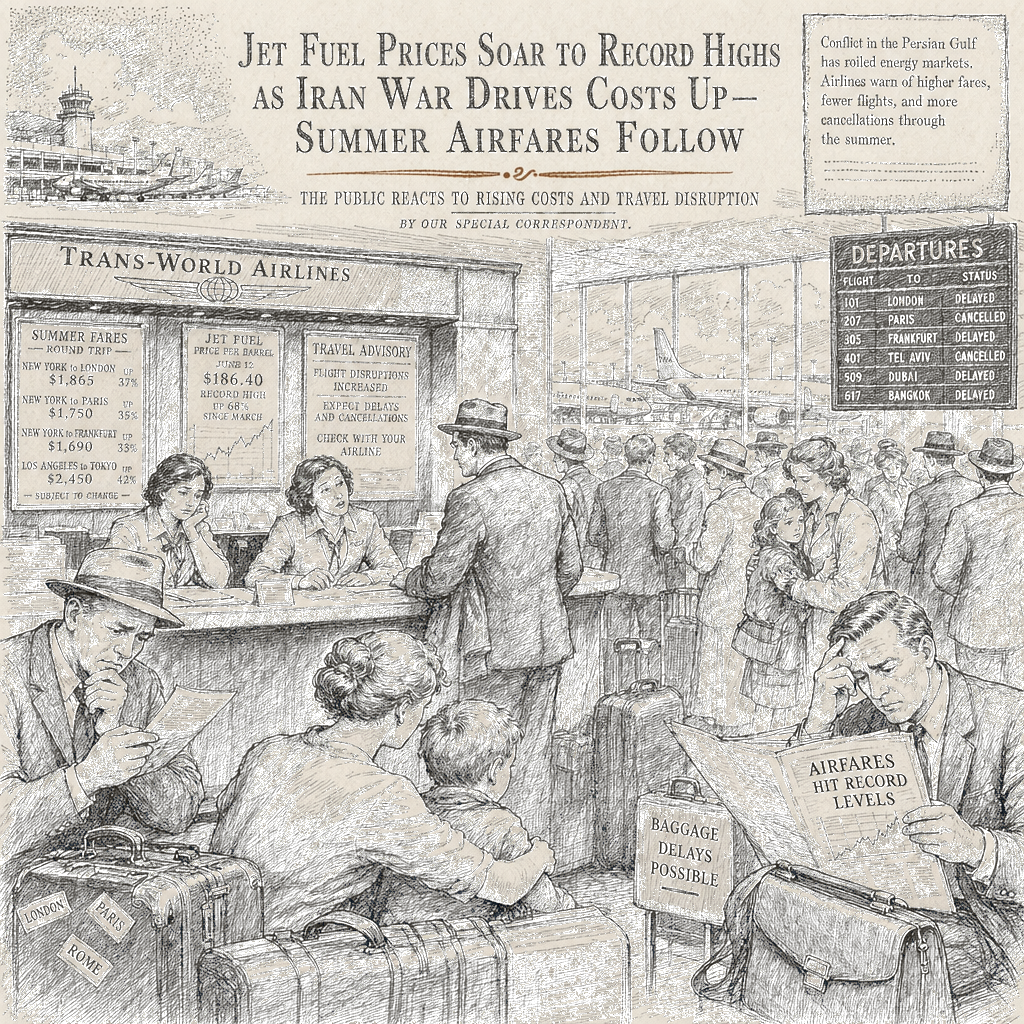
As the U.S. and Israel’s war with Iran squeezes global oil supplies, travelers planning summer vacations face escalating costs: jet fuel prices have soared from roughly $99 a barrel in late February to as high as $209 in early April, forcing airlines to raise fares and add fuel surcharges. The International Energy Agency warned that European countries could run low on jet fuel within weeks, prompting carriers including Air Canada, United, Delta, and Air France-KLM to reduce routes and raise ticket prices.
While the pricing environment is uncertain, travelers still have strategies to mitigate costs—from booking well in advance to using accumulated airline loyalty points. Industry experts say booking early remains the most reliable path to lower fares.
When jet fuel—a major airline operating cost—nearly doubles in price, ticket fares rise. That is what has happened over the past two months as the U.S. and Israel’s war with Iran disrupts global oil supplies and sends jet fuel prices soaring from roughly $99 per barrel in late February to as high as $209 per barrel in early April.
For travelers planning summer vacations in peak season, the impact is immediate and tangible. Airlines are raising fares and adding fuel surcharges. The International Energy Agency has warned that European countries could run low on jet fuel within weeks, creating pressure on both European carriers and international airlines serving the continent. Air Canada announced Friday it would suspend service to New York’s John F. Kennedy International Airport from June 1 through October 25 to lower costs. United, Delta, Air France-KLM, SAS, Philippine Airlines, and Cathay Pacific have all reduced routes or signaled plans to raise ticket prices if the conflict continues to block oil shipments through the Strait of Hormuz.
“It’s very hard for the airlines to make predictions in this environment, so they’re going to be conservative, and that’s why it’s likely that their prices will remain elevated for some time until things really stabilize,” said Shye Gilad, a former airline captain who now teaches at Georgetown University’s business school.
As the conflict persists, the Strait of Hormuz shows no relief. Iran recently reversed a decision to reopen the waterway, and the Trump administration has stated its intention to maintain a U.S. blockade of Iranian ports. These conditions suggest oil shipments will remain disrupted for months.
Travelers are not without recourse. Several strategies can substantially reduce what you pay for summer flights.
Book Early—But Carefully
Waiting for the conflict to end before booking is risky. The longer the war persists, the higher prices are likely to remain, making strategic early booking essential.
“My advice to travelers is this: If you find a flight whose schedule fits yours, with a fare you can afford, and on an airline you can at least tolerate, book it,” said Henry Harteveldt, president of Atmosphere Research Group, an airline industry research firm. “But—and I cannot emphasize this enough—do not book a Basic Economy fare.”
The distinction matters. Most North American airlines do not offer refunds or travel credits to Basic Economy passengers who cancel more than 24 hours after purchase. Standard Economy tickets, which cost more upfront, typically provide flexibility and the option to rebook if prices drop significantly.
Harteveldt recommends paying more upfront for a refundable ticket. “If the prices start to dramatically change, you can cancel and rebook for the better price,” said Gilad.
Traditional booking timelines remain a guide: international flights are typically cheapest two to five months in advance, and domestic flights three to six weeks out. The farther in advance you book, the better your chances of avoiding premium pricing that tightens as travel dates approach.
Shift Dates and Destinations
Travelers with flexibility can save substantially by shifting departure or return dates by a day or two, especially moving from peak weekends and holidays to midweek travel. The price difference between a Friday departure and a Tuesday departure can be significant.
Choosing a different destination can also pay off. Flights from the United States may be substantially cheaper to one European city than another. Since trains connect much of Europe and budget airlines link regional airports, arriving at a less expensive destination does not necessarily limit access to one’s actual intended location.
Tools like Skyscanner’s “Explore Everywhere” feature allow consumers to identify lower-cost destination alternatives. Choosing to depart from a major hub instead of a smaller regional airport can unlock cheaper long-haul fares—booking separately to a hub may save enough on the main flight to cover the connector cost.
Pack Light and Use Loyalty Points
Checked luggage now carries additional cost. Delta, American, United, Southwest, and JetBlue have recently introduced or increased checked baggage fees. Sticking to a carry-on bag when possible avoids this expense entirely. For those who must check bags, planning ahead to add luggage further from departure saves money; airlines charge more to add bags within 24 hours of a flight.
For frequent travelers with accumulated airline loyalty points, the current pricing environment presents an unexpected advantage. The number of points required for many flights has not increased at the same pace as fares, said Adam Morvitz, CEO of points.me, a loyalty rewards platform.
“Airlines still need to fill seats, and offering more of them for fewer points is one way to do it,” Morvitz said. Travelers can use accumulated points to cover one leg of a journey and preserve cash for other costs. Transferring credit card points to airline loyalty programs often provides better value than redemption through credit card portals, where points typically convert at about one cent each.
Travel credit cards offer another option. Sign-up bonuses are often large enough to cover a flight after meeting minimum spending requirements. Even consumers traveling monthly could accumulate more points from a single sign-up bonus than from a year of actual flying.
Until global oil supplies stabilize and airlines regain pricing confidence, the current environment will favor those who act strategically and early. The closer to summer travel season, the fewer bargains remain.