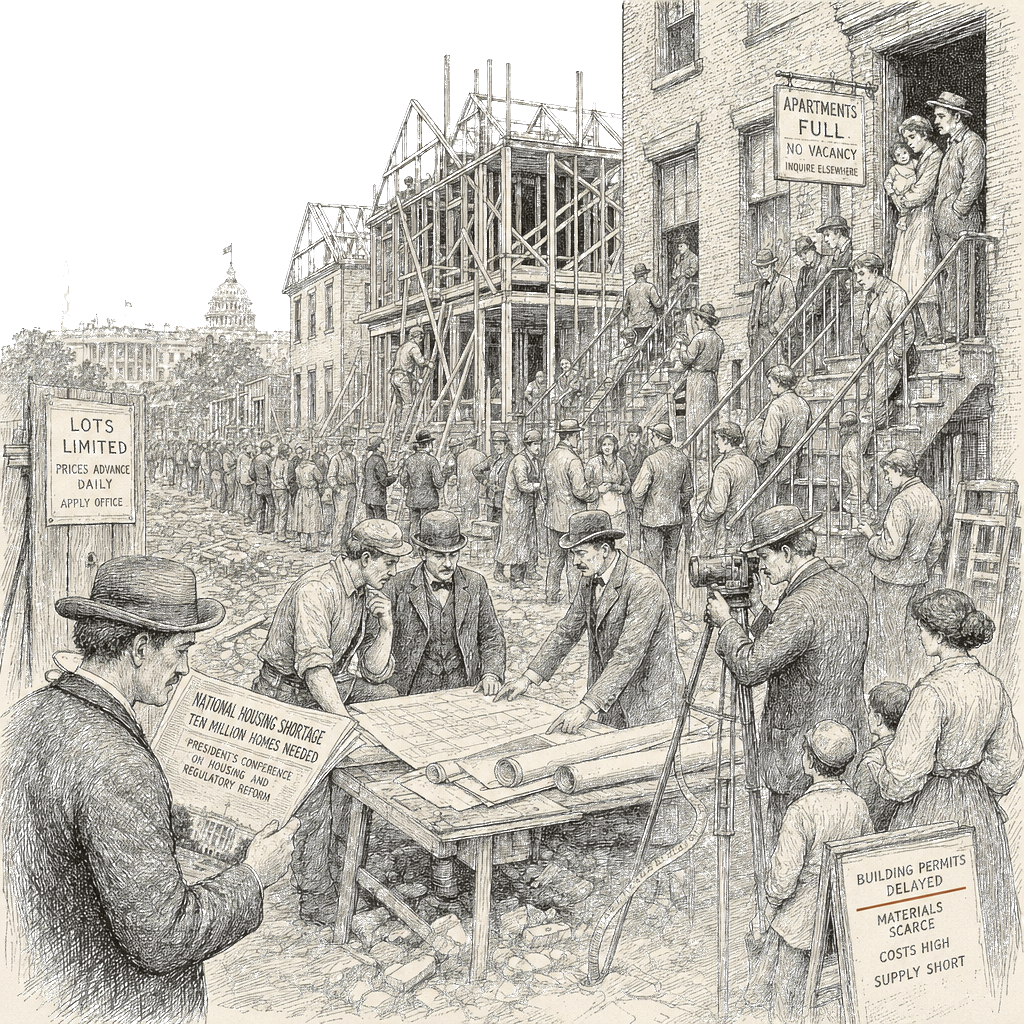
The White House’s Economic Report of the President, released Monday, estimates the United States is short about 10 million homes and argues that policy changes could help increase construction, stabilize prices and boost economic growth. The housing analysis, prepared by staff at the White House Council of Economic Advisers, also frames housing affordability as a political issue for President Donald Trump ahead of a likely challenging midterm season for Republicans.
According to the report, there would be about 10 million more houses if homebuilding and the growth of the single-family housing stock had continued at their historical pace instead of falling dramatically after the 2008 global financial crisis. It ties that downturn to the wave of defaults and problematic lending practices that helped cause the crisis, and it argues the housing shortage has persisted even as the broader economy changed.
The report describes a mismatch between rising home prices and slower growth in incomes. It says home prices have risen 82% since 2000 while incomes have risen 12%, and it argues that historically low mortgage rates helped mask the affordability problem before mortgage rates rose. The report points to the period after the pandemic as when higher mortgage rates increased monthly housing costs for buyers.
Housing costs have also become harder for borrowers as mortgage rates moved up, and the report points to higher borrowing costs tied to the Iran war. In the AP report, the 30-year mortgage rate range it cites is consistent with the FRED vintage value of 6.37% for the 30-year fixed mortgage rate as of April 13, 2026. The White House’s focus on housing affordability comes as Trump’s public approval has slipped amid voter concerns about tariffs, the Iran war and unfulfilled promises on inflation and growth, according to the AP report.
Trump signed two executive orders in March directing federal agencies to reduce housing regulatory burdens and make it easier for smaller banks to provide mortgages, the Associated Press reported. The report says the White House has been trying to emphasize housing and other affordability issues for months, but it says that effort has been repeatedly disrupted by other global and political events.
The Economic Report’s housing chapter lays out what it portrays as a blueprint for how more home construction would help the middle class and the overall economy. It argues that regulatory requirements related to construction—including changes to building codes over the past decade, compliance costs and zoning approval fees—amount to what it calls “the bureaucrat tax,” adding more than $100,000 in costs to building. It also estimates that a reduction in those regulatory costs could help spur construction of as many as 13.2 million homes, adding an average 1.3 percentage points to annual economic growth over the next decade and supporting 2 million manufacturing and construction jobs.
The report also takes aim at green energy housing standards introduced during the Biden administration, arguing those standards have contributed to higher construction costs. It says the standards provided preferences for more efficient air conditioning units and water heaters and required higher standards for related duct work. The report warns that rolling back some of those requirements could increase other homeowner costs over the long run, including utility bills.
The analysis, according to the AP report, relies on a 2021 analysis by the National Association of Home Builders that estimated the standards could add up to $31,000 to the price of a new home. It also says the analysis estimated it could take as many as 90 years for a buyer to recoup costs associated with the added home price. The report, as described by AP, said it is not clear how much savings would occur from rolling back Biden-era housing standards because of legal challenges and differences in how states apply requirements.
As part of the legal context, the AP report said that in March a federal judge in Texas agreed with 15 states led by Republicans that said the standards for federally backed housing were unlawful. The AP report also said an administration official, who requested anonymity to discuss the report before release, said the Trump administration could decide to make federal funding to state and local governments contingent on reducing some of the regulations.
The White House maintains, the AP report said, that steps already taken—such as the March executive orders and plans to purchase mortgage-backed securities—show Trump is focusing on housing issues. The same AP report also included Trump’s earlier remarks to his Cabinet, including his statement: “I don’t want to drive housing prices down,” and “I want to drive housing prices up for people that own their homes, and they can be assured that’s what’s going to happen.”