Body
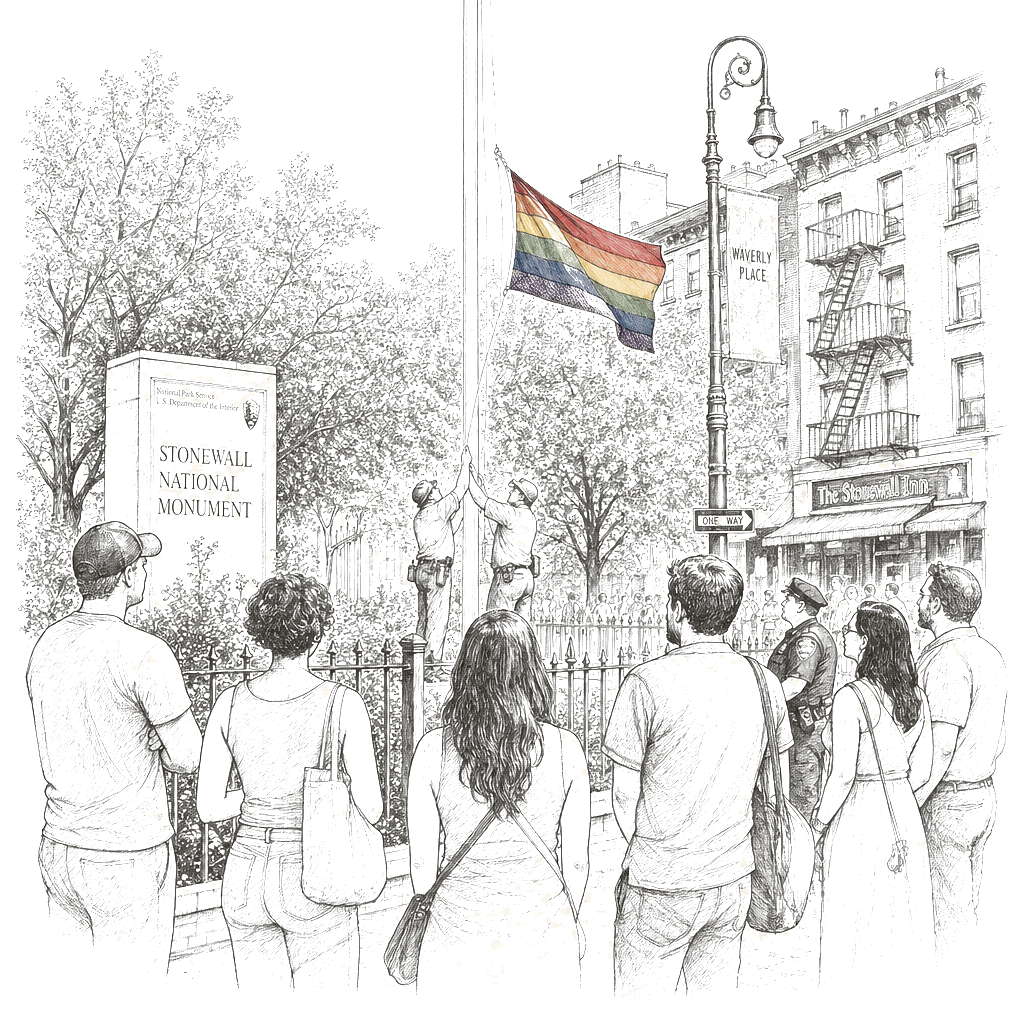
The Trump administration said Monday it would resume flying a rainbow Pride flag on a federal flagpole at the Stonewall National Monument in New York City, overturning a February decision to remove the banner from the first national monument commemorating LGBTQ+ history. The government reached the arrangement as part of a lawsuit settlement that targeted the Feb. 9 removal, according to court papers submitted by lawyers for the government and the advocacy and historic preservation groups.
The agreement was approved by a judge, and the filing said the Interior Department and National Park Service have confirmed their intention to maintain a Pride flag at Stonewall. Under the terms described in the joint filing, the flag will not be removed except for “maintenance or other practical purposes.”
As part of the restoration, the park service is expected to hang three flags on its flagpole within a week, placing the rainbow Pride flag in a specific order. The Pride flag will be positioned below the U.S. flag in accordance with U.S. flag code, and above the park service flag; each flag is listed as measuring 3 feet by 5 feet.
The Stonewall National Monument spans 7.7 acres (3.1 hectares) and sits across the street from the Stonewall Inn, the gay bar where a 1969 police raid sparked an uprising and helped catalyze the modern LGBTQ+ rights movement. The site also features a large Pride flag on a city-controlled flagpole and smaller flags on a fence surrounding the monument, and those flags were not removed during the February change.
The case became a flashpoint for disputes over how President Donald Trump’s administration approached Stonewall and other historical properties. After the flag was removed in February, the park service said it was complying with federal guidance for flag displays, including a Jan. 21 memo that largely restricted the agency to flying U.S., Interior Department and POW/MIA flags, while allowing exemptions that include providing “historical context.”
Park service officials had said the monument “remains committed to preserving and interpreting the history and significance of this site” through exhibits and programs, but LGBTQ+ activists viewed the removal as a targeted effort to diminish a site that is central to their fight for visibility and rights. Activists Michael Petrelis and Steven Love Menendez, who had fought to have the park service fly the Pride flag, said Monday’s agreement pleased them, while also criticizing what they said was missing from the restored display.
In their comments, Petrelis and Menendez said they were dismayed that other symbols—such as the more inclusive Progress Pride flag—were left out of the renewed flagpole display. Menendez said in remarks provided in the report that they looked forward to a time when LGBTQ+ flags could return to the display’s original intent, but that “at least we have the original rainbow flag flying to serve as a beacon of light.”
Manhattan Borough President Brad Hoylman-Sigal, a Democrat who helped organize a protest Pride flag raising after the banner was removed, wrote on X that “We fought the Trump administration and won.” Mayor Zohran Mamdani, also a Democrat, called the administration’s reversal “a victory for the LGBTQ+ community and for our entire city” and said it was a reminder that New Yorkers would not allow local history to be rewritten.
The lawsuit also included the Gilbert Baker Foundation, which honors the creator of the Pride flag who died in 2017. Charley Beal, the foundation president, said Stonewall is “sacred ground in the fight for LGBTQ+ liberation,” adding that the resolution helps ensure the “Rainbow Flag will continue to fly there, where it belongs.”
Democratic President Barack Obama created the Stonewall monument in 2016. The Pride flag was formally installed in 2022 during President Joe Biden’s tenure, when park service officials described it as a sign of the government’s commitment to “telling the complex and diverse histories of all Americans.” After Trump returned to office last year, the administration sought to narrow diversity, equity and inclusion-related materials tied to the monument, and the report said references to transgender people were excised from the monument’s website and materials.