Body
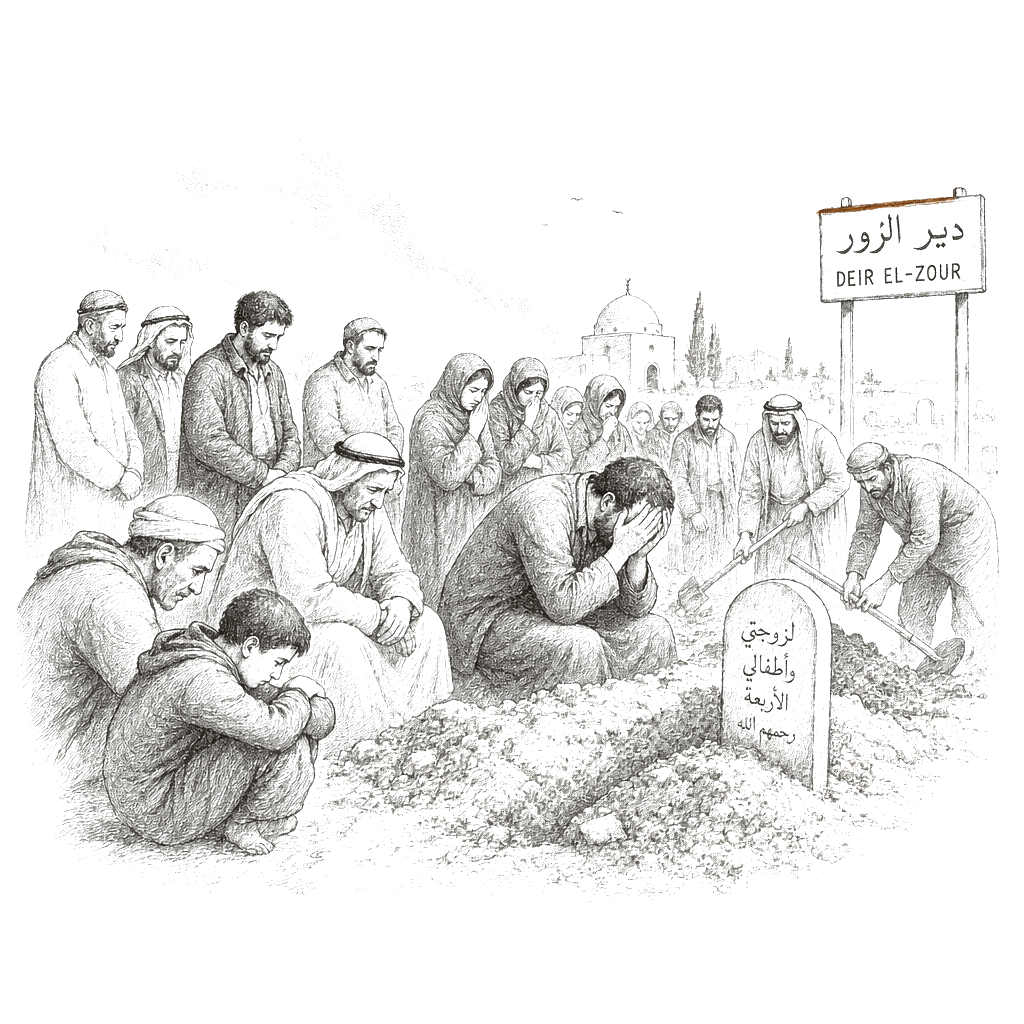
A Syrian man on Saturday buried his wife and four of his five children killed in Israeli strikes on Beirut, an Associated Press report said, with the family’s remains transported from Lebanon to Deir el-Zour in northeastern Syria. The AP said the bodies arrived in wooden coffins on a bus and that mourners stood and cried beside the vehicle before a burial procession in al-Sour town. One daughter remained missing after the search operations ended, the report said.
The father, Hamad al-Jalib, survived because he was away fetching a gas canister while working as the building’s concierge, the AP reported. He said he rushed back after learning that a strike had hit the Ain Mreisseh neighborhood where he lived. The AP reported that he saw smoke rising from a building behind a mosque across from Beirut’s seaside promenade, an area usually crowded with people.
Hamad al-Jalib told the AP, “The Israeli attack killed my girls, they are innocent, just sitting at home,” adding, “They were having lunch.” The report said rescue teams took three days to extract his family from under rubble, and that he still had one daughter missing, naming her as Fatima Hamad al-Jalib, 10. The AP said his other daughter was 12, and his sons were 17, 14 and 13.
The AP reported that one of his remaining daughters’ bodies did not arrive with the others because she was still missing as searches concluded. It also said three other Syrian relatives were killed in the Ain Mreisseh strike and were buried later in al-Shuhail in Deir el-Zour after the family split when they returned to Syria. Following the burial in al-Sour, men stood shoulder to shoulder in prayer over the fresh graves, the AP reported.
The report said the strikes that hit Beirut earlier this week were among roughly 100 carried out by Israel on Wednesday without warning, targeting what the Israeli military said were Hezbollah-linked sites across Beirut and other parts of Lebanon. The AP reported that more than 350 people were killed on that day, a third of them women and children, which it described as the deadliest day in nearly six weeks of war.
The Associated Press reported that many strikes hit commercial streets and densely populated neighborhoods in central Beirut, far from conflict zones, where repeated Israeli evacuation warnings had been issued since March 2. It said the warnings came after Hezbollah fired missiles into Israel in retaliation for U.S.-Israeli attacks on Iran.
On the scale of the war, the AP reported that Lebanon’s Health Ministry put the death toll over a month at more than 1,950 killed and more than 6,300 wounded, including at least 315 Syrians killed and wounded. The AP said it remained unclear how many of those killed on Wednesday were non-Lebanese because the ministry did not provide a nationality breakdown, and that officials had reported at least 39 Syrians among the dead.
The AP also cited the UN refugee agency’s spokesperson, Dalal Harb, who said the family killed in Ain Mreisseh was not registered with UNHCR. The report said about 530,000 Syrians refugees are registered with UNHCR in Lebanon, with hundreds of thousands more believed to be unregistered, and that while hundreds of thousands have returned to Syria since former President Bashar Assad’s ouster in December 2024, many others remain reluctant to go back because of a lack of jobs and ongoing violence.
Hamad al-Jalib told the AP that his family had fled Syria to Lebanon six years ago and that they had moved there in 2020 amid growing tensions in their area, including tribal conflicts and fighting involving the Kurdish-led Syrian Democratic Forces. The AP said his brother, Jomaa, was about 150 meters away at work when the first blast hit and that he and others ran as a second strike followed, with ambulances later recovering bodies identified at a hospital. Abby Sewell in Beirut contributed to the report, the AP said.