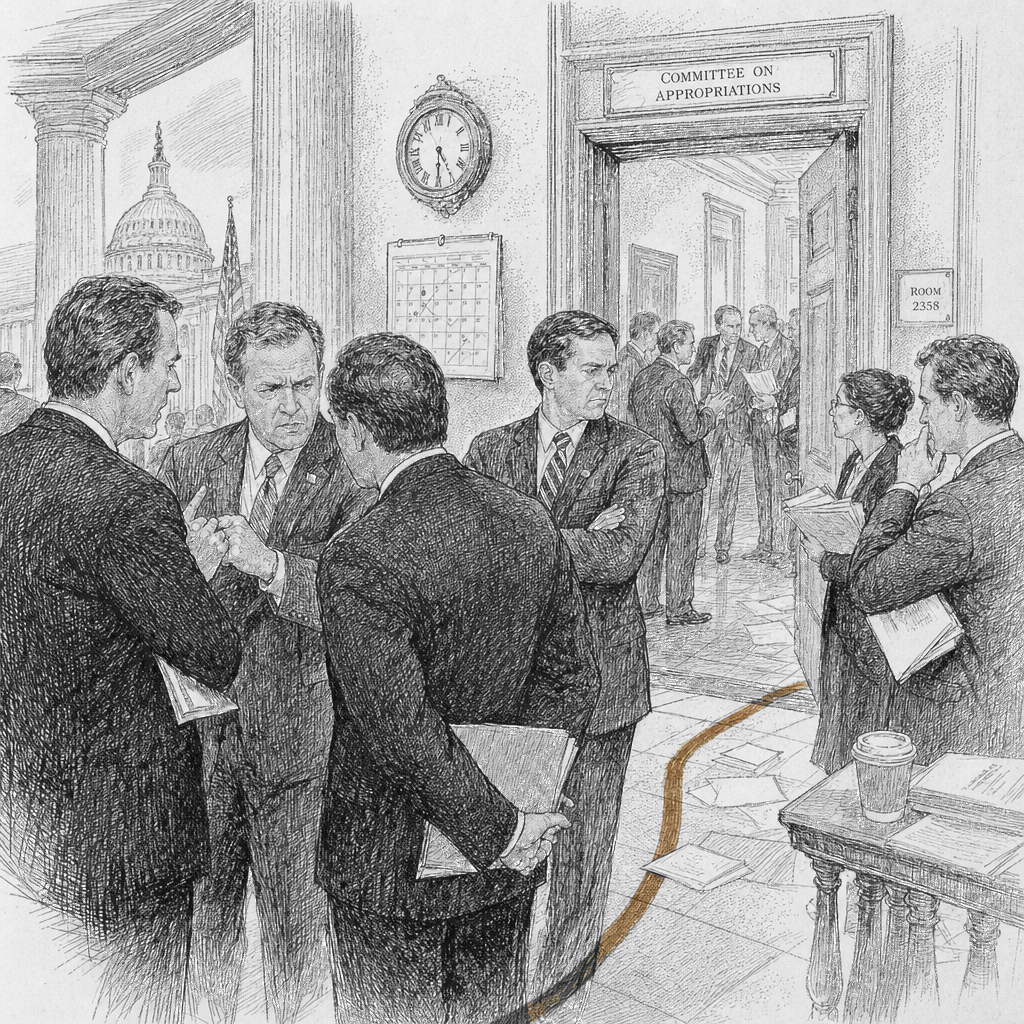
After a partial Homeland Security shutdown has been in effect since mid-February, Senate Republicans appeared to have reached a pathway to reopening much of the department Friday—only to watch the agreement break down hours later and leave Congress without an exit as leaders head for a scheduled two-week spring break.
The episode sharpened a rare public rupture between House Speaker Mike Johnson and Senate Majority Leader John Thune, both top Republican negotiators. Johnson emerged from his office Friday afternoon after the deal fell apart, rebuking it as a “joke” and saying, “I have to protect the House, and I have to protect the American people,” according to the report by the Associated Press.
The collapse left lawmakers with no immediate, clear next step for ending the shutdown and reopened questions about whether the two GOP leaders could coordinate as they try to move other President Donald Trump priorities into law before the November elections. The shutdown has also become a new political line for Democrats, who said House Republicans were driving the latest failure.
The funding talks had moved in fits and starts for weeks, with Thune negotiating with Democratic senators on their demands for new restrictions on the department’s immigration enforcement work. Offers were exchanged multiple times and votes failed repeatedly before the agreement advanced late in the process, according to the AP account.
The deal that eventually emerged reflected a shift tied to another development involving the Trump administration and the Transportation Security Administration. The AP report said that after Trump indicated Thursday he would sign an executive action to pay TSA workers, Thune and Democratic leader Chuck Schumer reached an agreement that would not include funding for U.S. Immigration and Customs Enforcement and U.S. Border Patrol, while also setting aside Democratic demands for new limits on those agencies.
Thune told reporters early Friday that he believed the compromise would allow “a lot of the government opened up again and then we’ll go from there,” and he said he and Johnson had texted about it. But as House Republicans woke up to the news, their opposition surfaced quickly, with lawmakers ranging from moderates to hard-line conservatives questioning the Senate plan.
Rep. Nick LaLota described a GOP conference call to discuss the path forward, saying members spoke against the Senate proposal. LaLota characterized it as a failure of courage by the Senate, saying “The Senate chickened out,” and adding that “We need to raise the bar,” in remarks reported by AP.
With negotiations ending acrimoniously on both sides, the disagreement carried into what Republicans said they would do next. It also reinforced Democrats’ argument that the House would not accept a Senate-led approach, with Massachusetts Rep. Katherine Clark saying, “They know this is a continuation of the shutdown because the Senate is gone,” and that “So they know fully well what they’re doing.”
Senate Majority Leader Thune said he believed Democrats never intended to reach agreement and would not vote for ICE funding under any circumstances. “I felt like from the beginning, they just didn’t want to get to ‘yes,’” he said after the vote, according to AP, while Senate Democratic leaders said the caucus was prepared to hold their ground.
Sen. Susan Collins of Maine, who leads the Senate Appropriations Committee, said Democrats were “intransigent and unreasonable.” She added that the stalled compromise reflected the limits of the talks rather than a workable opening that failed to survive House scrutiny.
Republican leaders also suggested the bigger policy calendar would be hard to pursue without a functioning appropriations pathway. Trump has said legislation to impose strict new proof of citizenship requirements on voting is his top priority, but the AP report said there was no clear route for that plan in the Senate under the 60-vote threshold needed to advance legislation.
Some Republicans have looked instead toward assembling a broader budget package that could potentially put parts of a voter ID effort into place. They are also contemplating an expected White House request to fund the war with Iran that could total more than $200 billion, among other priorities, as the shutdown fight continues to consume attention and negotiating bandwidth.
For lawmakers trying to find an exit from the shutdown, Friday’s breakdown offered little immediate optimism. “This takes two chambers to get the job done,” said Rep. Brian Fitzpatrick, a moderate Republican, adding, “Apparently, there’s not enough communication between those chambers,” according to the AP account.
Meanwhile, some House Republicans celebrated defying the Senate’s approach. Rep. Virginia Foxx, R-N.C., said the Senate’s proposal amounted to what she described as surrender, calling it “nothing more than unconditional surrender masquerading as a solution,” and she said the House “will not bend itself into submission by acquiescing,” as reported by AP.