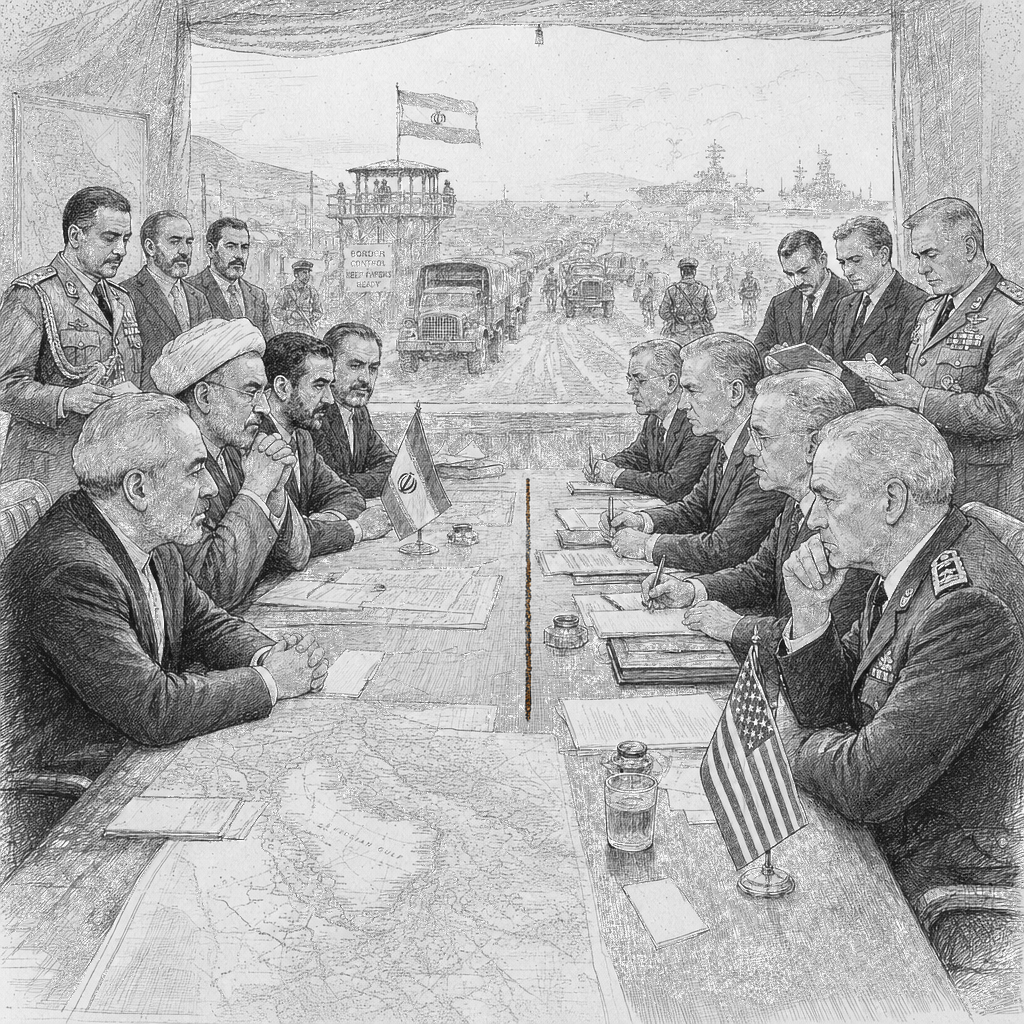
Iran and the United States appeared to be at an impasse Thursday over efforts to end a nearly month-old war, with both sides hardening their public positions as Israel and Iran exchanged strikes across the region and U.S. troops moved closer to the Middle East.
At the center of the diplomacy was the Strait of Hormuz, a key shipping lane that the two countries have tied to their leverage in the conflict. President Donald Trump extended his deadline for Iran to reopen the strait to April 6, and Tehran tightened its grip on the waterway, with Gulf nations working to intercept attacks. The same day, Sirens over Israel warned of barrages of incoming Iranian missiles, and heavy strikes were reported in Iran’s capital and other cities.
While the military pressure increased, Washington also pushed for a deal through intermediaries. Trump envoy Steve Witkoff confirmed Thursday that the United States had delivered a 15-point “action list” to Iran through Pakistan, describing it as a framework for a possible peace deal. Witkoff also said there were “strong signs” the U.S. could “convince Iran that this is the inflection point, with no good alternatives for them other than more death and destruction.”
Iran’s leadership signaled, however, that the two sides were not genuinely in negotiations. Foreign Minister Abbas Araghchi said in an interview on state television that Iran has not engaged in talks to end the war and does not plan to, adding that U.S. messages relayed through other nations were “not a conversation nor a negotiation.” In parallel, Iran’s state broadcaster Press TV said Iran had its own five-point proposal that included reparations and recognition of Iran’s sovereignty over the Strait of Hormuz.
Diplomacy continued through regional intermediaries even as each side pressed its own demands. Egypt’s foreign minister, Badr Abdelatty, said Thursday that Egypt sees a desire from both sides “for calm, for the exploration of negotiations.” At the same time, Trump said in a cabinet meeting that Iran should “get serious” on negotiations before it was “too late,” and the White House extended its Hormuz deadline, a move that pulled back from an earlier threat tied to Iran’s energy plants.
The dispute over Hormuz carried immediate economic and security implications. The report said Iran had been blocking ships from the strait that it viewed as linked to the U.S. and Israel’s war effort while allowing some others through, and Trump said during a cabinet meeting that Iran was allowing some oil tankers through as a sign of good faith for talks. Jasem Mohamed al-Budaiwi, secretary-general of the Gulf Cooperation Council, said Iran was charging for safe passage. Lloyd’s List Intelligence characterized the practice as a “de facto ‘toll booth’ regime,” noting that at least two vessels had paid in yuan, and it said Brent crude had risen more than 40% since the war started.
On the battlefield, Israel expanded its operations in southern Lebanon while Iranian missile strikes hit Israel and Gulf neighbors. Israel said it deployed the 162nd Division into southern Lebanon, joining thousands of troops already moved there since the war erupted, describing the open-ended invasion as aimed at protecting northern border towns from Hezbollah attacks and uprooting the militant group from the area. Sirens and missile alerts were reported as Israel faced repeated barrages from Iran, while witnesses told The Associated Press that power was out in some areas of Iran’s capital, Tehran.
Israel also said it carried out a wave of attacks targeting Iranian infrastructure early Thursday, with heavy strikes reported around Isfahan, home to a major Iranian air base and other military sites, as well as one of Iran’s nuclear sites. Israel said it killed Commodore Alireza Tangsiri, the head of the Iranian Revolutionary Guard’s navy, and Behnam Rezaei, the naval intelligence chief; Israeli Defense Minister Israel Katz said Tangsiri was responsible for bombing operations that had blocked ships from crossing the Strait of Hormuz, while Iran did not immediately acknowledge the killings.
As the diplomatic effort played out, U.S. forces moved toward the region. The report said ships including the USS Tripoli drew closer with some 2,500 Marines, and that at least 1,000 paratroopers from the 82nd Airborne were ordered to the region, trained to land in hostile territory to secure key territory and airfields.
Casualties and the scale of the conflict continued to mount across multiple fronts. The report said Deputy Health Minister Ali Jafarian told Al Jazeera that more than 1,900 people have been killed in Iran, while it cited numbers for deaths in Israel, Lebanon, Iraq, and other areas reached through the fighting. An update at the end of the report said it corrected the death toll in Israel and that a Trump envoy said there were “strong signs” Iran could be persuaded it had no option but a deal.