Body
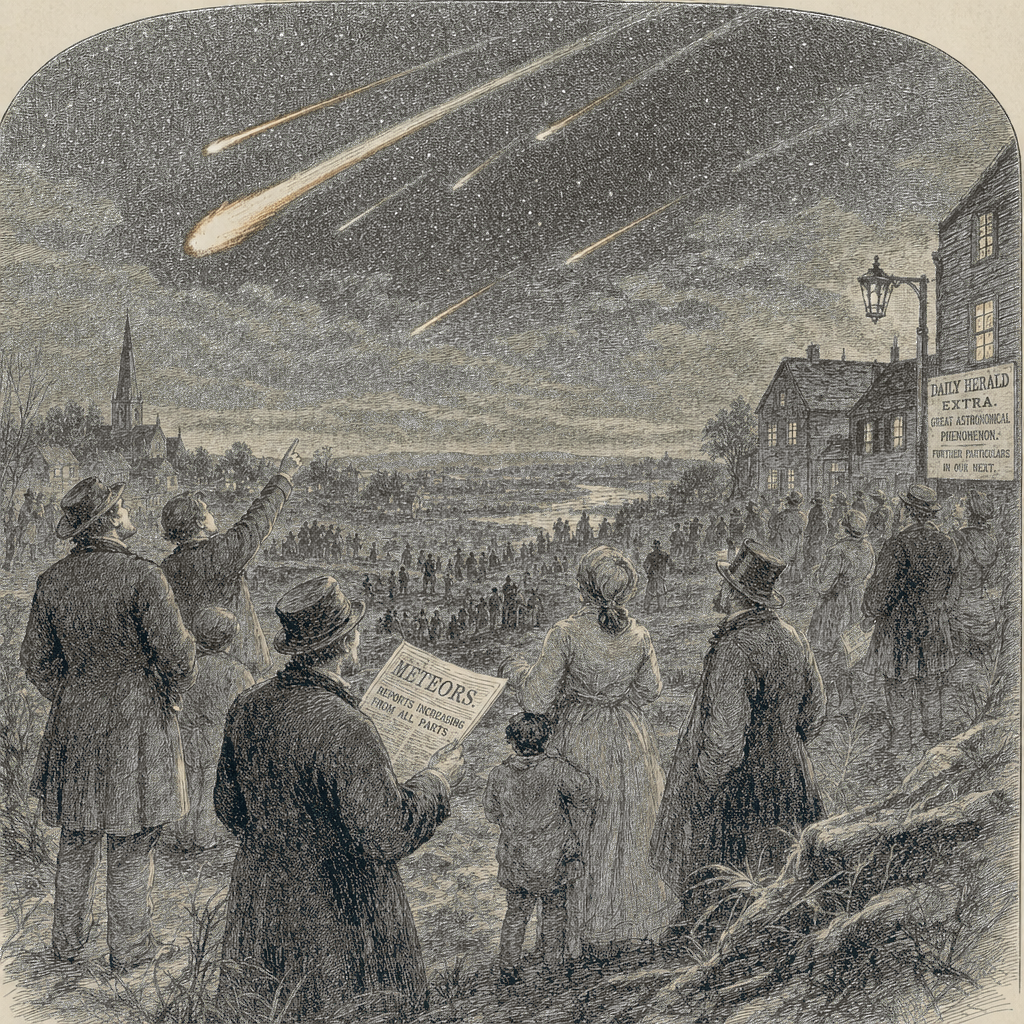
A fireball streaked across the sky near Cleveland and was seen from Wisconsin to Maryland this week, according to the American Meteor Society. The same week’s reports are part of what astronomers say is a steady stream of bright meteors — space rocks that light up as they plunge into Earth’s atmosphere.
The American Meteor Society said the event was caused by what was thought to be a space rock nearly 6 feet (1.8 meters) across and weighing 7 tons. NASA said the object traveled more than 34 miles (55 kilometers) through Earth’s upper atmosphere before breaking apart.
In most cases, the drama fades before anything reaches the ground. Meteoroids and other small bodies move through empty space at extremely high speeds, then experience intense heating and stress as they hit the gases blanketing Earth, which can cause them to melt and break up.
The sight people call a meteor depends on what part of the process is visible. An asteroid is a chunk of rock, ice or metal left over from the solar system’s formation about 4.6 billion years ago, a meteoroid is a fragment of an asteroid or comet, and a meteor is the light emitted as the meteoroid or asteroid burns up in the atmosphere. A meteor bright enough to outshine Venus in the morning or evening sky is called a fireball, and if fragments make it to land they are called meteorites.
Meteor-related flashes are common, and they can sometimes be seen in regular patterns during meteor showers. The Perseids meteor shower, which happens in mid-August each year, is considered the best by NASA, and flashes of light from meteoroids can appear every few minutes on clear nights.
Fireballs, while less frequent than ordinary meteors, still happen often. The American Meteor Society said “several thousand” meteors that would qualify as fireballs occur in Earth’s atmosphere every day, but most happen over oceans or other places where people do not live, or when the sun is too bright to notice them.
Even so, people still capture plenty of events. The American Meteor Society and the International Meteor Organization said that if someone sees a fireball, they should tell them so teams can check it out. So far in 2026, they said, 10 fireballs have drawn more than 100 reports, averaging nearly one per week.