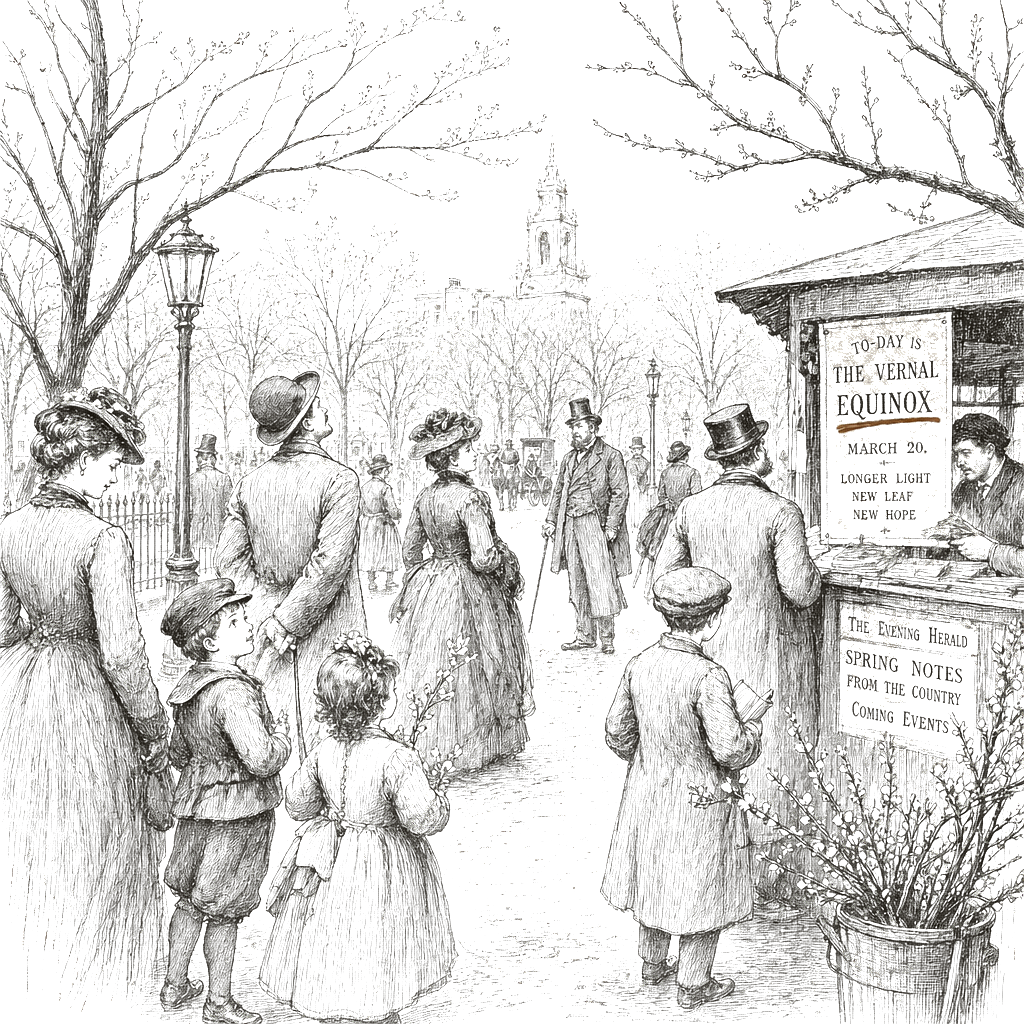
Spring still feels like a moving target for many people, but the calendar’s astronomical flag moves on Friday: the vernal equinox. The Associated Press describes it as the point when spring begins “technically, at least,” in the Northern Hemisphere, while the Southern Hemisphere shifts to fall. The exact moment for 2026 is Friday, March 20, at 10:46 a.m. EST.
During most of the year, Earth’s axial tilt means the sun’s warmth and light fall unequally on the planet’s northern and southern halves. On the equinox, however, Earth’s tilt is neither leaning toward the sun nor tipped away, so both hemispheres receive an equal amount of sunlight. The AP notes that the equinox is also associated with the sun’s apparent path: it rises almost exactly due east and sets almost exactly due west.
The equinox timing hinges on the position of the sun relative to Earth. On the equinox, AP says, the sun is directly overhead at the equator at noon—an observation that helps explain why equinoxes have been noticed and marked around the world for centuries. The story cites Japan’s Vernal Equinox Day as a public holiday, and it also points to gatherings at the Mayan site Chichen Itza in Mexico, where people watch the sun create a shadow pattern during the equinox that resembles a serpent descending the pyramid called El Castillo.
The term “equinox” reflects that day-night symmetry. AP says the word comes from two Latin words meaning equal and night, and it describes equinoxes as the only times when both Earth’s North and South poles are lit by sunshine at the same time. The AP also says day and night last almost the same amount of time, though one side may get a few extra minutes depending on where you are on the planet.
Astronomically, the story also distinguishes between the timing and the naming conventions of seasonal changes. AP says the Northern Hemisphere’s spring equinox can land between March 19 and March 21, and it adds that the Northern Hemisphere’s fall or autumnal equinox can fall between Sept. 21 and 24. After Friday’s vernal equinox, AP says days get a little longer every day in the Northern Hemisphere while getting shorter in the Southern Hemisphere, continuing toward the June solstice.
Solstices come next as the other major markers in Earth’s seasonal cycle. The AP explains that solstices mark when Earth’s tilt is tipped most extremely either toward or away from the sun, producing the most unequal split between day and night. For the Northern Hemisphere summer solstice, AP says, the date falls between June 20 and 22, and in 2026 it is on June 21; the opposite effect defines the Northern Hemisphere winter solstice, which falls between Dec. 20 and 23.
Finally, the AP draws a line between astronomical seasons and the seasons defined by weather patterns. It says meteorological seasons rely on temperature cycles and divide the year into three-month blocks that begin March 1, June 1, Sept. 1 and Dec. 1. That means spring’s weather-driven start can arrive on a different schedule than the astronomical equinox, even though both are used to describe the year’s turning points.