Missile launches during joint drills
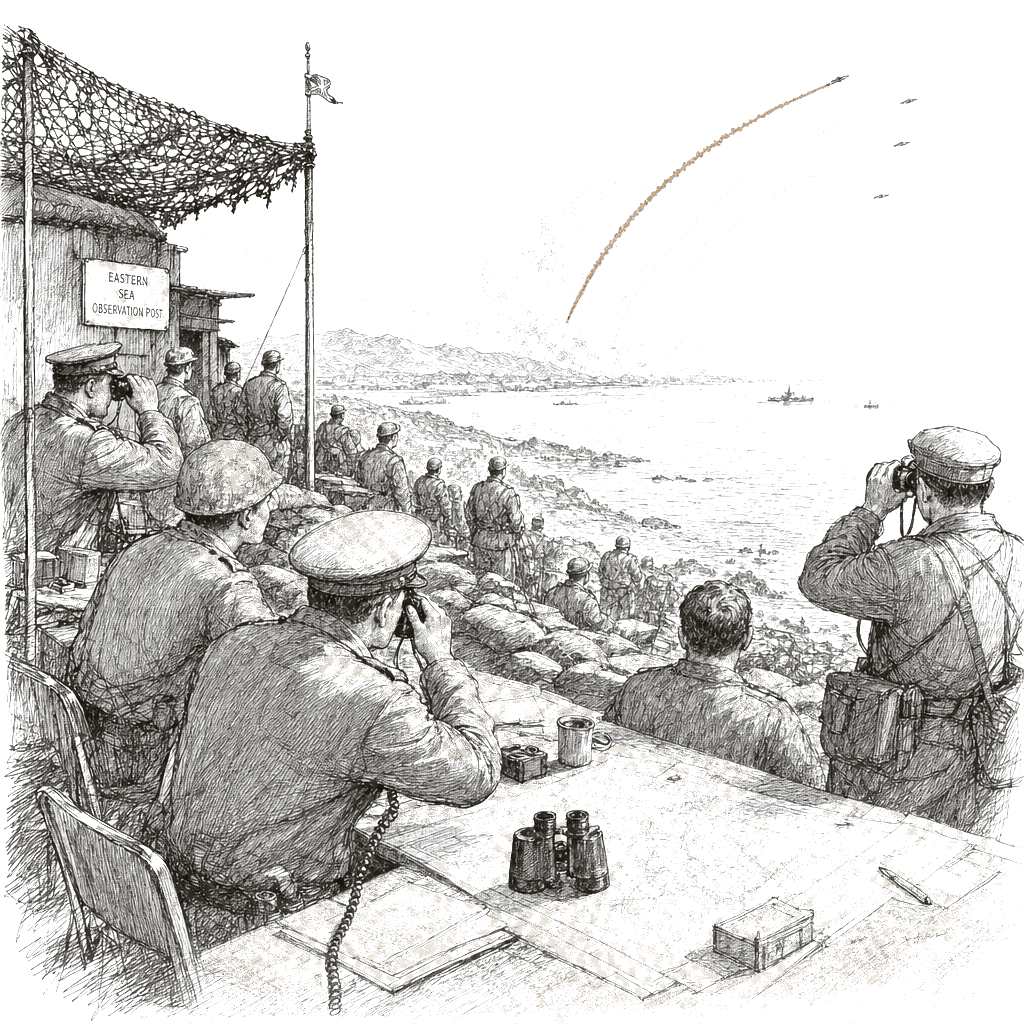
North Korea fired about 10 ballistic missiles toward the eastern sea on Saturday, according to South Korea’s military, staging the launches as the rival South conducted a joint military exercise with the United States.
South Korea’s Joint Chiefs of Staff said the missiles were fired from an area in Sunan, the site of Pyongyang’s international airport, and flew about 350 kilometers (220 miles).
Japanese Defense Minister Shinjiro Koizumi said the weapons landed outside Japan’s exclusive economic zone, and that there were no reports of damage to planes or ships, according to the AP report.
South Korea’s response and information-sharing
South Korea’s Joint Chiefs said the military stepped up surveillance and maintained readiness against possible additional launches, while closely sharing information with the U.S. and Japan.
Exercises and diplomacy backdrop
The launches came as the U.S. and South Korean militaries conducted their annual springtime exercises involving thousands of troops. The AP report also described concerns in South Korea about potential security lapses, with local media speculating that the U.S. could be relocating some missile defense assets to support operations against Iran.
When asked by The Associated Press whether U.S. Forces Korea was moving interceptor missiles from its Terminal High Altitude Area Defense, or THAAD, system in Seongju to the Middle East, South Korean President Lee Jae Myung’s office said it could not confirm details about U.S. military operations.
The office said any potential relocation of U.S. military assets would not affect the allies’ defense posture against nuclear-armed North Korea, and also cited South Korea’s conventional military strength. It said the office earlier gave a similar response to reports about possible relocation of Patriot missile defense systems from South Korea.
Meeting in Washington hours earlier
The AP report said the missile launches came hours after South Korean Prime Minister Kim Min-seok met U.S. President Donald Trump in Washington. Kim expressed hope for renewed diplomacy between Washington and Pyongyang.
The report said Lee seeks improved inter-Korean relations, and that some of his top officials have said Trump’s expected visit to China—starting March 31—may create an opening with Pyongyang. Saturday’s launches appeared to dim those hopes, the AP report said, by signaling defiance by Pyongyang.
North Korea’s hard-line messaging
The AP report said North Korea in recent months hardened its stance toward Seoul and urged Washington to drop denuclearization demands as a precondition for talks. It said North Korea has long described the allies’ drills as invasion rehearsals and has used them as a pretext to dial up military demonstrations or weapons testing.
On Tuesday, Kim Yo Jong criticized Washington and Seoul for proceeding with their drills at what she called a perilous moment for global security, and warned that any challenge to the North’s safety would bring “terrible consequences.”
The AP report also said Kim Yo Jong, without directly referring to the Iran war, said the U.S.-South Korea drills undermine regional stability at a time when the global security structure is “collapsing rapidly and wars break out in different parts of the world due to the reckless acts of outrageous international rogues.”
Foreign Ministry statements
The AP report said North Korea’s Foreign Ministry released separate statements denouncing joint U.S.-Israeli attacks on Iran and expressing support for Tehran’s new supreme leader, Mojtaba Khamenei.
“Freedom Shield” and “Warrior Shield”
The AP report described “Freedom Shield” as an 11-day exercise running through March 19 and one of two annual command post exercises conducted by the militaries of the United States and South Korea. It said the mostly computer-simulated drills are designed to test the allies’ joint operational capabilities while incorporating evolving war scenarios and security challenges.
The report said Freedom Shield is accompanied by a field training program called Warrior Shield.
Diplomacy stalled since 2019
The AP report said North Korea has repeatedly rejected Washington and Seoul’s calls to resume diplomacy aimed at winding down its nuclear program. It said talks derailed in 2019 after the collapse of Kim Jong Un’s second summit with Trump during Trump’s first term.
The AP report added that Kim has made Russia the priority of his foreign policy, sending thousands of troops and large amounts of military equipment to support Moscow’s war in Ukraine, possibly in exchange for aid and military technology.