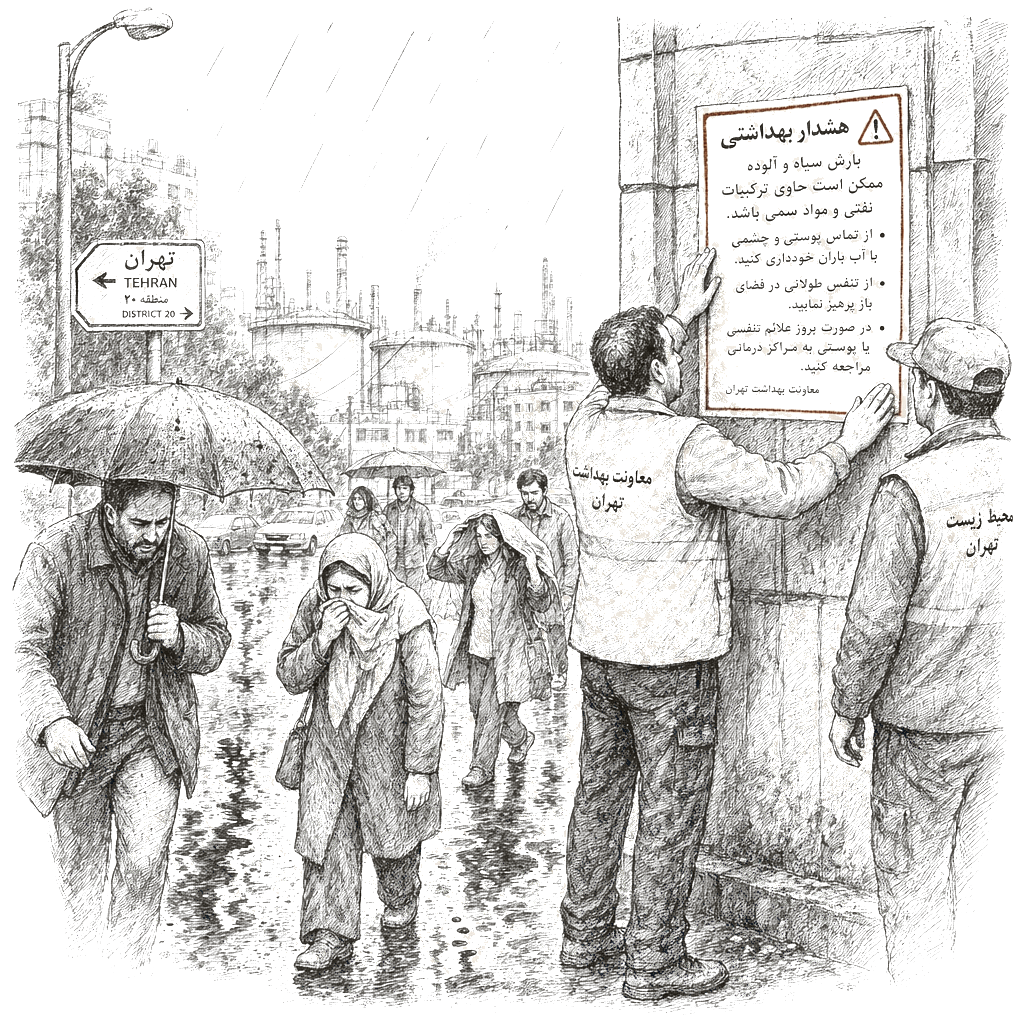
A wave of airstrikes on Iran’s oil facilities has prompted international concern after toxic “black rain” fell over parts of the country, including the area around Tehran, according to health and environmental officials and scientists cited in reporting. The dark, oily precipitation followed U.S.-Israeli strikes on fuel oil depots and a refinery, which sent clouds of toxic smoke into the atmosphere, officials warned.
In Tehran and nearby areas, residents complained last week of burning eyes and difficulty breathing when the black rain fell, the reporting said. Similar dark plumes have also been seen across other parts of the region over the past two weeks of war as Iran retaliates by firing drones and missiles at oil and natural gas facilities of its Persian Gulf neighbors.
Experts said black rain is a form of fallout from pollution rather than weather itself. It can occur when soot, ash and toxic chemicals combine with water droplets in the atmosphere and then return to Earth as precipitation. In Iran, microscopic soot can form when hydrocarbons in fuel oil burn incompletely, and the smoke can also contain compounds such as polycyclic aromatic hydrocarbons, or PAHs, as well as gases including sulfur dioxide and nitrogen oxides that contribute to acid rain, according to Peter Adams of Carnegie Mellon University.
Health concerns focus on what exposure products can do once they are breathed in or contact the body. The microscopic soot particles can lodge deep in the lungs and enter the bloodstream, experts said, potentially contributing to breathing and heart problems; exposure to PAHs can also increase cancer risk. The World Health Organization and Iranian health and environmental officials advised people to stay indoors and wear masks, warning that the rainfall was highly acidic and could burn the skin and cause lung damage.
V. Faye McNeill, a chemical engineering professor at Columbia University who specializes in atmospheric chemistry, said there “can definitely” be acute health effects from an event like this. She also cautioned that even routine air pollution events can trigger health problems and lead to more hospitalizations, particularly among older adults, children, and people who already have health conditions, describing the current episode as a “higher level” and saying health problems were likely happening in the immediate term.
Scientists also pointed to additional worry about environmental impacts beyond immediate symptoms. Some Iranians feared the polluted rain, which can contain heavy metals, could contaminate drinking-water reservoirs and waterways, adding to the public concern about what the precipitation might carry after it falls.
On how long the hazardous material may persist, Adams said burning oil incidents often do not end at the moment smoke is first seen. It can take only hours for fuel tanks to burn out, but oil fields can burn for months, and smoke and soot can linger in the atmosphere over time depending on how long fires continue. For fires that burn out more quickly, Adams said most soot and chemicals will disperse on the wind and wash out of the atmosphere in about three to seven days, though he said longer-term health risks are not necessarily resolved in that time.
Adams said that if no further strikes occur, the immediate atmospheric problem could ease as what is in the air is removed. But he also warned that the overall situation depends on future attacks, noting uncertainty about whether additional tanks will be struck and whether oil fields will be hit, describing the scene as “a real mess” for people closest to the immediate impact area.