Body
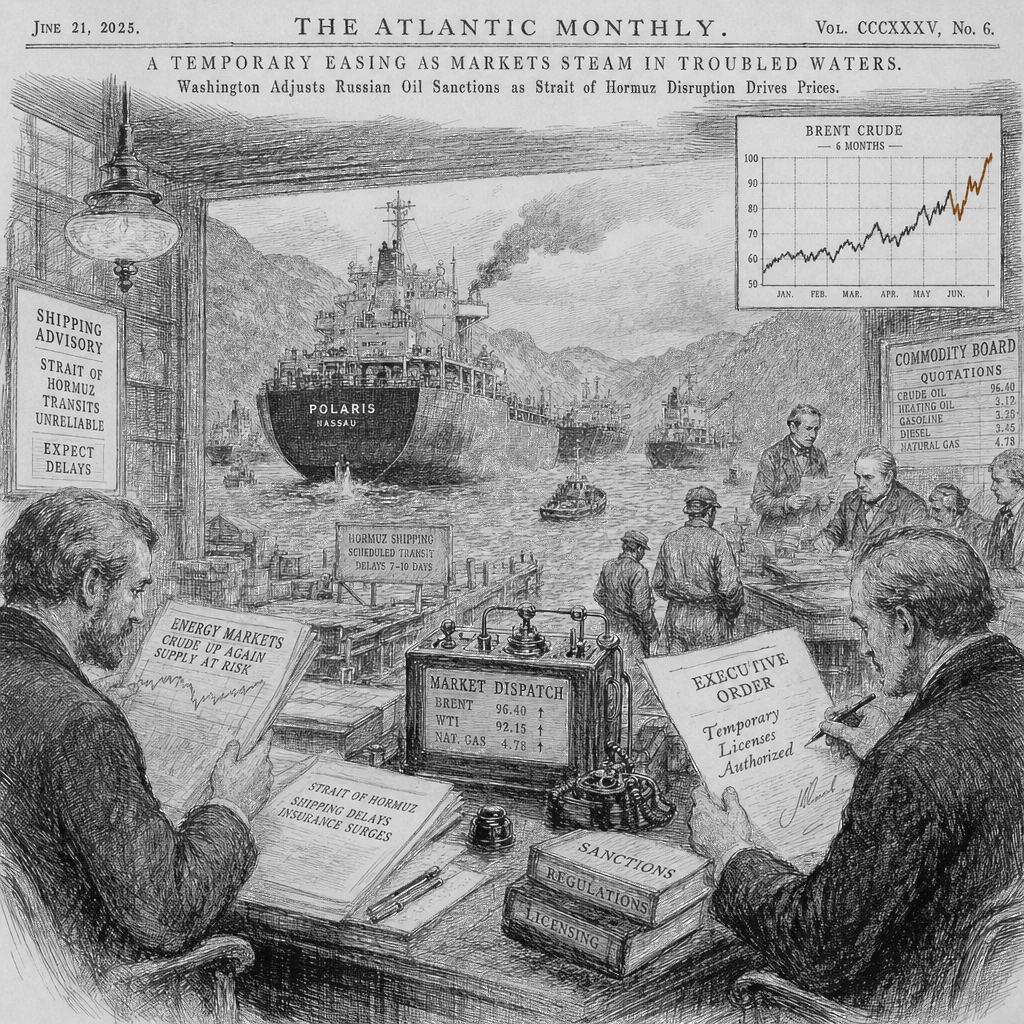
The U.S. temporarily eased some sanctions on Russian oil shipments as crude prices climbed amid disruptions tied to the Iran war and bottlenecks near the Strait of Hormuz, according to Treasury Secretary Scott Bessent. The change, described by Bessent as a short-term, narrowly tailored step, will apply to certain Russian oil deliveries for 30 days if the oil was loaded on tankers as of Thursday, giving buyers time to take the cargo without triggering the sanctions for that window.
In a post on X, Bessent said the measure was part of President Donald Trump’s “decisive steps to promote stability in global energy markets” and to “keep prices low,” the Associated Press reported. Bessent said the sanction relief would not provide additional financial benefit for Russia because the Kremlin already taxed the oil when it was extracted from the ground. He also said the rest of the U.S. sanctions regime remained in place, including designations affecting Russia’s two biggest oil companies, Lukoil and Rosneft.
The Ukrainian government sharply criticized the decision. Ukrainian President Volodymyr Zelenskyy said the easing “does not help peace” and argued that the U.S. action alone could provide Russia with about $10 billion for the war, adding that Russia spends money from energy sales on weapons used against Ukraine.
Kremlin officials defended the move as market-stabilizing. Dmitry Peskov said the U.S. step would help stabilize global energy markets, adding it was impossible to do so “without significant volumes of Russian oil.” AP reported that Peskov’s comments came after the U.S. announcement, as officials on both sides framed the policy change through different lenses: price stabilization and market access versus what Zelenskyy described as war-funding assistance.
Oil prices stayed high after the announcement. The price of international benchmark Brent crude eased briefly but then rose again, breaking through $100 and trading at $103.24 per barrel as of 1800 GMT (2 p.m. EDT) Friday, AP reported. That was still well above $72.87, where Brent traded on Feb. 27, the eve of the war.
AP said the underlying pressure on supply comes from fighting that has choked off most tanker transport through the Strait of Hormuz, where about 20% of the world’s oil supply typically passes. The disruption has dealt a “massive energy shock” to the global economy and raised concerns about higher inflation, AP reported. Bruegel energy expert Simone Tagliapietra said the U.S. easing could slightly increase available supply in the short term, helping contain the spike in oil prices, and that the impact on prices should therefore be modestly downward or at least stabilizing.
Even as the U.S. made limited adjustments, AP said analysts estimate Russia is shipping a volume that amounts to only a small fraction of normal Strait of Hormuz flows. AP reported estimates of about 125 million barrels of Russian oil currently being shipped—equal to roughly five or six days’ worth of normal shipments through the Strait of Hormuz, or just over one day’s worth of global consumption of about 101 million barrels per day.
Sanctions have already cut into Russia’s oil revenues, AP said, in part because many buyers stopped taking Russian crude after Russia’s full-scale invasion of Ukraine in 2022. AP reported that the European Union ended purchases, and many Western customers also shunned Russian oil; meanwhile, Russian crude shifted toward China and India, often sold at discounts as Washington, the EU and Kyiv’s allies pursued a price-cap regime enforced through shipping and insurance.
Over time, AP said Russia worked around the price cap by using a fleet of used tankers with opaque ownership and insurance based in countries that were not observing the cap. Alongside U.S. sanctions targeting Lukoil and Rosneft, Ukraine’s allies penalized more vessels in what has been called Russia’s “shadow fleet,” and AP reported that customers in China and India began demanding even bigger discounts to compensate for risks of sanctions exposure and for the workarounds required to keep payments moving.
AP said Russia’s own revenue strain showed up in trading: in December, Urals blend crude traded under $40 per barrel, about $25 below Brent, leaving Kremlin oil revenues at their lowest levels since the invasion. It said oil and gas exports typically supply 20% to 30% of the federal budget, and that rising global prices during the Iran war have helped Russia improve its market position.
As crude prices rose, AP reported that Russian oil also traded above $80 per barrel, helping financial fortunes if supply disruptions near the Strait of Hormuz keep prices elevated and if refineries in Asia seek replacement supplies from elsewhere. AP cited analysis from the nonprofit Centre for Research on Energy and Clean Air saying Russia’s daily revenue from oil sales during the Iran war averaged 14% higher than in February. AP also cited CREA calculations by Isaac Levi that Russia has been earning about 510 million euros ($588 million) every day this month from oil and liquefied natural gas exports.
Even with the U.S. waiver, analysts said the sanctions effect remains. AP reported that Tagliapietra said the move likely narrows the Urals discount somewhat by reducing sanctions risk, but does not fundamentally alter longer-term Russian oil flows or sanctions pressure because it is limited. AP also cited former Russian central bank official Sergei Aleksashenko, who said the change would not be a very significant boost to the Russian budget because the oil would find buyers anyway—especially given disruptions to the Strait of Hormuz.
In Washington and among European leaders, the move also raised questions about messaging. AP reported that Aleksashenko said the Trump administration may not have expected the sharp rise in prices or a prolonged war and that the president should respond to the “problem.” AP also reported that the Group of Seven discussion included Russian oil, with German Chancellor Friedrich Merz saying “six members expressed a very clear view” that the U.S. policy signal was not the right one to send.
—With contributions from Kostya Manenko in Tallinn, Estonia, and Kwiyeon Ha in London.