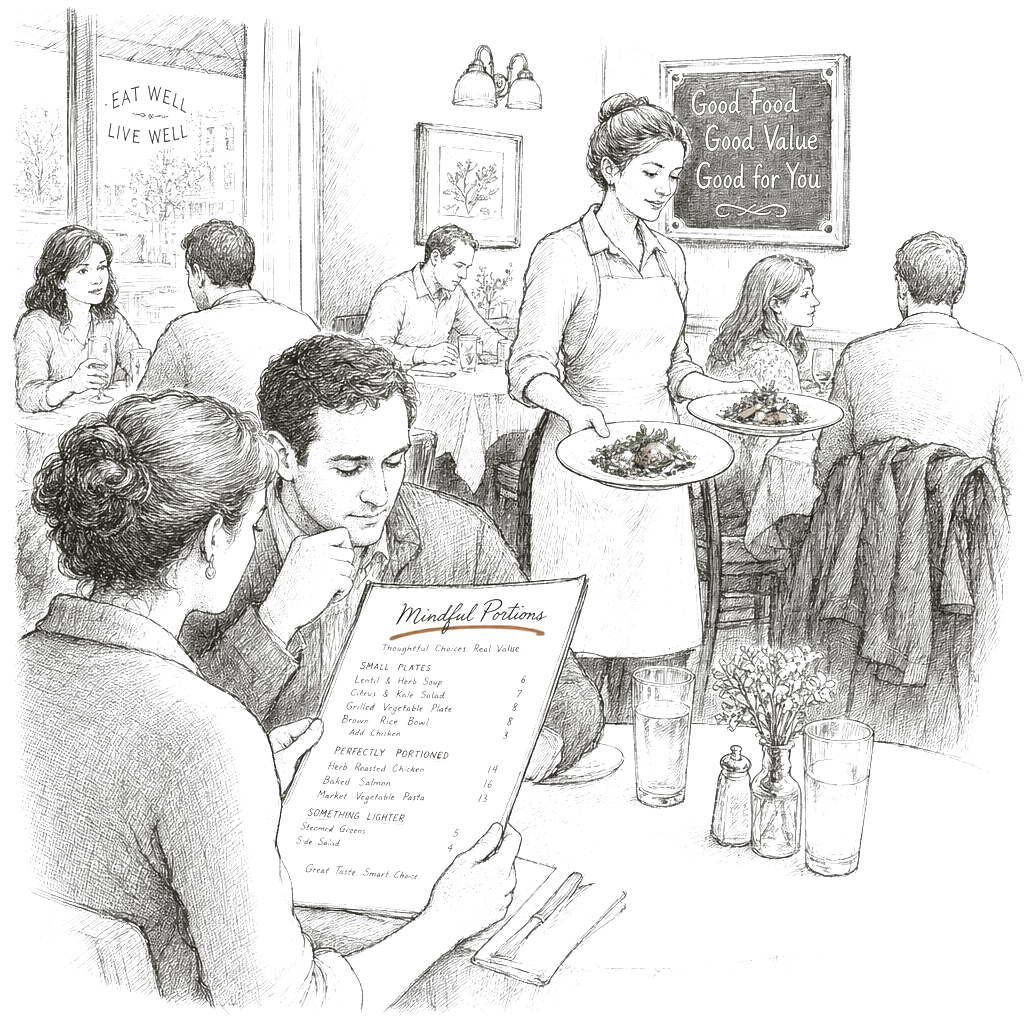
Smaller portions become more visible on restaurant menus
Smaller portion sizes are emerging as a restaurant trend as diners watch their budgets and health goals, and as some customers adjust their eating while using weight-loss drugs. Some restaurants have begun offering smaller servings beyond children’s menus, aiming to meet appetites that may be smaller than they used to be.
Restaurants say the trend is showing up across cuisines and price points, with special menus that feature petite, lower-cost items. Maeve Webster, president of the culinary consulting firm Menu Matters, said the shift is driven by changes in how people think about their relationship with food and what they consider a good value.
Webster said, “These are really driven by, I think, changes in the way people are thinking about their relationship with food, the way they spend money on food, what is a good value and what’s not,” pointing to the role of both spending decisions and diet choices.
Mini Meals: a value-focused option for some adults
In Connersville, Indiana, Beth Tipton, co-owner of Daniel Girls Farmhouse Restaurant, introduced an eight-item Mini Meals menu last fall after customers asked for smaller portions. Tipton said the menu includes daily specials such as a half piece of meatloaf with green beans, mashed potatoes and gravy for $8.
Tipton said the Mini Meals menu now accounts for about 20% of the restaurant’s orders. She said about half of the restaurant’s clientele are older adults and that some customers told her the regular menu was a stretch for their budgets.
Tipton said she also had personal context from weight-loss surgery, and that she knew from experience that many restaurants won’t allow adults to order from children’s menus. “We wanted it to be available to all without the word ‘kids meals’ attached,” she said, adding that with rising costs, the smaller-menu option was designed to help customers.
Menus built for GLP-1 users
Some restaurants are also adding menus tailored to people using GLP-1 weight-loss and diabetes drugs such as Zepbound, Wegovy, Ozempic and Mounjaro. A restaurant owner’s description of the demand centered on the way GLP-1 users often eat less and therefore need meals that are nutritionally dense, with low fat and higher protein and fiber.
In Philadelphia, Barry Gutin, co-owner of Cuba Libre Restaurant and Rum Bar, said he came across friends who told him they were taking GLP-1s and struggling to find meals that fit both dietary needs and smaller appetites. Gutin reached out to a weight-loss specialist doctor and Cuba Libre’s culinary director, Angel Roque, and the menu was developed over the next month.
Cuba Libre’s GLP-Wonderful menu is offered during dinner and includes five classic Cuban options. Roque said the pollo asado on Cuba Libre’s regular menu has nearly 1,000 calories and that on the GLP-1 menu it is slimmed down to 400 calories while staying heavy on protein and fiber. He said it was also important to keep the meals flavorful and colorful “to stimulate appetites.”
Roque said, “Many times when people are on those kind of regimes, they feel that they can’t do the same as everybody else. So we wanted to show them, yes, at Cuba Libre, you can.”
Gutin said he estimated that 10 to 20 groups at each of the chain’s locations every week request the GLP-Wonderful menu, and he said customers have responded positively. “People say, ‘Thank you for serving us’,” he said.
Chain menus also go smaller
Major chains have rolled out smaller-portions options as well. Olive Garden rolled out its seven-item “Lighter Portions” menu nationwide in January, and the company said GLP-1 users were one consideration. The Italian-style chain also wanted to appeal to patrons pursuing healthier diets or more affordable meals, according to Rick Cardenas, president and CEO of Olive Garden’s parent company, Darden Restaurants.
Cardenas said in September during a conference call with investors that “There is a consumer group out there that believes in abundance, but abundance is different for everybody.” He added, “So consumers can choose. We’re not changing our entire menu to make it a smaller portion.”
Other chains are also offering smaller or medium-sized portions. P.F. Chang’s began offering medium-sized portions last fall, while The Cheesecake Factory added smaller, lower-priced Bites and Bowls last summer. TGI Fridays recently began testing an “Eat Like A Kid” menu with smaller portions.
A longer-term shift, not just a passing trend
Webster said smaller portions are not a new idea, citing small-plate tapas restaurants that were popular about two decades ago, but she described the current menus as a longer-term shift. She said the trend is not tied to any particular cuisine and that consumers are thinking more about food waste than they used to, with smaller portions potentially helping address that concern.
Webster said, “I think it is a core need that consumers have, and a demand that has been lingering under the surface for a long time because restaurant meals, particularly at chains, have become so large.” She added, “Sure, it sounds great to take leftovers home, but they never taste as good.”
“Teeny Tuesday” draws weekday interest
In Shelburne, Vermont, Jack Pless said he was delighted to see Barkeaters Restaurant’s Teeny Tuesday menu. Pless, who said he is in his 60s and used to own a restaurant, said he can’t eat as much as he used to at meals. He described what happens with leftovers after taking home a box: “So many times you go out to restaurants, especially me or my wife, and we’ll take home a box and it’ll sit in the refrigerator for two, three days and start to grow a beard.”
Barkeaters co-owner Julie Finestone said she introduced the Teeny Tuesday menu last month to bring in more weekday business during the winter. She said she was concerned about the cost of offering lower-priced options, including items such as $12 reuben sliders, but she said the decision brought in more business than she expected.
Finestone said she is confident Teeny Tuesday will become a year-round fixture. She said, “Some people, it’s dietary. Some have smaller appetites. Some people don’t like to overindulge in the middle of the week,” and added, “I think that it just spoke to people.”