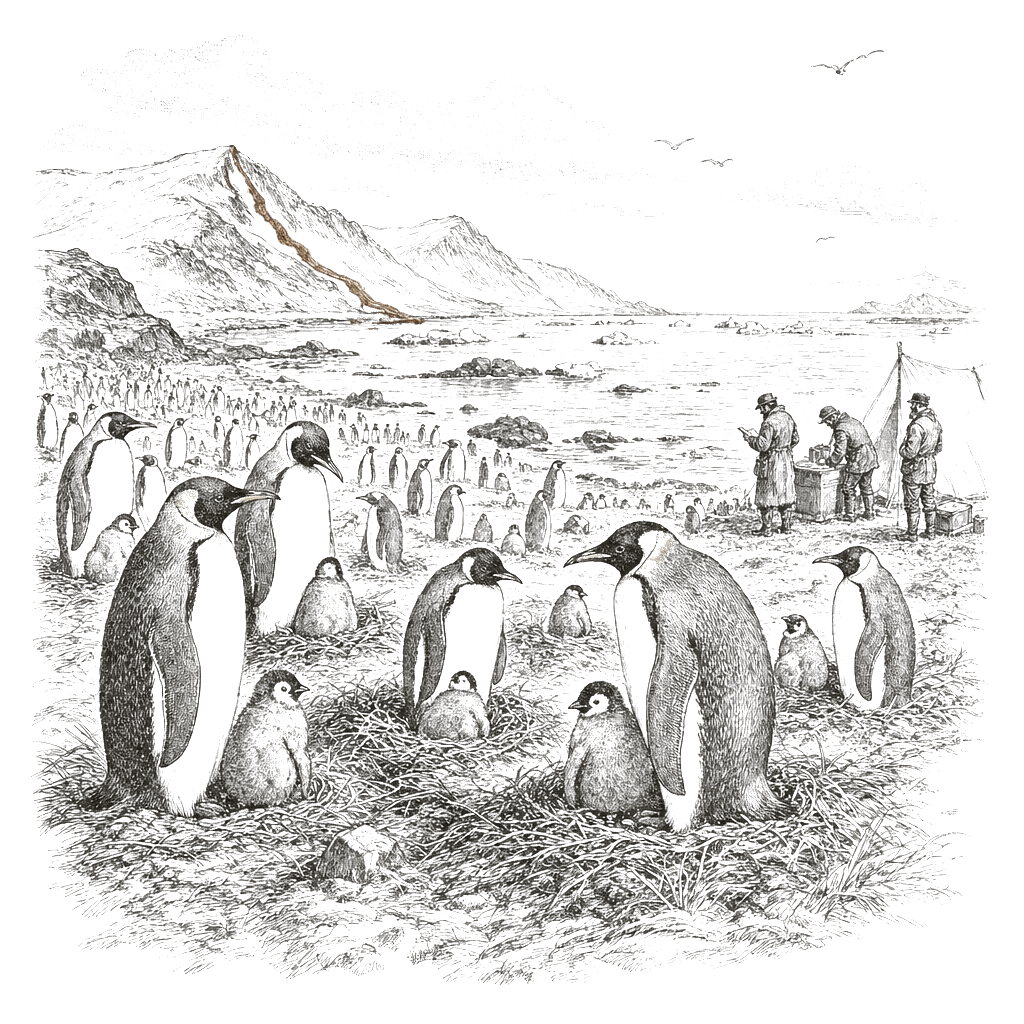
Warming seas and changing seasons can shift when animals reproduce, sometimes leaving species out of sync with one another. A new study focusing on king penguins found that, in at least one region, the birds have begun breeding earlier than they did two decades ago—and that starting earlier has been linked to improved breeding outcomes.
Researchers studied about 19,000 king penguins in a sub-Antarctic island chain and reported that breeding now begins 19 days earlier than it did in 2000. The study also found that breeding earlier increased the breeding success rate by 40%. The results were published in Science Advances on Wednesday.
The study sits within a broader research effort on “phenology,” which refers to the timing of plant and animal reproduction. Biologists have focused on phenology because predators, prey, pollinators and plants may adjust to warmer climates at different rates, creating crucial mismatches in timing that can harm survival.
The article said phenology shifts are often especially concerning in birds and pollinating species, where changes in seasonal schedules can lead to problems such as pollinators arriving too late. Casey Youngflesh, a Clemson University biological sciences professor who was not part of the study, said most birds—particularly in North America—are not keeping pace with changes in phenology.
Against that background, the researchers described king penguins as a rare case that appears to benefit from a warming world, at least for the moment. Celine Le Bohec, a seabird ecologist with France’s CNRS who co-authored the study, said that the ability of king penguins to adapt to seasonal shifts and timing changes is “unprecedented,” adding: “It’s quite striking.”
Le Bohec said that, unlike other penguins that have been threatened by earlier breeding, king penguins have the ability to breed from late October to March. The researchers said the birds are succeeding even as the ocean warms and the food web they rely on changes.
Gaël Bardon, the study’s lead author and also a seabird ecologist at the Scientific Centre of Monaco, said king penguins can adjust their foraging behavior. Bardon told how some birds go south to the polar front, some go north, and some stay around the colony—adjustments he said help the species cope with such changes for the moment.
Le Bohec added that the adjustment may be temporary because the environment is changing quickly. “So that’s why for the moment the species is able to cope with this change, but till when? This, we don’t know, because it’s going very, very fast,” she said.
Outside scientists who were not part of the research echoed the caution. Michelle LaRue, a professor of Antarctic marine science at the University of Canterbury in New Zealand, said she is unsure what happens after breeding because king penguins live 20 or more years in the wild and the study examines only a small portion of that lifespan.
Other researchers also warned against treating king penguins as a straightforward “good news” story for climate change. Youngflesh said that “winning for this species might mean losing for another species if they are competing for resources.” Ignacio Juarez Martinez, a biologist at Oxford University, said the study shows king penguins might be winners for now, but that continued climate change—through potential future shifts in currents, precipitation or temperatures—could undo the gains.