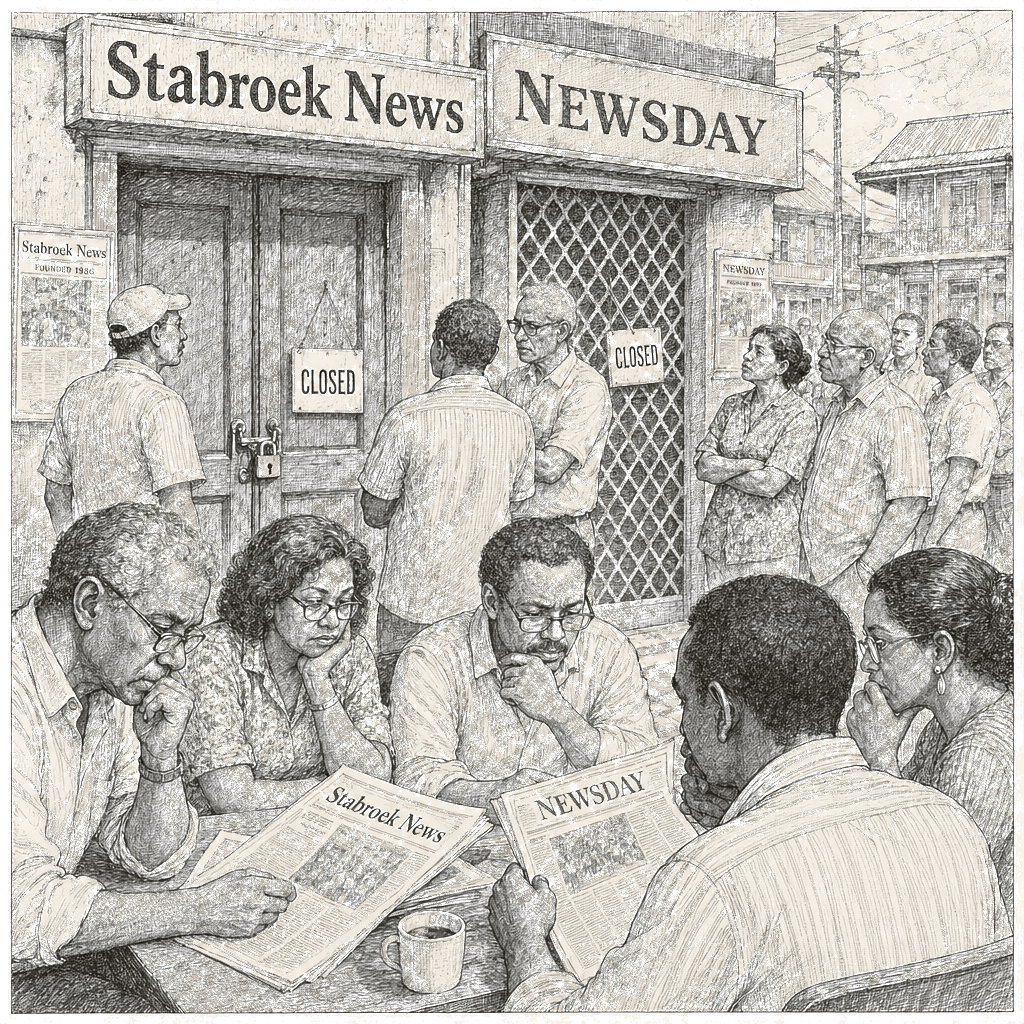
Two of the Caribbean’s most storied independent papers — Guyana’s Stabroek News and Trinidad and Tobago’s Newsday — have shut their doors, officials and media veterans said, dealing a blow to democratic accountability in the region.
Stabroek News printed its final edition on Sunday and halted its online publication, ending a four‑decade run that began in November 1986. The paper had long been celebrated for independent reporting, literary op‑eds and a vibrant letters page that served as “an informal national meeting place,” according to lawyer Christopher Ram.
Newsday ceased both its print run and its website in January 2026 after fifteen years of covering the twin‑island nation, especially the underserved island of Tobago. Former editor‑in‑chief Judy Raymond warned that the loss “is definitely a loss to the country, to our democracy, where particularly in this age of social media, credible professional media houses are needed more than ever.”
Media owners point to a dramatic shift in reading habits as the primary cause. “Everything is on social media now. Whatever happens today, you don’t have to wait to get the papers tomorrow,” said 32‑year‑old Carlon Augustus of Trinidad and Tobago, who now relies on platforms like Twitter for breaking news. The decline in print advertising has been steep; Grant Taylor, managing director of Daily News Limited, described the closures as a “perfect storm of challenges,” noting a 75 % drop in ad revenue over the past decade as Big‑Tech platforms siphoned dollars away from traditional outlets.
The shutdowns also raise concerns about media plurality. Kiran Maharaj, president and co‑founder of the Media Institute of the Caribbean, said the independent ownership of the two papers meant they offered a variety of voices less susceptible to advertiser or political pressure. “You have now a narrowing of that,” she warned, emphasizing the risk of a media landscape dominated by state‑linked or party‑affiliated outlets.
Veteran journalist Wesley Gibbings recalled a time when “people would be seen walking with a physical copy of newspapers” and described the era as a “status symbol.” He noted that the rise of Google and other platforms “attracting advertising content and revenue while mining mainstream media content” signaled a long‑awaited watershed period for Caribbean journalism.
In a poignant tribute, former Stabroek News editor‑in‑chief Anand Persaud said the paper chose to close “to make sure our independence is not on the line,” underscoring the fragile balance between financial survival and editorial freedom.
The twin closures leave a noticeable void: Guyana now relies on a state‑owned paper, a ruling‑party‑linked outlet, and a nascent pay‑wall experiment, while Trinidad and Tobago’s news market returns to a duopoly between the Guardian and the Express. As readers migrate to social media and television, the region’s capacity for investigative, accountable journalism faces an uncertain future.