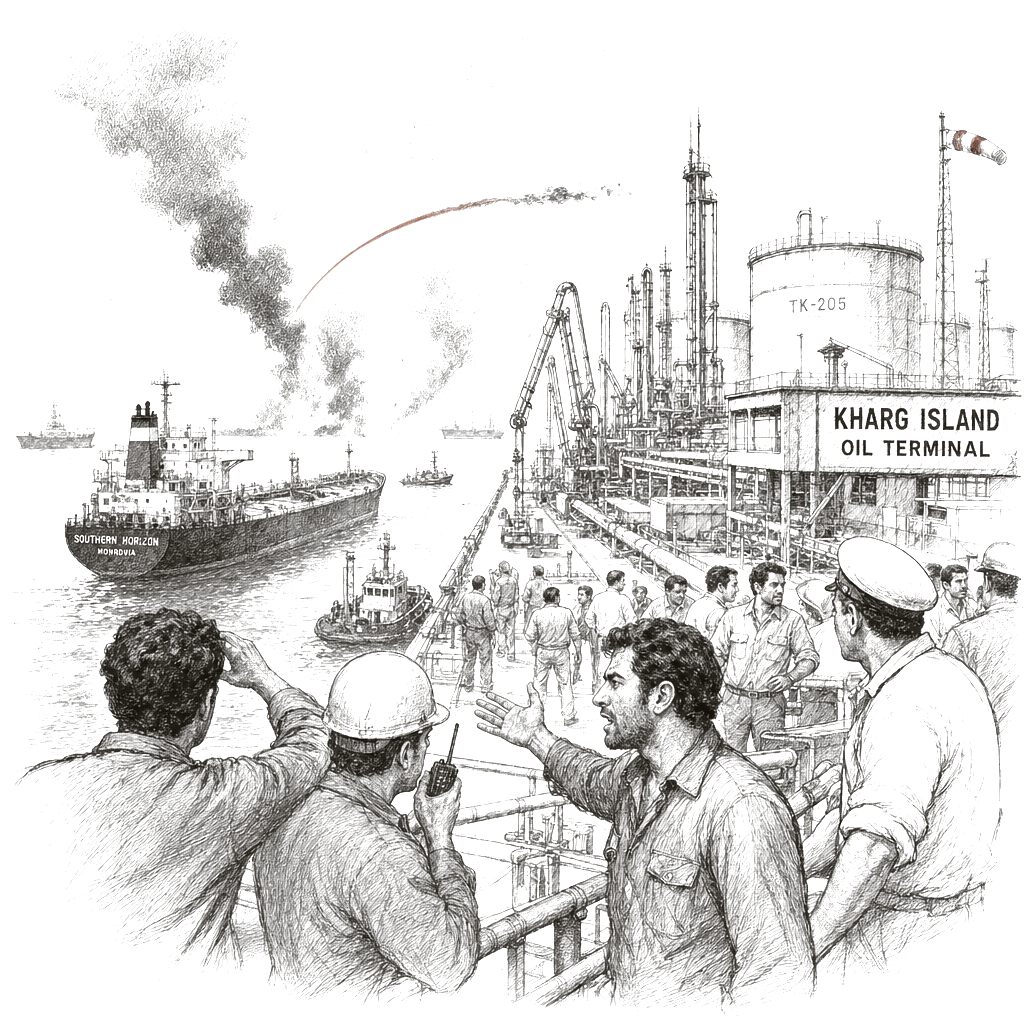
Kharg Island’s Strategic Role
Iran’s Kharg Island, a small coral island in the Persian Gulf, serves as the primary export terminal for nearly all of Iran’s oil. The island’s infrastructure includes storage tanks, housing for thousands of workers, and a terminal that has allowed Iran to continue exporting oil — mainly to China — even as the month-old war with the United States and Israel has disrupted traffic through the vital Strait of Hormuz.
The destruction or loss of Kharg would deal a severe blow to Iran’s economy by cutting off a major revenue source. However, such an action would also remove more oil from world markets already strained by soaring prices, potentially triggering a global economic crisis.
U.S. Targeting and Risks
President Donald Trump said U.S. strikes in mid-March “obliterated” Kharg’s military assets but deliberately spared the island’s oil infrastructure. He warned that if Iran continued to disrupt shipping through the Strait of Hormuz, he would reconsider sparing energy targets on the island.
A U.S. occupation of Kharg would place American troops just 33 kilometers (21 miles) off Iran’s coast, within easy range of Iran’s drones and missiles. Military analysts note that holding the island would be a precarious position, exposing U.S. forces to constant threat while providing only limited strategic advantage.
Other Islands in the Conflict
Several other islands near the Strait of Hormuz have emerged as points of tension:
- Abu Musa and the Greater and Lesser Tunb islands: Seized by Iranian forces in November 1971 after the British withdrawal, these islands are claimed by the United Arab Emirates and host Iranian military garrisons.
- Qeshm Island: The largest island in the Persian Gulf, home to about 150,000 people. Iran claims the U.S. struck a desalination plant there on March 8, a claim Washington has not acknowledged. The plant supplied water to approximately 30 villages.
Global Implications
The Strait of Hormuz remains a critical chokepoint; before the war, a fifth of the world’s traded oil passed through it. Iran’s continued ability to disrupt traffic through the strait keeps global energy markets on edge. With oil prices already elevated, any major escalation targeting Kharg’s oil facilities could send prices spiraling higher, threatening economic stability worldwide.
The situation underscores how localized military actions in the Persian Gulf can rapidly transform into global economic shocks. While the U.S. has so far avoided striking Iran’s energy infrastructure directly, the island’s vulnerability makes it a constant pressure point in the conflict — one that could trigger consequences far beyond the region.