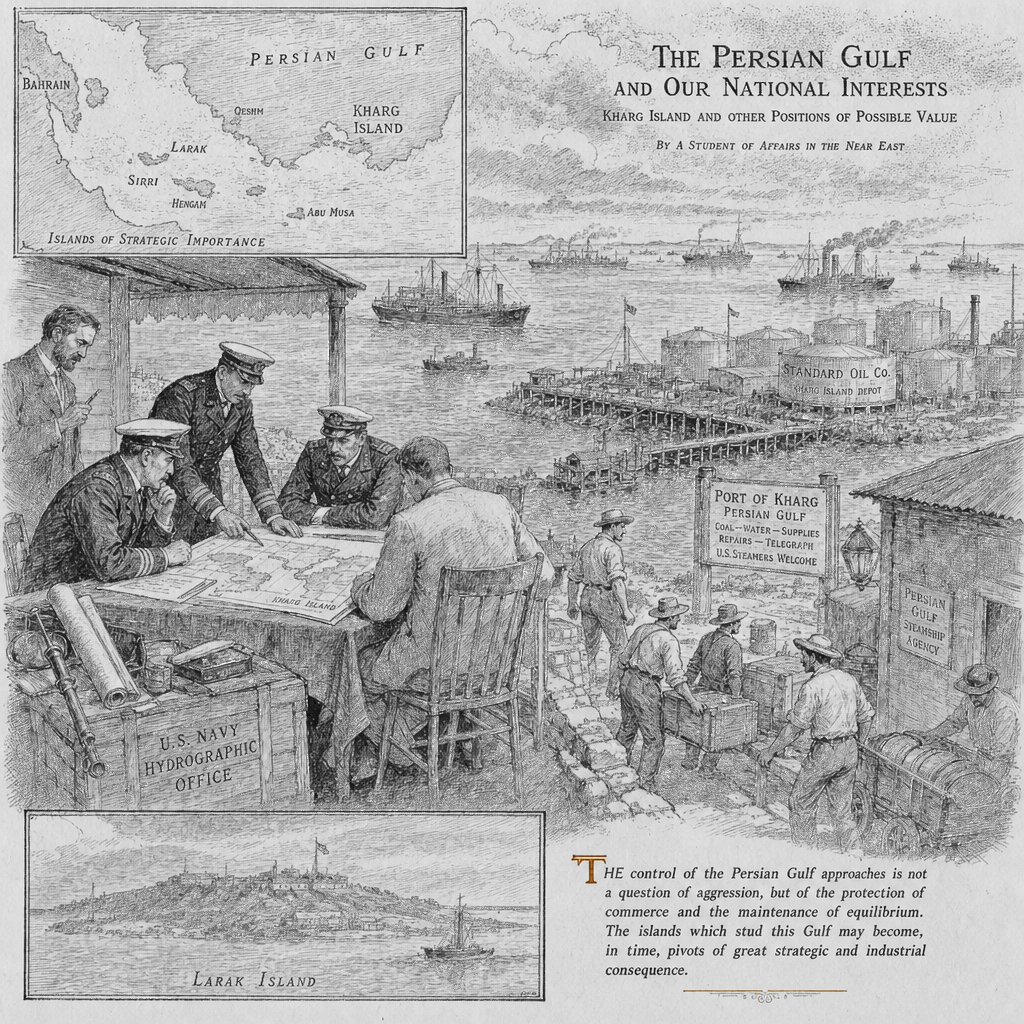
Kharg Island, a small coral island off Iran, has become a focus as a month-old war involving the United States and Israel draws attention to where strikes could most directly affect Iran’s oil exports, according to an Associated Press report.
Kharg hosts a terminal through which Iran exports most of its oil, and the report describes the site as a key revenue point for the Islamic Republic. It says that strikes on oil infrastructure on Kharg—or a ground invasion—would severely curb Iran’s oil exports, with the additional risk that such action could trigger heavier retaliatory attacks affecting Gulf Arab infrastructure and contribute to higher oil prices.
The report says that destroying or losing Kharg would deny Iran a major revenue source, while also removing even more oil from world markets at a time when prices are soaring. It also characterizes the terminal’s destruction as a factor that could severely damage Iran’s economy and undermine the future of any government that might emerge after conflict.
It also notes the potential military risks of a U.S. occupation, saying it would put American troops in a stationary position roughly 33 kilometers (21 miles) off Iran’s coast—within range of drones and missiles, according to the report.
The report includes remarks by U.S. President Donald Trump, saying he stated that strikes in mid-March “obliterated” Kharg’s military assets, while not targeting the island’s oil infrastructure. The report says Trump warned that if Iran continued disrupting traffic through the Strait of Hormuz, the U.S. would reconsider sparing energy targets on Kharg.
Kharg is described in the report as the place where nearly all of Iran’s oil exports pass. The report says Iran has continued to export oil mainly to China through the Strait of Hormuz even as its attacks have closed the vital waterway to most traffic, and that Iran has continued to exert control over the strait. Before the war, the report says about a fifth of the world’s traded oil passed through the Strait of Hormuz.
In addition to its industrial infrastructure, the AP report describes Kharg as having storage tanks and housing for thousands of workers. It also says gazelles roam near the island’s refineries and depots, and notes the presence of a medieval Portuguese fortress and the ruins of one of the oldest Christian monasteries in the Persian Gulf.
The report also points to other islands near the Strait of Hormuz that could be considered for targeting. It describes Abu Musa and the Greater and Lesser Tunb as islands held by Iran but long claimed by the United Arab Emirates, which it identifies as a close U.S. ally, and it says Iran has military assets and garrisons there, including staging military drills.
It says Iranian forces seized those islands in November 1971, days after the United Kingdom withdrew from the Gulf and before the UAE’s formation. The report says Iran maintains that the islands were part of Persian states until they were occupied by the British in the early 20th century, while the UAE claims all three islands.
On Qeshm Island, the report describes a different kind of infrastructure, saying it is home to a desalination plant and about 150,000 people live there. The report says Iran stated that the U.S. struck a desalination plant on Qeshm on March 8, and that Washington did not acknowledge the claim; it says the desalination plant supplied water to about 30 villages.