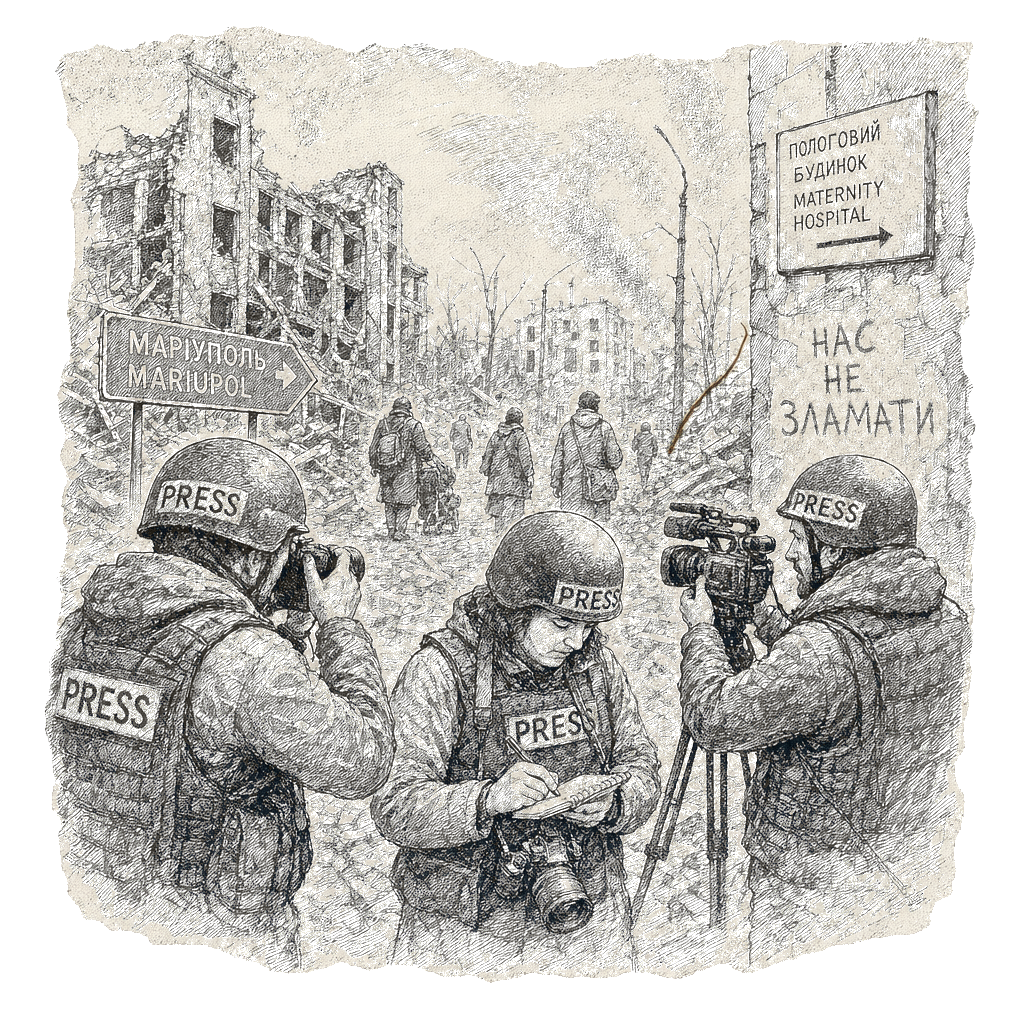
AP’s on-the-ground reporting from Mariupol, Ukraine, described a city under siege where families struggled to find places to hide, bury the dead, and obtain basic necessities as Russian shelling and airstrikes intensified in the final weeks of February and into March 2022.
In one account, the focus turned to the outskirts of Mariupol, where workers put the bodies of children into a hastily dug trench in frozen earth while residents could not bury loved ones because of what the story described as the constant drumbeat of shelling. The narrative included details of how bodies were carried and tossed as quickly as possible, with the aim of limiting the time workers spent in the open.
The AP account also described a rapidly deteriorating civilian environment driven by communications collapse and infrastructure failure. It said the blackout cut off Ukrainian television and radio, leaving residents to rely on car stereos for information, and described how shelters became the default refuge as grocery shelves emptied and people emerged only briefly to grab what they could before scurrying underground again.
Ukrainian officials later said about 30,000 people fled Mariupol in convoys of cars, the AP report said, after several appeals for humanitarian corridors had gone unheeded. Even as that departure was reported, the story described road access as constrained by mines, with the port blocked, food running out, electricity mostly gone, and water described as sparse, with residents melting snow to drink.
The AP reporting said the siege hit hospitals, including a maternity hospital converted into a medical ward. It described children and adults being treated during shelling and portrayed medical staff working amid bombardment, including scenes of wounded patients and deaths in hospital corridors and beds.
The account also framed the maternity hospital attack as a focal point in the battle over competing narratives. It described how, by March 9, fighter jets and airstrikes were enough to prompt people to scream for cover, and it said the maternity hospital was decimated, leaving a crater and forcing rescuers to push a pregnant woman through rubble and snow as medics said her baby was dying.
Russian officials, however, disputed what AP described as the reality of the maternity hospital attack. The report said Russian officials claimed the facility had been taken over by far-right Ukrainian forces to use as a base, and that it had been emptied of patients and nurses. It added that the Russian Embassy in London posted two tweets with “FAKE” written in red over side-by-side images of AP photos, saying the maternity hospital had long been out of operation and that Mariana Vishegirskaya was an actress; it also said Twitter later removed the tweets for violating rules.
AP’s reporters in Mariupol said they saw nothing to suggest the hospital had been used as anything other than a hospital, and the story said there was also nothing to suggest Vishegirskaya was anything other than a patient. It added that Veronika’s birth was described as evidence of the pregnancy that her mother carefully documented on Instagram, including one post showing Vishegirskaya wearing the polka-dot pajamas.
As the siege tightened further, the AP report said Russian forces had seized control of the maternity hospital building entirely, trapping medics and patients inside and using it as a base, according to a doctor there and local officials. It said that Serhiy Orlov, the deputy mayor, predicted that worse was coming, adding that defenders would defend “to the last bullet,” while he said people were dying without water and food and that “in the next several days we will count hundreds and thousands of deaths.”