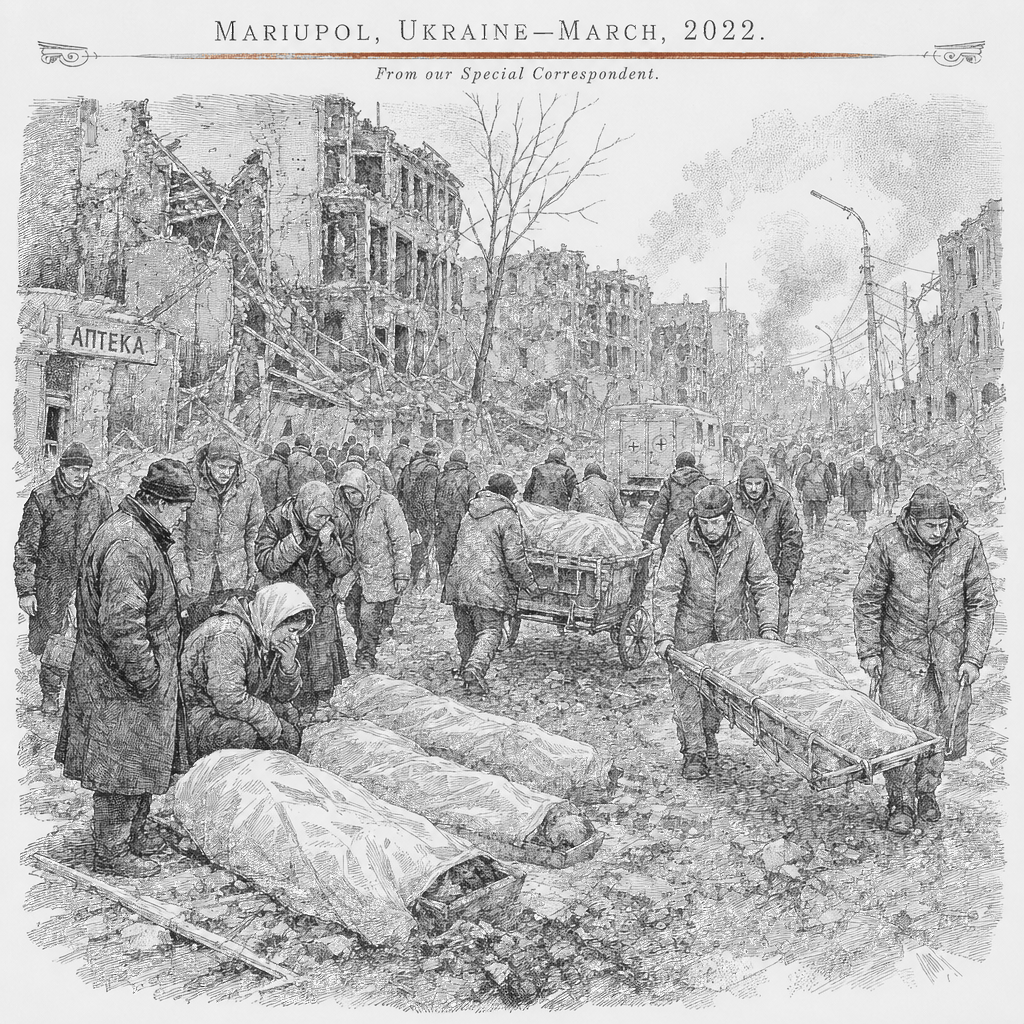
Bodies stacked as shelling prevents burials
In Mariupol, Ukraine, the AP reported that the dead were being stacked in a mass grave on the outskirts while heavy shelling made it impossible to bury loved ones. In the report, workers tossed bodies into a trench dug into frozen ground, as the blasts continued.
AP described children among the dead, including 18-month-old Kirill, 16-year-old Iliya, and a girl no older than 6, who were among the children stacked together with dozens of others. The account also described bodies wrapped in tarps and sheets while workers worked quickly because time spent exposed reduced survival odds.
Hospitals under pressure, utility failures and blocked access
AP said Russian soldiers had encircled the city and were squeezing it by repeated shelling and airstrikes. The AP report described humanitarian corridors for evacuating civilians as previously going unheeded, until Ukrainian officials said that about 30,000 people had fled in convoys of cars.
The AP described airstrikes and shells hitting the maternity hospital, the fire department, homes, a church and a field outside a school. For residents who remained, AP reported there was nowhere to go, with surrounding roads mined and the port blocked, and with food running out as Russians stopped humanitarian attempts to bring it in.
AP also said electricity was mostly gone and water was sparse, with residents melting snow to drink. The report said some parents left their newborns at the hospital, in what AP described as an attempt to give them a chance at life in the one place with decent electricity and water.
Death toll estimate and instructions to leave bodies outside
AP reported that local officials had tallied more than 2,500 deaths in the siege. The report said many bodies could not be counted because endless shelling continued, and that families were told to leave their dead outside in the streets because it was too dangerous to hold funerals.
AP reported that many of the deaths documented by the AP were of children and mothers, despite Russia’s claims that civilians had not been attacked.
Ukrainian President Volodymyr Zelenskyy said on March 10, “They have a clear order to hold Mariupol hostage, to mock it, to constantly bomb and shell it,” according to AP.
Appeals for evacuation, daily survival and the breakdown of normal life
AP said shelling and airstrikes could arrive at any moment and that residents spent much of their time in shelters, with electricity and communications periodically failing. The report described car stereos becoming a key link to the outside world after Ukrainian television and radio were cut.
As the siege deepened, AP said grocery shelves emptied and residents cowered by night in underground shelters and emerged by day to grab what they could before returning underground. The report also described people burning scraps of furniture on makeshift grills to warm their hands and cook what little food remained.
In one scene AP reported from the outskirts mass grave, worker Volodymyr Bykovskyi said, “The only thing (I want) is for this to be finished,” and, “Damn them all, those people who started this!” AP said.
Dispute over the maternity hospital attack and claims of “FAKE” postings
AP reported that by March 9, fighter jets over Mariupol had sent people screaming for cover and that this time the jets decimated the maternity hospital. AP described rescuers rushing a pregnant woman through rubble and light snow and that another pregnant woman, Mariana Vishegirskaya, delivered her child the next day.
The report said that after worldwide condemnation, Russian officials claimed the maternity hospital had been taken over by far-right Ukrainian forces as a base and that it had been emptied of patients and nurses. AP said the Russian Embassy in London posted side-by-side images of AP photos with the word “FAKE” in red, claiming the hospital had long been out of operation and that Vishegirskaya