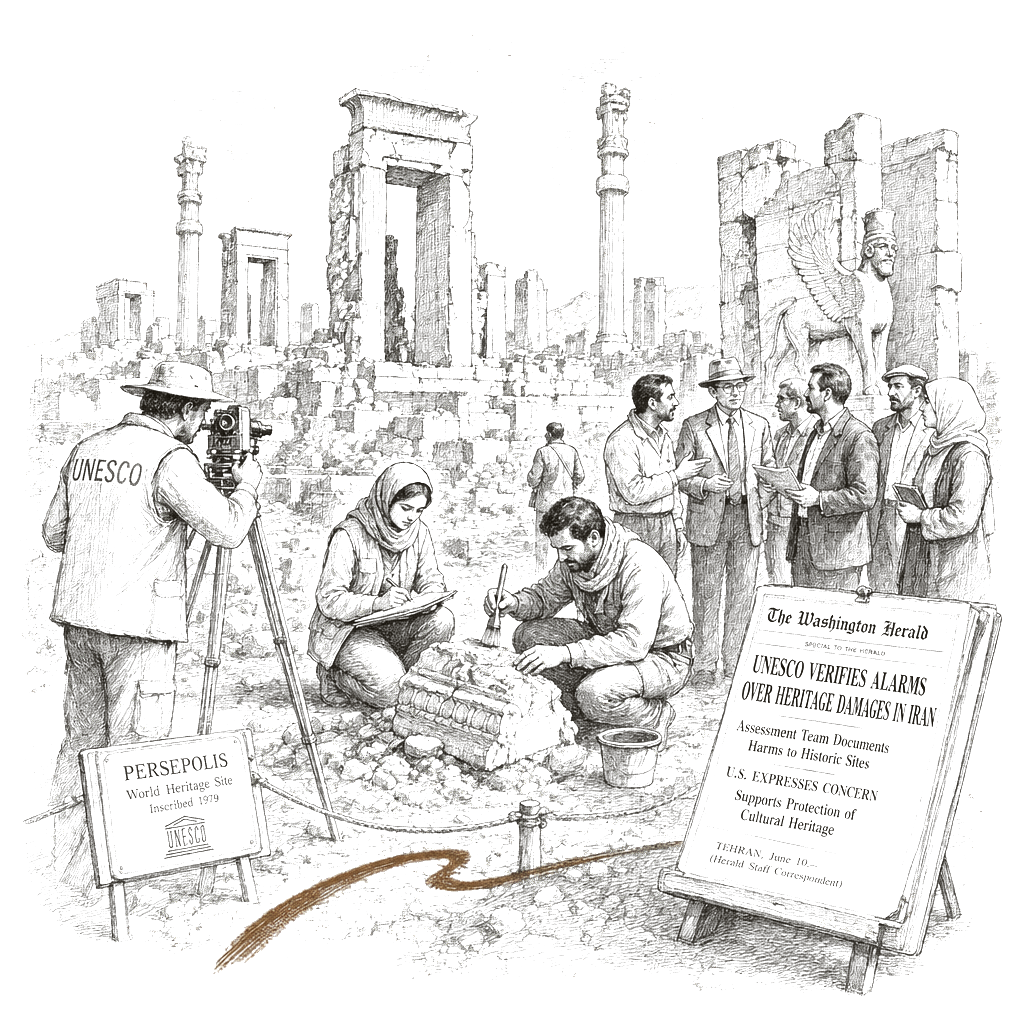
U.S. and Israeli strikes on Iran have damaged at least four cultural and historical sites, UNESCO said in a report that raised alarms about how the widening war is affecting protected landmarks important to Iranian identity and world history.
UNESCO said it has verified damage to the Qajar-era Golestan Palace in Tehran, describing shattered glass from mirrored ceilings blanketing the floors and broken archways, blown-out windows and damaged molding below the palace’s glass-mosaic walls. In its reporting on the condition of the site, UNESCO pointed to Associated Press video taken March 3.
The cultural agency also confirmed verified damage in Isfahan to the 17th-century Chehel Sotoun palace and to Masjed-e Jāme, described by UNESCO as the country’s oldest Friday mosque. UNESCO said it further verified damage to buildings close to the Khorramabad Valley, an area that includes five prehistoric caves and one rock shelter with evidence of human occupation dating to 63,000 B.C.
UNESCO said it provided all parties to the conflict with the geographical coordinates of the heritage sites ahead of time “to take all feasible precautions to avoid damage,” according to UNESCO. The damage to cultural sites has also been felt beyond Iran, with UNESCO tracking damage to the White City in Israel, Tyre in Lebanon and other places, the report said.
U.N. spokesperson Stephane Dujarric said the pattern is not limited to heritage alone, arguing that civilian harm is the recurring feature of the modern battles. “What is happening is clear to all: In these increasingly modern conflicts, it’s civilians who pay the price, it’s civilian infrastructure that pays the price, and we’ve all seen the destruction of priceless historical heritage,” Dujarric said this week, according to the report.
Human rights advocates, including those monitoring the laws of war, echoed that damage to historical and cultural places can harm communities beyond physical destruction. Bonnie Docherty, a senior researcher in the arms division at Human Rights Watch, said in the report that such damage undermines shared identity within a community because it “damages or destroys a piece of their history that can be significant both to the world and also to a specific region or community.”
The report also included accounts from Iranian Americans who said the heritage sites are tied to personal and family memory. Arash Azizi, who grew up in Iran and later moved to the United States, described visiting sites around the country as a child with his family and said he learned about cultural identity and history through those trips. He said people should not treat heritage damage as minor when “human life is at stake,” adding, “We need a cultural context. We need to know who we are, and where we come from, and what does it all mean?”
For Shabnam Emdadi, a 35-year-old Iranian American in New York, the verified damage to the Safavid-era Chehel Sotoun Palace in Isfahan was described as deeply personal. She said she traveled there with her father before he died, calling the trips her “most fond memories” and saying that “every day when I see the damage of these sites that are the core of my memories, I feel like I am also losing a piece of him.”
The report said it was unclear whether U.S. or Israeli strikes caused the damage to the UNESCO-listed sites. It said the Pentagon did not provide comment, while the Israeli Defense Forces told AP it was “unfamiliar” with claims of damage to UNESCO sites.
In the wider debate over battlefield conduct, a Blue Shield official pointed to rules of engagement as a key part of the humanitarian law framework. Patty Gerstenblith, president of the U.S. Committee of the Blue Shield, said in the report that Secretary of Defense Pete Hegseth’s comment that the U.S. approach would not include “stupid rules of engagement” was important because such rules embody international humanitarian law, including protections for “civilian populations and structures, including your hospitals, your schools, etc.”
UNESCO said the affected sites are among nearly 30 Iranian locations designated as under special protection as part of the World Heritage list. The World Heritage Committee designates sites it considers “of outstanding value to humanity” and can intervene when a site is in danger, and the program provides technical assistance and professional training to preserve sites, the report said. The reporting also noted that the Trump administration announced last July it would withdraw from UNESCO, a decision it said would not take effect until December.