Body
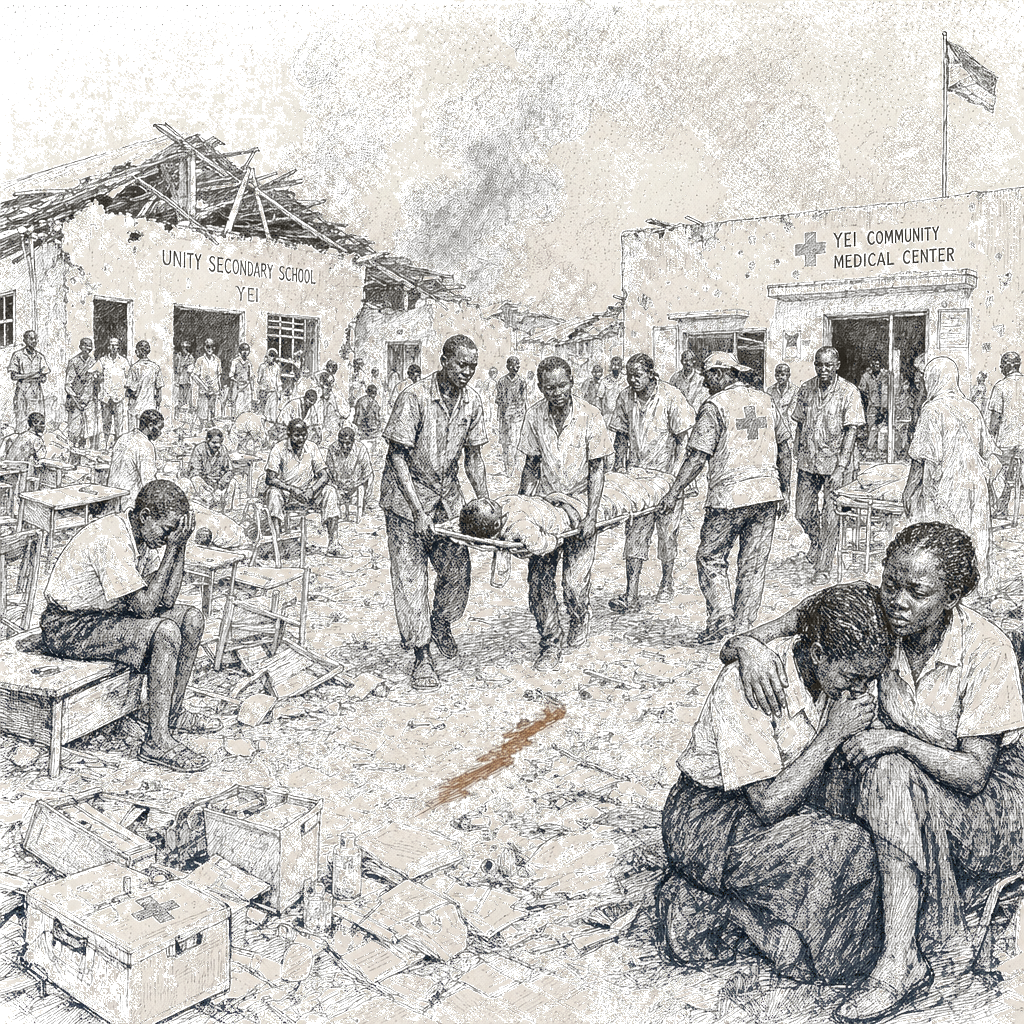
A drone struck a secondary school and a health care center in southern Sudan’s White Nile province on Wednesday, killing at least 17 people, mostly schoolgirls, hospital and medical officials said. The attack hit the village of Shukeiri, where Douiem Hospital director Dr. Musa al-Majeri said at least 10 people were wounded. Dr. al-Majeri said three girls suffered serious injuries; two underwent surgeries at the hospital, while the third was evacuated to Khartoum.
A hospital official and a medical group both pointed to the strike as an example of how civilian facilities have been targeted during Sudan’s nearly three-year war. The war has been marked by repeated attacks on schools, hospitals and other non-military sites, alongside other atrocities investigated by international bodies as possible war crimes and crimes against humanity.
The war-tracking Sudan Doctors Network reported the strike first, saying the killings included two teachers and a health care worker. The group said there was no military presence in the village of Shukeiri, where the school and medical facilities were hit.
Dr. Razan Al-Mahdi, a spokeswoman for a medical group, said the attack showed what she described as a continuation of violations by the Rapid Support Forces in White Nile province. She said the paramilitaries attacked several civilian facilities in the previous two days, including a student dormitory and a power station.
Both al-Majeri and the medical group blamed the Rapid Support Forces for the drone strike. The RSF did not respond to a request for comment.
The strike in Shukeiri came as fighting continues across multiple parts of Sudan. Sudan slid into chaos in April 2023 when a power struggle between the military and the RSF escalated into open conflict in Khartoum and elsewhere, according to the officials and reporting described in the case.
Fighting has centered in regions including Kordofan, where reports of deadly drone attacks have continued. United Nations figures estimate that the war has killed more than 40,000 people, though aid groups have said the true toll may be much higher due to undercounting.
The AP reporting also referenced earlier atrocities investigated for potential international crimes, including attacks on the Darfur city of el-Fasher in October. In that episode, United Nations-commissioned experts said the RSF attack bore “hallmarks of genocide,” and the U.N.’s Human Rights Office said at least 6,000 people were killed in three days.