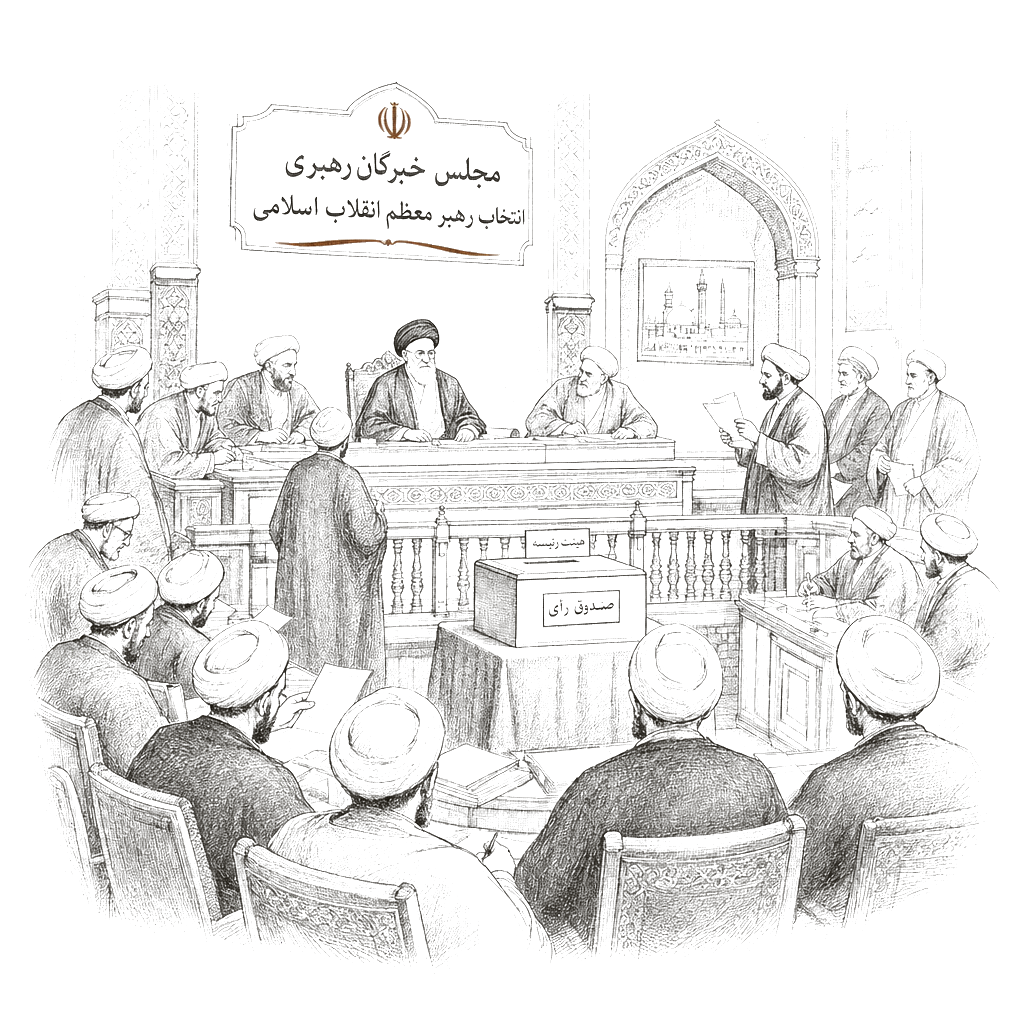
Mojtaba Khamenei, a son of Iran’s late Supreme Leader Ayatollah Ali Khamenei, was chosen Sunday by the Assembly of Experts to succeed his father as the Islamic Republic’s paramount decision-maker, assuming command of Iran’s military and its paramilitary Revolutionary Guard during an ongoing conflict with Israel and the United States.
Khamenei, who had never been elected or appointed to a government position, will now hold final say over all matters of state, including Iran’s ballistic missile arsenal and a stockpile of highly enriched uranium, according to the Associated Press.
The selection marks only the second transfer of supreme leader power since Iran’s 1979 Islamic Revolution, placing a man who spent decades as a secretive power broker within his father’s offices at the helm of a country at war.
Father and wife killed in airstrike
Ali Khamenei, 86, was killed in an Israeli airstrike targeting the supreme leader’s offices at the start of the conflict, the AP reported. Mojtaba Khamenei’s wife, Zahra Haddad Adel, who came from a family long associated with the Islamic Republic’s theocracy, was also killed in the strike.
The deaths elevated the younger Khamenei’s standing among hard-liners, who came to view the family as martyrs in the war against the United States and Israel, the AP reported. Signs of a rift among Iranian officials had emerged as the Assembly of Experts, an 88-seat body of clerics, deliberated over the succession.
His candidacy had drawn criticism within Iran as potentially creating a theocratic version of the hereditary monarchy the 1979 revolution overthrew. That criticism receded among hard-liners following the deaths of his father and wife, the AP reported.
Trump demands role in selection
U.S. President Donald Trump, in an interview Thursday with the news website Axios, said he expected to be directly involved in choosing Iran’s next leader. “They are wasting their time. Khamenei’s son is a lightweight. I have to be involved in the appointment,” Trump said, citing his operation that resulted in the seizure of former Venezuelan leader Nicolás Maduro. “Khamenei’s son is unacceptable to me. We want someone that will bring harmony and peace to Iran,” Trump added.
Rise through his father’s offices
Mojtaba Khamenei was born in 1969 in the city of Mashhad, before the 1979 Islamic Revolution swept Iran. He fought in the Iran-Iraq war with the Habib ibn Mazahir Battalion, a division of the Revolutionary Guard whose members later ascended to senior intelligence positions within the force.
After his father became supreme leader in 1989, Mojtaba Khamenei worked within his father’s offices in Tehran. U.S. diplomatic cables published by WikiLeaks in the late 2000s described him as “the power behind the robes,” characterizing him as his father’s “principal gatekeeper” and noting allegations that he had tapped his own father’s phone.
A 2008 cable said Khamenei was “widely viewed within the regime as a capable and forceful leader and manager who may someday succeed to at least a share of national leadership,” while noting his lack of theological qualifications.
The United States sanctioned Mojtaba Khamenei in 2019 during Trump’s first term over working to “advance his father’s destabilizing regional ambitions and oppressive domestic objectives,” according to the U.S. Treasury.
Mahdi Karroubi, a presidential candidate in both 2005 and 2009, denounced Khamenei as “a master’s son” and alleged he interfered in both elections. Ali Khamenei reportedly responded at the time that his son was “a master himself, not a master’s son.”
Powers of the supreme leader
The supreme leader is the paramount decision-maker in Iran’s Shiite theocracy, with final say over all matters of state and authority as commander-in-chief of the country’s military. Mojtaba Khamenei will also command the Revolutionary Guard, which the United States designated a foreign terrorist organization in 2019 and which controls Iran’s ballistic missile arsenal and holds extensive financial assets within Iran. The Guard leads what it describes as the “Axis of Resistance,” a network of militant groups across the Middle East.
The only prior transfer of supreme leader power occurred in 1989, when Ayatollah Ruhollah Khomeini died at age 86 after leading Iran through the revolution and its eight-year war with Iraq.