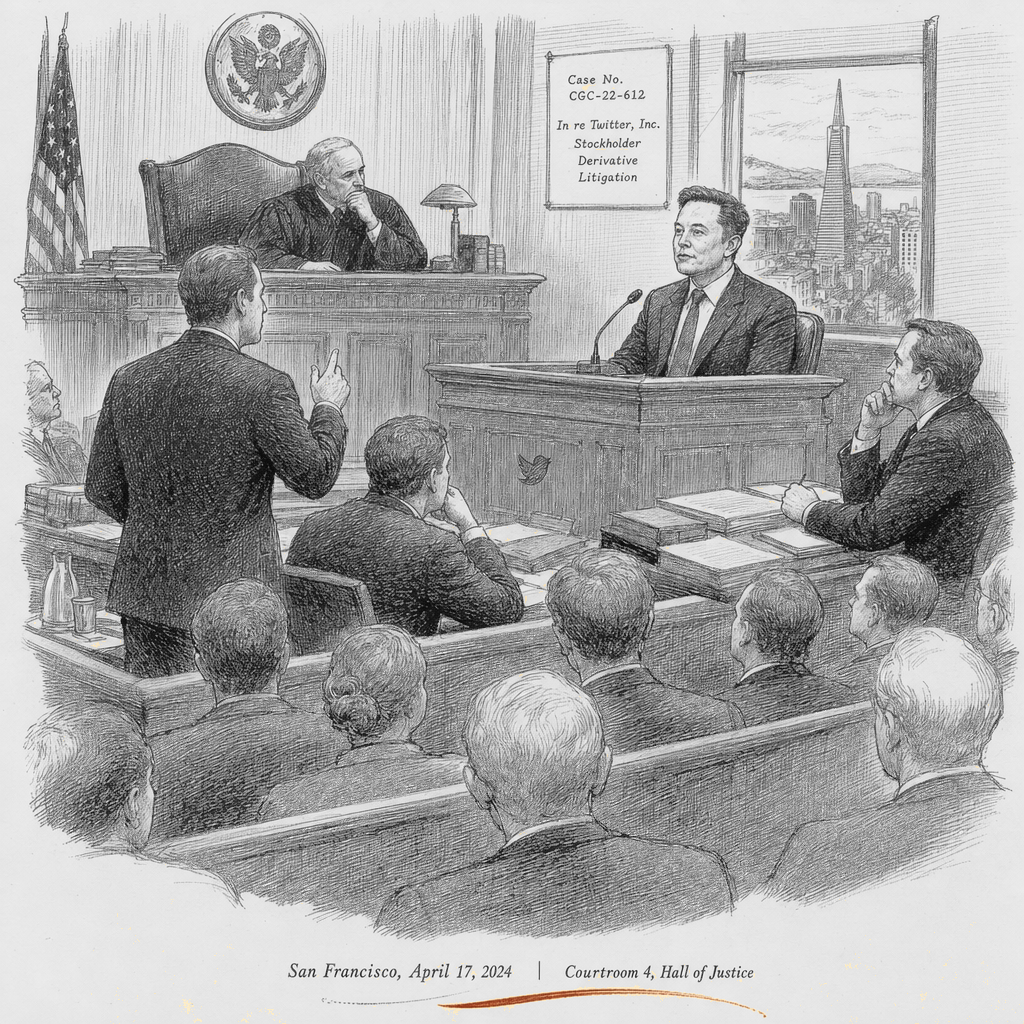
Elon Musk testified Wednesday in San Francisco as a jury heard arguments in a civil case brought by Twitter shareholders who say they were harmed by what the lawsuit alleges was a pattern of deceptive behavior tied to his effort to unwind a $44 billion acquisition of Twitter.
The trial, described as a class-action lawsuit filed just before Musk took control of Twitter—later renamed X in October 2022—focuses on accusations that Musk’s actions around the planned purchase misled investors. Musk had agreed to buy the company about six months earlier, in 2022, for $44 billion, or $54.20 per share.
Prosecutors in this civil context say the disputed period involves Musk’s attempt to back out of the deal before he ultimately completed the takeover. The class represents shareholders who sold Twitter stock between May 13 and Oct. 4, 2022, during the uncertainty that followed Musk’s announcement in July 2022 that he planned to withdraw from the transaction, according to the allegations presented in court.
Musk said on the stand that he believed the deal needed re-negotiation or termination, and he faulted Twitter’s board for what he described as misleading information about the amount of fake accounts on the platform. Asked about the accuracy of the board’s disclosures on “bot” accounts, Musk repeated his view that the calculations did not hold up, and he testified that he made it clear he believed the board’s estimates were “BS.”
The testimony also reflected the acrimony that surrounded the negotiations. When asked whether he threatened to “hunt down” Twitter’s board unless the parties returned to the negotiating table to discuss a revised sales price, Musk did not rule out that possibility, with the exchange occurring amid the broader disputes outlined in the lawsuit.
Musk described his decision to complete the acquisition as connected to advice from his lawyers about the judge overseeing the Delaware case tied to Twitter’s attempt to force him to honor the original agreement. He testified that his legal team advised him that Chancellor Kathleen St. Jude McCormick was “extremely biased” against him, and he pointed to an order that voided a $55 billion pay package awarded to him as Tesla CEO.
Musk’s account said the Delaware dispute’s legal posture left him with little chance of prevailing, which he linked to why he ultimately returned to the deal terms he had earlier abandoned. The story of the litigation includes that, after Musk backed out, Twitter sued in Delaware to compel him to close the transaction, and the parties later agreed to proceed with the original price before a Delaware trial was to begin.
During the San Francisco trial, Judge Charles Breyer said he cited other evidence suggesting Musk may have personally concluded that McCormick was biased, which could affect whether attorney-client privilege blocks certain testimony. Breyer indicated he may rule on the matter later as the case, currently scheduled to continue through March 19, moves forward.
Musk also argued that completing the deal at the original sales price produced benefits for most Twitter shareholders, even as the stock dropped during the period of uncertainty. His testimony acknowledged that his social media activity often reveals more than he intends, and he told the court, “What I think privately is what I say publicly.”
Musk is expected to return to court Thursday to continue his testimony.