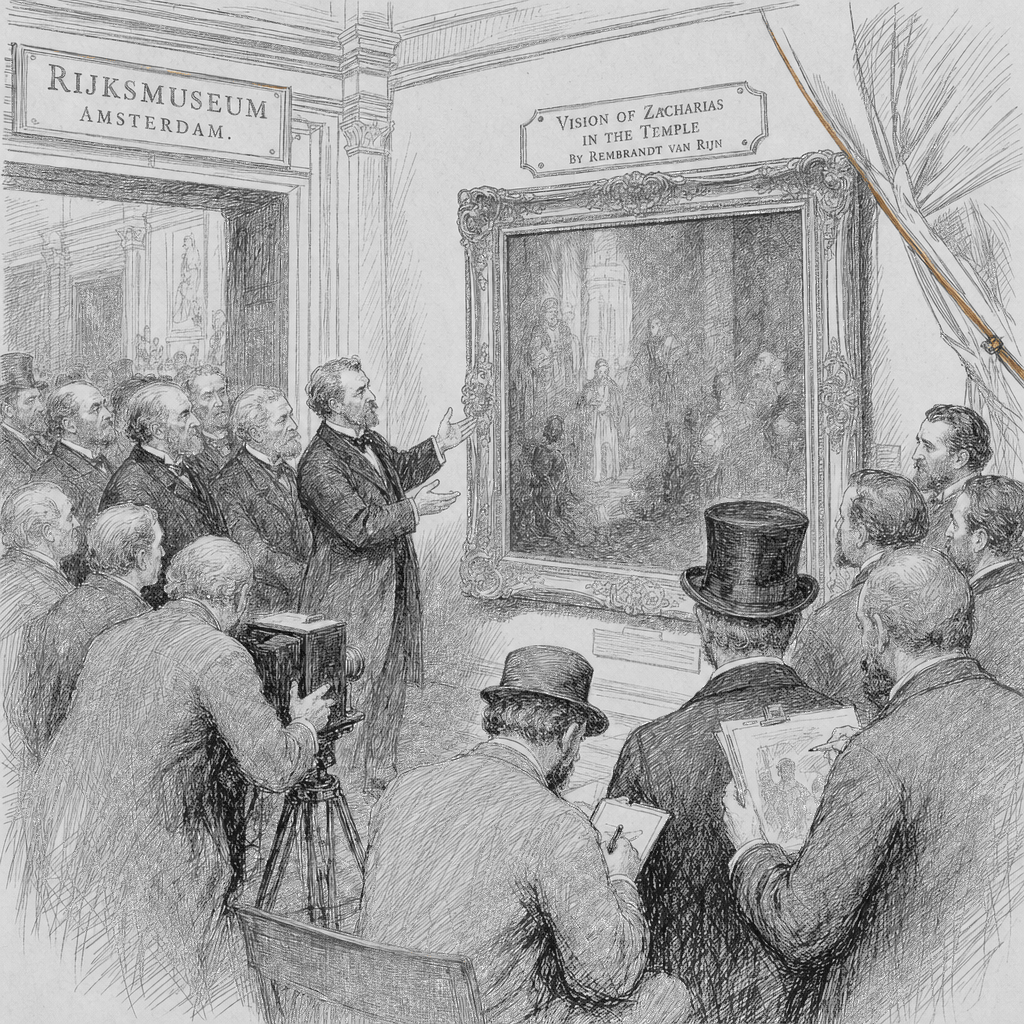
Dutch museum unveils Rembrandt painting after long-shelved identification
The Rijksmuseum in Amsterdam unveiled on Monday a painting titled “Vision of Zacharias in the Temple,” acknowledging it as a work by Rembrandt van Rijn after what the museum described as two years of scrutiny. The museum said the analysis took place in the city where Rembrandt painted the work in 1633, and that the results confirmed the artist created the painting after he moved to Amsterdam.
The museum said the work had not been displayed publicly for decades. It was bought by a private collector in 1961, a year after it had been judged not to be a Rembrandt, the Rijksmuseum said.
Rijksmuseum officials said the painting would go on show from Wednesday among other masterpieces at the museum. The museum said it is on long-term loan.
Director Taco Dibbits described the discovery as rare even for a museum that receives inquiries about whether a painting an owner holds could be by Rembrandt. He told The Associated Press that such discoveries happen infrequently and described the process as “just like (finding) a needle in a haystack.”
The museum said the painting depicts a biblical scene: high priest Zacharias is visited by the Archangel Gabriel, who tells Zacharias that he and his wife will have a son, John the Baptist. The Rijksmuseum said Zacharias’ surprised expression stands out under light that heralds Gabriel’s arrival.
Rijksmuseum curator of 17th century Dutch paintings Jonathan Bikker said the attribution drew on an in-depth study that included macro X-ray fluorescence scans and comparisons with Rembrandt’s other works. He said material evidence helped narrow the dating and authorship, including the wood used for the panel and the chemical makeup and layering of the pigments.
Bikker said the wood on which the painting is executed “is definitely from a tree that was cut down before 1633,” matching the date on the painting. He also said the pigments and paint in the work were among those Rembrandt used in other paintings, and that the layers and technique are “precisely the same as in other works by Rembrandt.”
The Rijksmuseum said the painting joins about 350 known Rembrandt works. Bikker said the museum does not actively seek new paintings by the artist but that the study gives hope to the museum and to people interested in Rembrandt’s oeuvre.
Sources previously unseen by the public remained the key to unlocking the painting’s identity, the Rijksmuseum said, noting that the owner had initially asked only whether the painting was Dutch before the assessment evolved into a Rembrandt attribution.