Summary
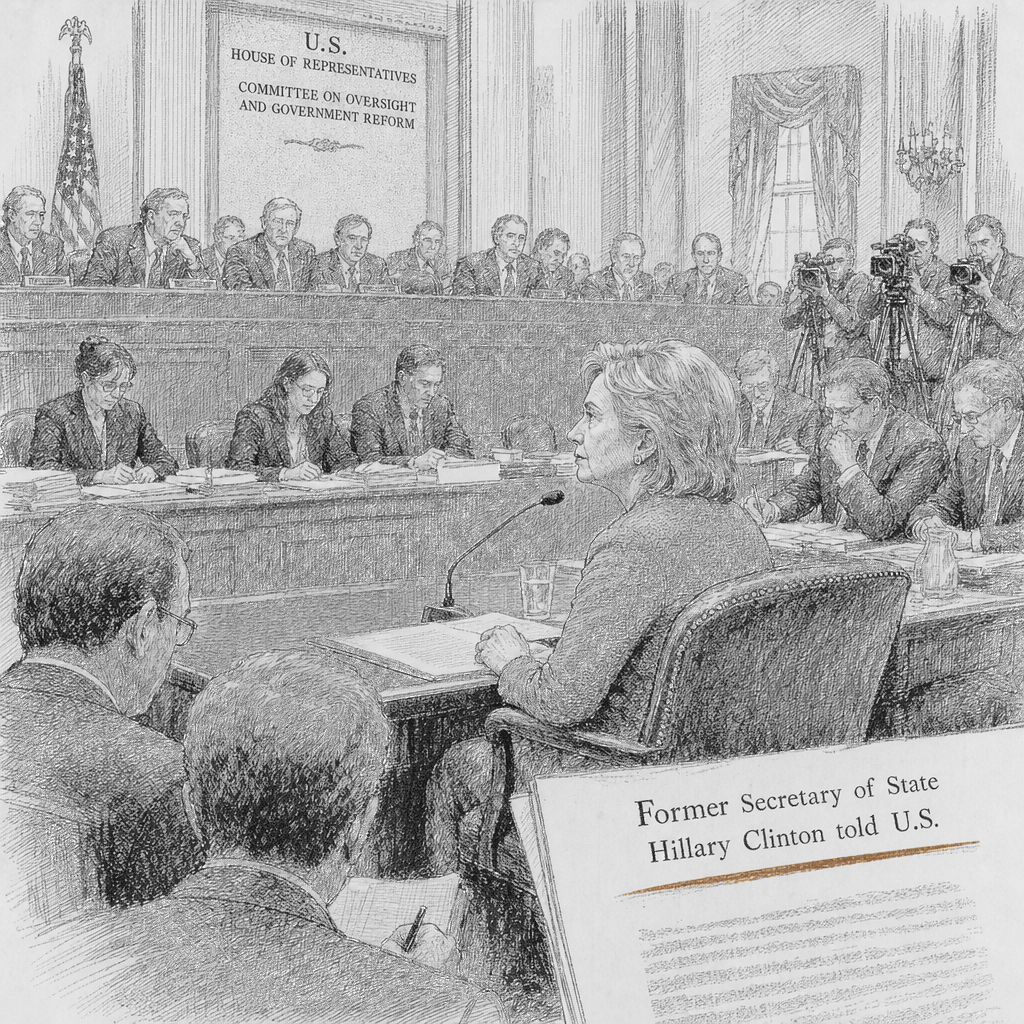
Former Secretary of State Hillary Clinton opened her deposition with a denial of any knowledge of Jeffrey Epstein’s and Ghislaine Maxwell’s alleged crimes, telling House investigators that she did not recall encountering Epstein. The closed-door deposition was held in the Clintons’ hometown of Chappaqua, a hamlet north of New York City, and it concluded on Thursday after more than six hours of questioning as part of a two-day testimony schedule that also includes former President Bill Clinton.
Clinton shared her opening statement with the committee in a session that began Thursday and ended after over six hours of answering questions, according to the Associated Press. In the statement, she said: “I had no idea about their criminal activities. I do not recall ever encountering Mr. Epstein,” language she delivered as part of her first remarks to lawmakers. She also told committee members, “Like every decent person,” she said, “I have been horrified by what we have learned about their crimes.”
The deposition comes after months of tense back-and-forth between the Clintons and the Republican-controlled House Oversight Committee, which has been investigating Epstein, who died by suicide in 2019 in a New York jail cell while awaiting trial. The committee’s effort also reflects a broader political push in Washington and beyond for scrutiny of Epstein’s abuse of underage girls and for the release of records tied to the case.
Outside the deposition location, Clinton said Maxwell attended Chelsea Clinton’s 2010 wedding as a guest of someone else, and she said she told the committee that she knew Maxwell “as an acquaintance.” The report also describes how Clinton previously said her husband flew with Epstein for charitable trips but that she did not recall meeting him, and it notes that she said she had interacted with Maxwell at conferences hosted by the Clinton Foundation.
The Oversight Committee chairman, Rep. James Comer, said the purpose of the overall investigation was to understand “many things about Epstein,” including how he accumulated wealth and how he was able to “surround himself with some of the most powerful men in the world.” Comer said he would work to release a video and transcript of the deposition. Democrats, led by Rep. Robert Garcia, pushed for transparency as well after an incident during the private proceeding.
During the deposition, the session was paused after Rep. Lauren Boebert sent a photo of Clinton from the private proceeding to a conservative influencer, who posted it on social media, which the committee treated as a rules violation. Democrats said that incident underscored the need for a clear public record of the deposition, and Garcia said Clinton repeated her longstanding demand that the deposition be made public and that Democrats called for a video and transcript of the complete proceedings.
Republicans highlighted the opportunity to question the Clintons as part of a political struggle over scrutiny for ties to Epstein, with Clinton described as a target for questions including her public record and prior interactions. The report says Republicans also pointed to Clinton’s work as secretary of state to address sex trafficking as an additional reason to insist on her testimony, while Clinton defended her efforts and said the issue remained important to help survivors of sex trafficking.
The deposition also reflected a disputed thread of the committee’s investigation into the Justice Department’s handling of the case after Epstein’s 2008 state plea that involved soliciting prostitution from an underage girl while avoiding federal charges. The investigation has sought to understand why federal prosecutors did not pursue additional charges in the aftermath of that arrangement.
Garcia called for Trump to testify, arguing that Bill Clinton’s appearance sets a precedent that should apply to the president as well. Comer previously said the committee cannot depose Trump because he is a sitting president. The report also describes Democrats’ response to Epstein-related filings in the context of federal records, including Senate Democratic leader Chuck Schumer’s plans to review unredacted versions of the case files at a Justice Department office and his language that his caucus would “pull on every thread” until materials reveal what he called a “massive cover-up.”