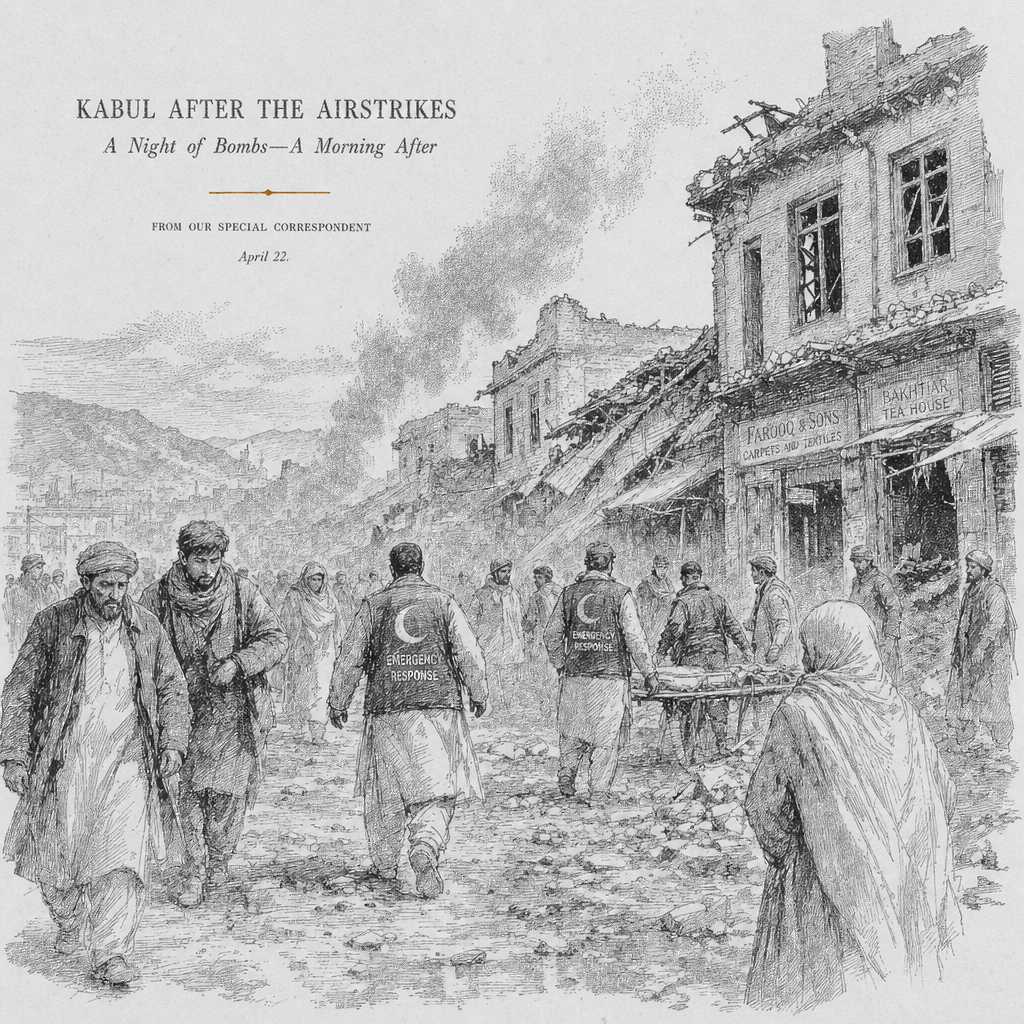
Hours after Afghanistan launched what it described as a retaliatory attack across the border into Pakistan late Thursday, Pakistan conducted airstrikes in Afghanistan, Afghanistan’s government said. Kabul heard at least three explosions early Friday, and Afghanistan’s government spokesperson, Zabihullah Mujahid, said Pakistan also struck in Kandahar to the south and in Paktia, the southeastern province.
Pakistan’s military did not describe the strikes in public with specific locations in Kabul, but two senior Pakistani security officials told The Associated Press on condition of anonymity that Pakistan targeted what they described as Afghan military facilities in Kabul, Kandahar and Paktia provinces. The officials said the strikes allegedly destroyed two brigade bases, though they did not mention any potential casualties.
Afghanistan framed its Thursday-night attack as retaliation for deadly Pakistani airstrikes on Afghan border areas Sunday. Mujahid said in a post on X that Afghanistan launched “large-scale offensive operations” in response to what he described as repeated rebellions and insurrections by the Pakistani military, and the Defense Ministry said the retaliatory attacks occurred along the border in six provinces.
The border area at the center of the escalation is the Durand Line, a roughly 2,611-kilometer border known by that name. Afghanistan has not formally recognized the Durand Line. Afghanistan said its military captured more than a dozen Pakistani army posts, while Pakistan’s government dismissed that claim and said the Pakistani strikes were aimed at militants harbored in the border area in the earlier exchange.
Pakistan’s government also characterized the Thursday attack as “unprovoked,” with Pakistan’s Information Minister Attaullah Tarar saying in a post on X that Pakistan was giving a “strong and effective response” to what he called firing from Afghanistan. Tarar’s claims differed sharply from Afghanistan’s, saying the number of Pakistani soldiers killed was two, with three wounded, and saying 36 Afghan fighters were killed.
Another Pakistan official, Mosharraf Ali Zaidi, a spokesperson for Pakistan’s Prime Minister Shehbaz Sharif, denied that any Pakistani soldiers had been captured. Later, Zaidi added in another post on X that at least 133 Afghan fighters were killed and more than 200 wounded, and that “27 Afghani posts” were destroyed and nine fighters captured; he did not specify where those victims died and said there would be “many more casualties estimated in strikes in Kabul, Paktia and Kandahar military targets.”
The dispute also spilled into claims about a refugee camp near the Torkham border crossing. Afghan authorities evacuated the camp after several refugees were wounded, said Qureshi Badlon, head of Torkham’s Information and Public Awareness Board. Afghanistan’s Defense Ministry said 13 civilians were wounded in a missile strike on the camp, including women and children, while Pakistani police said mortars fired from Afghanistan landed in nearby villages and there were no reports of civilian casualties.
In parallel, Pakistan’s Information Ministry said in a post on X that Pakistan would take “all necessary measures to ensure its territorial integrity and the safety and security of its citizens,” while Afghanistan’s military released video footage showing vehicles moving at night and the sound of heavy gunfire. The footage was not independently verified.
The renewed airstrikes landed amid months of tension between the two countries, including deadly clashes in October that killed dozens of soldiers, civilians and suspected militants. A Qatari-mediated ceasefire between Pakistan and Afghanistan has largely held, but the two sides have still traded occasional fire across the border, and several rounds of peace talks in November failed to produce a formal agreement.
U.N. Secretary-General António Guterres urged both sides to protect civilians as required under international law and “to continue to seek to resolve any differences through diplomacy,” the U.N. spokesperson Stephane Dujarric said. The episode underscored how quickly diplomatic efforts have strained during a cycle of accusations, cross-border strikes and competing casualty counts.