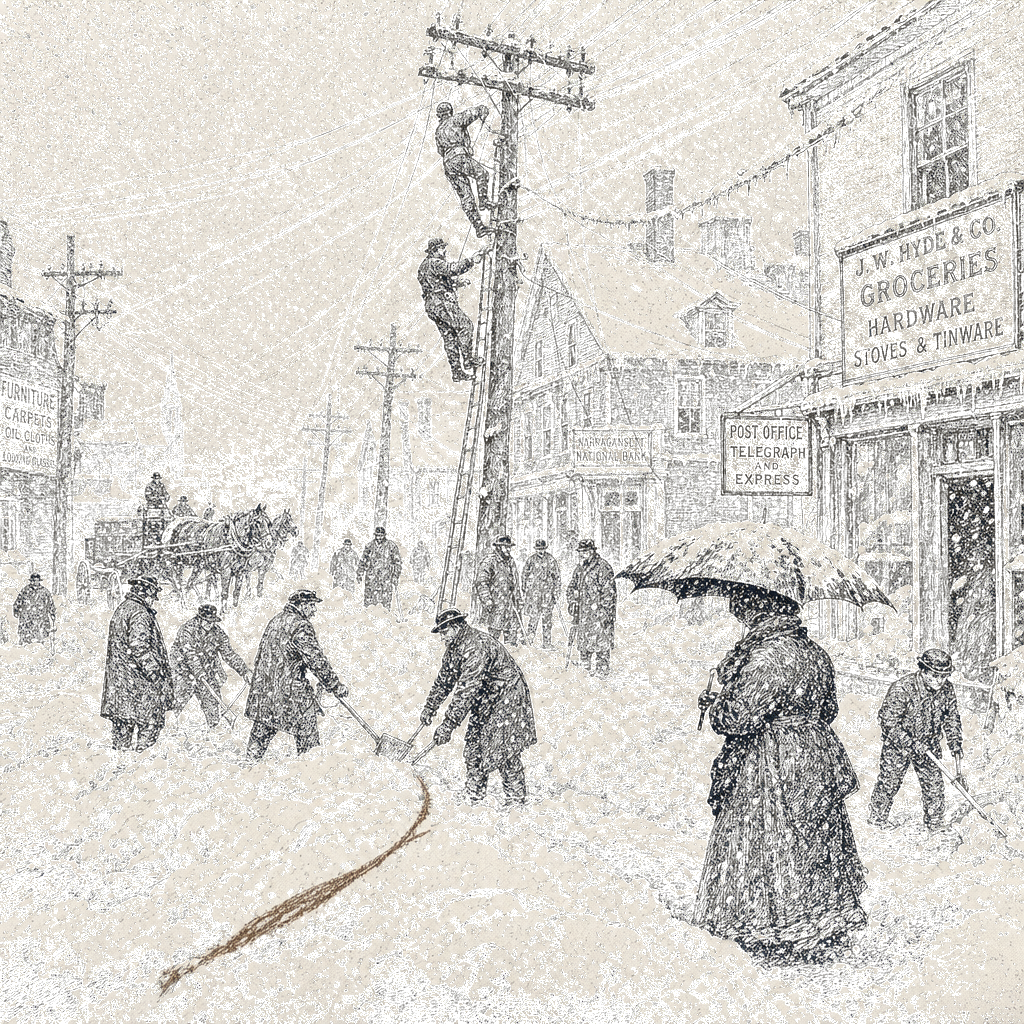
The storm aftermath in the Northeast carried into Wednesday, with additional light snow and lingering cleanup needs compounding the damage already caused by the massive system that dumped icy piles across streets and sidewalks from Maryland to Maine. The National Weather Service forecast that additional light snow moved out across the Great Lakes and into the Northeast overnight, extending difficult conditions beyond the storm’s peak.
In Rhode Island, the snowfall totals pushed higher than the landmark Blizzard of 1978, with residents and local officials describing a prolonged period of disruption. The Associated Press reported that in areas such as Rhode Island, where 3 feet of snow surpassed the record set in the Blizzard of 1978, people were stuck in their homes for a third straight day as residential streets remained unplowed and other services slowed or paused, including postponed trash pickup and some schools going virtual.
Elsewhere, the power problems persisted even as crews worked through extended shifts. Poweroutage.us data cited by the AP showed more than 138,000 customers still without electricity Wednesday afternoon, nearly all in Massachusetts—particularly Cape Cod. Utility crews were reportedly working 18-hour shifts to restore service, and some residents sought shelter at warming stations to recharge phones and get relief from the outage.
Anny Enos, taking her three grandchildren to a warming station in Barnstable, Massachusetts, said she had not had power since Sunday afternoon and worried it might not return until Friday. The article said she was “hoping for the best” after throwing out much of her refrigerator.
Officials also described the practical challenges of removing snow and repairing storm damage before crews could finish restoration work. In Massachusetts, Eversource officials described “thousands” of damage sites that required workers, in some cases, to remove large snow piles with backhoes before new poles could be installed or old ones repaired. The AP reported that additional crews from other states arrived to help, while early Wednesday snowfall—up to 3 more inches—added to slippery conditions before temperatures rose and left slushy areas.
In New York City, Mayor Zohran Mamdani said the city expanded snow response efforts by spreading 143 million pounds of salt by Tuesday evening and signing up at least 3,500 emergency shovelers for $30-per-hour shifts to clear snow from bus stops and streets. In the city, the school day for more than 900,000 students continued, but the AP reported that many students and caregivers had to scramble over mountainous snow banks and dodge salt spreaders during morning drop-off.
Outside city limits, some residents faced access barriers on footpaths that did not clear evenly. Jeff Peters, spokesperson for the Center for Independence of the Disabled, New York, said some sidewalks were partially cleared but still forced people to navigate narrow, obstructed pathways that could not accommodate mobility devices or even space for companions like strollers, rollators, walkers or crutches, and he described corners where snow remained as well. Tina Guenette, who uses a motorized wheelchair, told the AP she had to shovel out her yard in Harrisville, Rhode Island, after more than 33 inches of snow fell there and said the town’s volunteer snow-shoveling program had lacked volunteers for years.
The storm also raised safety concerns. Police in Rhode Island said carbon monoxide poisoning killed Joseph Boutrous, 21, in an area that had lost power. The AP reported that Newport Police Capt. Joseph Carroll said Boutrous had told a fellow Salve Regina student he was going to charge his phone in his car and that snow obstructed the exhaust pipe; police called the death accidental.
In regional recovery planning, meteorologist Ryan Maue calculated the total amount of water contained in the snowfall across the region, describing the storm’s scale in volumetric terms. He also said that when the snow melts, the water could help mitigate drought affecting parts of the Northeast, even as it continued to add misery during the current conditions.
The AP also reported that school reopenings were uneven across the hardest-hit areas. In New York, the AP said some large school districts moved back to in-person classes on Wednesday, but Providence officials kept schools closed and switched to virtual learning for the rest of the week in Rhode Island. Flight disruptions were also easing: by Wednesday the AP said FlightAware showed nearly 200 flights grounded, with T.F. Green International Airport in Rhode Island having reopened Tuesday, while some flights departed Wednesday and others were canceled.