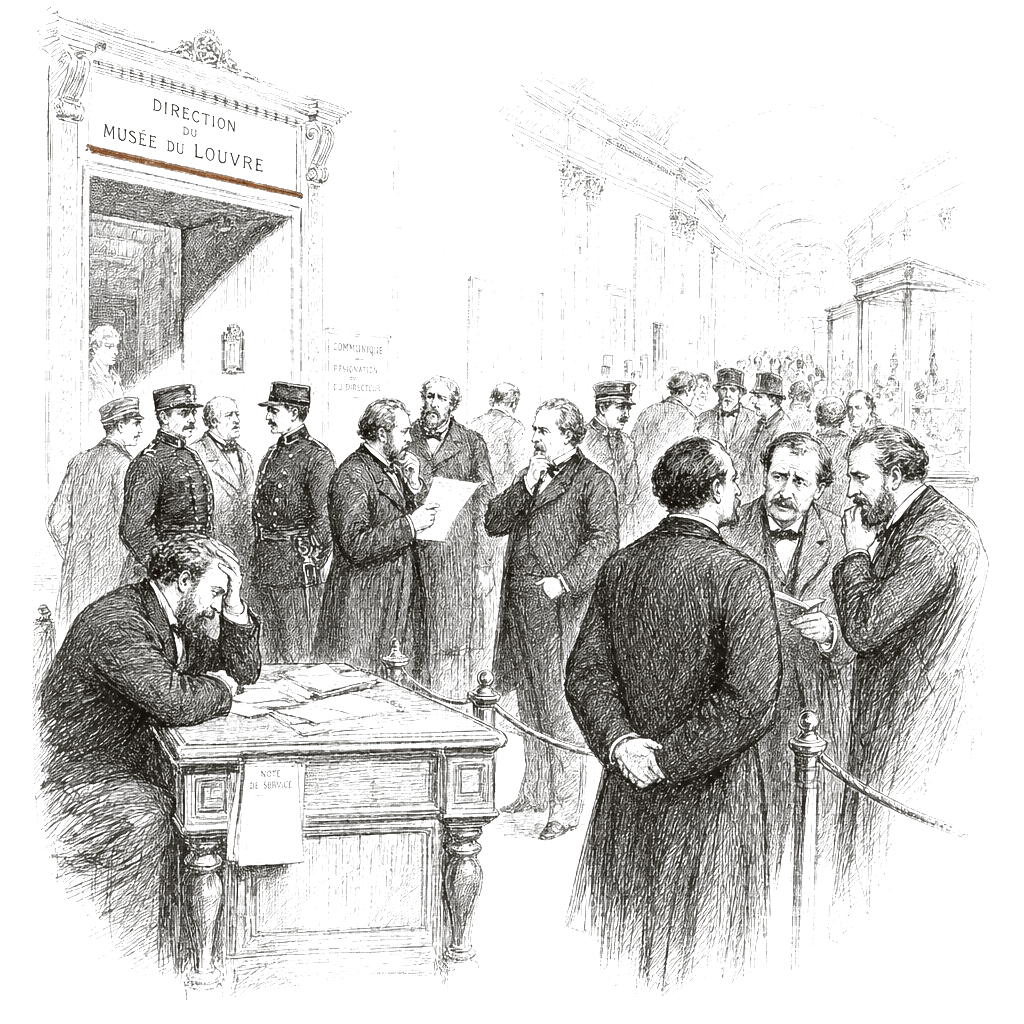
The Louvre Museum’s director, Laurence des Cars, resigned Tuesday in the wake of the October theft of French crown jewels valued at €88 million, a brazen daylight robbery that exposed severe security gaps at the Paris institution. President Emmanuel Macron accepted her resignation “as an act of responsibility,” according to his office, citing the need for “calm” and major security upgrades as the museum grapples with a suspected ticket fraud scheme and deep operational challenges.
The resignation represents a reckoning for one of the world’s most prestigious cultural institutions over accountability for security failures, coming as the museum prepares for a sweeping €700 million to €800 million renovation intended to address chronic overcrowding and modernization needs.
A Cascade of Crises
The Louvre faced a punishing year of institutional failures in the months following the October heist. Thieves took less than eight minutes to steal the crown jewels from the Apollo Gallery in a weekend operation that stunned visitors and shocked France. Several suspects were later arrested, but the stolen pieces remain missing.
In the months that followed, the museum confronted a series of additional problems. A burst pipe near the “Mona Lisa” in mid-February caused water leaks that damaged priceless books. The cumulative pressure prompted staff walkouts and, in June, a wildcat strike by front-of-house and security workers that forced the museum to halt operations, stranding thousands of visitors outside the glass pyramid.
Workers and unions cited unmanageable visitor flows—particularly around the “Mona Lisa”—and what they called untenable working conditions. The promised reforms were arriving too slowly, they said, and the crumbling medieval structure’s infrastructure and staffing had not kept pace with the crowds.
The Fraud Discovery
The mounting institutional pressures deepened in recent weeks when French authorities revealed a suspected ticket fraud operation that prosecutors say operated for a decade. Tour guides allegedly reused the same tickets to bring in different visitor groups up to 20 times a day, at times with help from Louvre employees, in a system investigators believe cost the museum €10 million.
Kim Pham, the Louvre’s general administrator, acknowledged the fraud in a rare interview with the Associated Press after the case was made public. He said fraud at an institution of the Louvre’s scale was “statistically inevitable” given the museum’s sheer scale—millions of visitors, multiple checkpoints and a sprawling historic complex. But he also said the museum had tightened validation checks and increased controls.
Des Cars’ Account
Des Cars offered to resign on the day of the October heist, describing the moment as a “tragic, brutal, violent reality” for the museum and saying that as the person in charge, it had felt right to offer her resignation. The culture minister initially refused.
In remarks published Tuesday by the French daily Le Figaro, des Cars said she had tried to steer the Louvre through the fallout from the heist but concluded that she could no longer carry out the museum’s transformation in the current institutional climate. Staying on, she said, would have meant managing the status quo when the museum still needs deep reform.
“I was there to take the lightning as museum director,” she said.
Des Cars also said the October break-in exposed problems she had been warning about since she took office in 2021, including aging infrastructure, obsolete technical systems and severe congestion.
The Renovation Question
These mounting crises have amplified focus on a project Macron has heavily championed: the Louvre’s sweeping overhaul plan, branded the “Louvre New Renaissance.”
Unveiled by Macron in January 2025, the renovation, which could take up to a decade, aims to modernize a museum widely seen as overstretched and physically worn down by mass tourism. The plan includes a new entrance near the Seine River to ease pressure on I.M. Pei’s pyramid, new underground spaces and a dedicated room for the “Mona Lisa” with timed access—all intended to improve crowd flow and reduce the daily crush that has become a symbol of the Louvre’s success and its dysfunction.
The project is expected to cost roughly €700 million to €800 million, with funding from ticket revenue, state support, donations and Louvre Abu Dhabi-related income.
The scale and cost of that plan now loom over the search for des Cars’ successor.