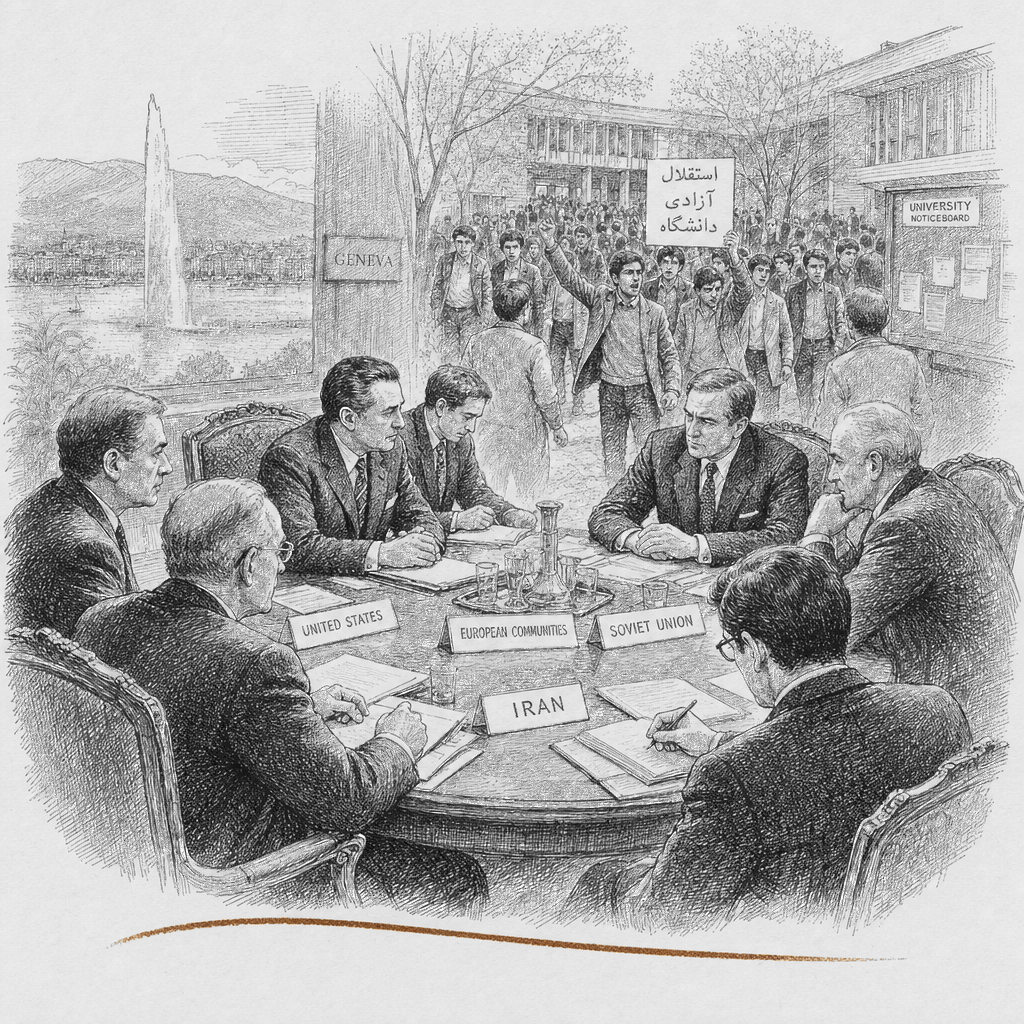
The United States and Iran will resume nuclear negotiations Thursday in Geneva, as the Islamic Republic faces fresh anti-government demonstrations at universities across the country, Oman announced Sunday. Iran’s top diplomat, Abbas Araghchi, told CBS News he expected to meet U.S. envoy Steve Witkoff on Thursday and said a “good chance” remained for a diplomatic resolution on Iran’s nuclear program. The talks come as students in Tehran and the city of Mashhad gathered at university memorials for thousands killed in a government crackdown six weeks ago — a period in Iranian history when mourning ceremonies have often transformed into new cycles of protest and renewed state violence.
The resumption of nuclear talks offers the Trump administration its first substantive diplomatic opening with Iran since earlier rounds of negotiations stalled. Both sides have publicly signaled they remain prepared for military action if the talks fail to produce an agreement, with President Trump warning Friday that limited strikes against Iran remain possible.
Nuclear Diplomacy Advances
Oman’s foreign minister, Badr al-Busaidi, confirmed the Thursday talks. Oman previously hosted indirect rounds of negotiations on Iran’s nuclear program and facilitated the most recent discussions in Geneva last week.
Iran’s top diplomat told CBS News he expected substantive discussions. “I expect to meet Steve Witkoff in Geneva on Thursday,” Abbas Araghchi said, adding that the two sides had narrowed their disagreements. “There is a good chance for a solution, I believe.”
Washington awaits a proposed deal that Araghchi has said would be ready to present within days. In his CBS interview, Araghchi said Iran was still drafting the proposal.
The nuclear issue is the only matter being discussed in the current talks, Araghchi said, even though both the United States and Israel have separately pushed Iran to address its ballistic missile program and its support for armed groups across the Middle East.
The negotiations center on a fundamental disagreement over uranium enrichment. The United States says Iran cannot have nuclear weapons or the capacity to build them, and cannot enrich uranium. Araghchi, however, said Iran has the right to enrich uranium. He also said U.S. officials had not demanded zero enrichment as part of the latest round of talks — a claim that differs from public U.S. statements on the matter.
“They want to ensure that Iran’s nuclear program, including enrichment, will remain peaceful forever,” Araghchi said of the U.S. side. “In return, Iran will implement confidence-building measures in exchange for relief on economic sanctions.”
Iran has insisted that any negotiations focus only on its nuclear program and has declined to discuss wider U.S. and Israeli demands. Tehran has long maintained that its nuclear program is entirely peaceful, though the United States and other nations suspect it is aimed at developing nuclear weapons capacity.
Iran claims it has not enriched uranium since U.S. and Israeli strikes on Iranian nuclear sites in June. Trump said those strikes had “obliterated” Iran’s nuclear sites, though the exact damage remains unclear because Iran has barred international nuclear inspectors from the sites.
Araghchi pushed back against characterizations of Iranian weakness, telling CBS that “we have a very good capability of missiles, and now we are even in a better situation” than before the June strikes.
The current talks represent a significant shift after nuclear negotiations became deadlocked for years following Trump’s 2018 decision to unilaterally withdraw the United States from Iran’s 2015 nuclear agreement with world powers.
University Protests Resume
Meanwhile, university campuses in Iran have become sites of renewed anti-government demonstration. According to Iran’s state news agency, students protested at five universities in Tehran and one in the city of Mashhad on Sunday, continuing demonstrations that began Saturday following 40-day memorials for those killed in the government crackdown in January.
Videos posted on social media appeared to show confrontations at two universities between government supporters and anti-government protesters, with some chanting “Death to dictator.”
The protests center on commemorating those killed six weeks earlier during the deadliest crackdown on anti-government demonstrations seen under Supreme Leader Ali Khamenei’s rule. Thousands were killed and tens of thousands arrested in that earlier unrest.
40-Year Cycle of Commemoration and Conflict
During the 1979 Islamic Revolution that toppled the shah and brought the Islamic Republic to power, 40-day memorials for slain protesters often transformed into rallies that security forces moved to suppress, leading to new deaths that were then commemorated 40 days later, creating recurring cycles of protest and crackdown.
Activists say most of those killed in the January crackdown died around January 8 and 9. The U.S.-based Human Rights Activists News Agency has documented at least 7,015 deaths from that period and the subsequent crackdown, including 214 government security forces. The agency has been accurate in counting deaths during previous periods of unrest in Iran and relies on a network of activists inside the country to verify fatalities.
Iran’s government offered its only official death toll from the January disturbances on Jan. 21, saying 3,117 people were killed. Iran’s government has historically undercounted or declined to report fatalities from past unrest.
The Associated Press reported it has been unable to independently assess the death toll, as Iranian authorities have disrupted internet access and blocked international telephone calls within the country, limiting outside verification.
Iran’s government has not commented publicly on the latest university protests.