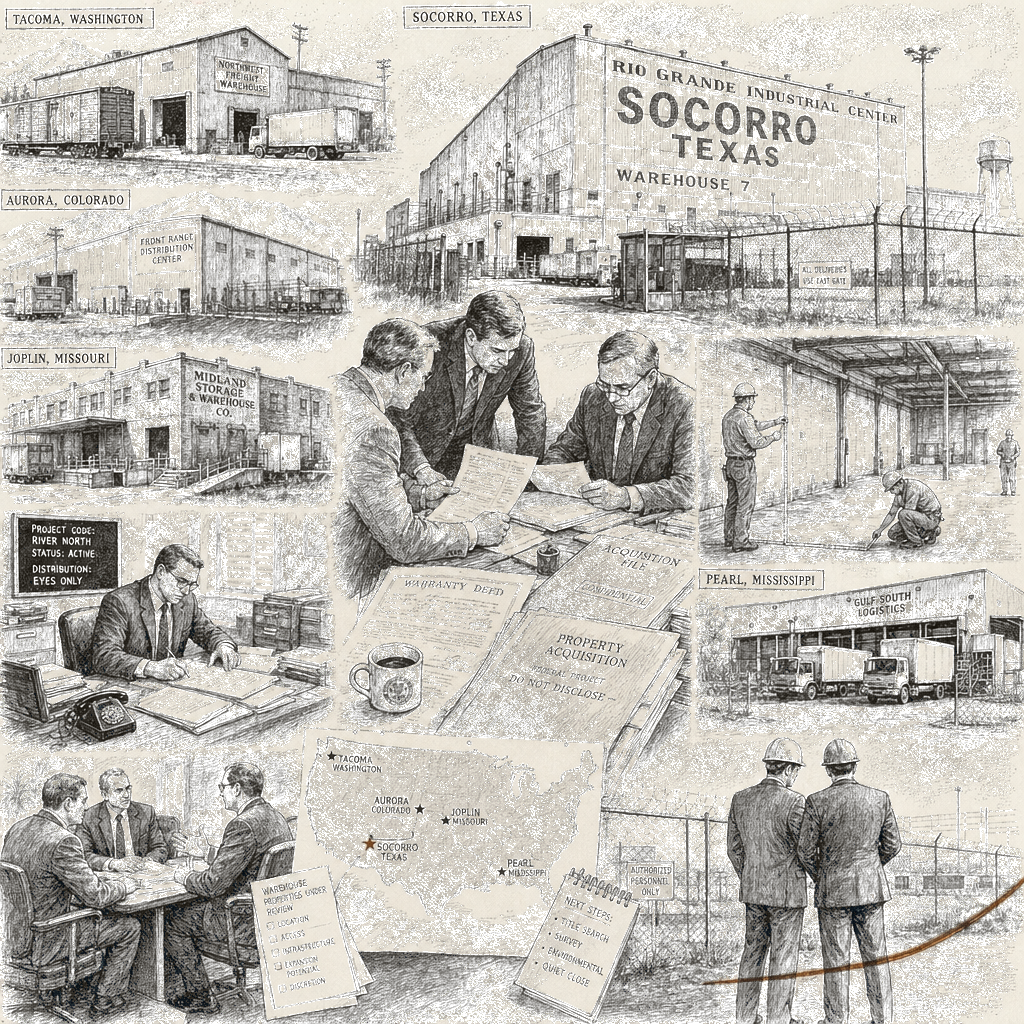
The Department of Homeland Security has secretly purchased at least seven warehouses across Arizona, Georgia, Maryland, Pennsylvania and Texas for immigration detention centers, spending $122.8 million on a single 826,000-square-foot facility in Socorro, Texas. Local officials say they learned about the purchases only after deed filings or news reports — with no federal notification before the deals closed.
The acquisitions are part of a broad Trump administration effort to expand immigration detention capacity to 92,000 beds, nearly double the 75,000 detainees currently held across more than 225 sites. Communities nationwide are raising concerns about water and sewage infrastructure, lost property tax revenue, and detention centers designed to hold more people than some towns have residents.
The Scope of the Expansion
Immigration and Customs Enforcement has identified at least 20 communities as targets for detention center conversions, according to the AP’s analysis of deeds and government documents. The purchases span multiple states and represent a coordinated effort to increase the federal detention system’s capacity without public input from the communities affected.
The scale of the proposed facilities has raised concerns far beyond the border region. An internal DHS document released by New Hampshire’s governor’s office indicates the agency plans to spend $38.3 billion on detention infrastructure that would expand capacity from the current 75,000 detained immigrants to 92,000 beds. The detention population has surged since Trump took office, more than doubling from 40,000 at the start of the administration.
Expansion Without Notice
In Socorro, Texas, a town of 40,000 outside El Paso, the purchase unfolded with no prior notification to local officials. Mayor Rudy Cruz Jr. said he learned of the $122.8 million warehouse deal — for a 826,000-square-foot facility — only when a deed appeared in public records.
“Nobody from the federal government bothered to pick up the phone or even send us any type of correspondence letting us know what’s about to take place,” Cruz said. “I just feel that they do these things in silence so that they don’t get opposition.”
The pattern repeated across the country. In Berks County, Pennsylvania, Commissioner Christian Leinbach called the district attorney, sheriff, jail warden and emergency services director when he first heard ICE might purchase a warehouse. None of them knew anything about the deal.
Within days, he learned that ICE had completed the purchase — a $87.4 million acquisition that would cost the county more than $800,000 annually in lost property tax revenue.
“There was absolutely no warning,” Leinbach said.
DHS has declined to discuss the procurement strategy, saying only that the facilities will be “very well structured detention facilities meeting our regular detention standards.” The agency has not disclosed sites ahead of acquisitions, leaving some cities to learn about plans through news reports or online spreadsheets circulating among immigration activists.
Some communities discovered ICE’s interest only after the purchases closed. This past week, ICE acknowledged it made a “mistake” when announcing warehouse purchases in Chester, New York and Roxbury, New Jersey. The sale in Roxbury, the agency said, had already closed on Friday.
The process has moved quickly, aided by military procurement contracts that allow DHS to bypass typical government safeguards and timelines, according to Charles Tiefer, a professor emeritus of law at the University of Baltimore Law School.
Infrastructure Concerns Mount
Local officials have raised alarms about whether their communities can handle the detention centers’ demands. In Social Circle, Georgia, a city of 5,000 people, the planned facility is designed to hold 7,500 to 10,000 detainees — potentially outnumbering the town’s entire population.
“To be clear, the City has repeatedly communicated that it does not have the capacity or resources to accommodate this demand, and no proposal presented to date has demonstrated otherwise,” Social Circle said in a statement, noting that ICE’s analysis relied on a wastewater treatment plant that has not yet been built.
In the Phoenix suburb of Surprise, Arizona, officials sent a scathing letter to Homeland Security Secretary Kristi Noem after ICE purchased a warehouse in a residential area about a mile from a high school without advance notice. Arizona Attorney General Kris Mayes, a Democrat, raised the prospect of legal action to have the site declared a public nuisance.
Communities are grappling with the financial implications as well. Federal detention facilities are exempt from property taxes, meaning municipalities lose significant revenue while facing increased demands on water, sewage and emergency services.
Legal Challenges Emerging
In Socorro, Eduardo Castillo, a former attorney for the U.S. Department of Justice, addressed city officials about potential legal remedies.
“If you don’t at least try,” Castillo said, “you will end up with another inhumane detention facility built in your jurisdiction and under your watch.”
Some communities backed Trump in 2024 but have expressed concern about the detention expansion. The revelation has created tensions between local officials and the administration’s immigration policies, even among those who previously supported the president’s approach.
The detention expansion comes as the Trump administration has intensified immigration enforcement, with ICE expanding its operations across more than 225 detention sites nationwide. The agency’s budget has grown substantially under the tax and spending legislation passed by Congress, which nearly doubled DHS’s appropriations.