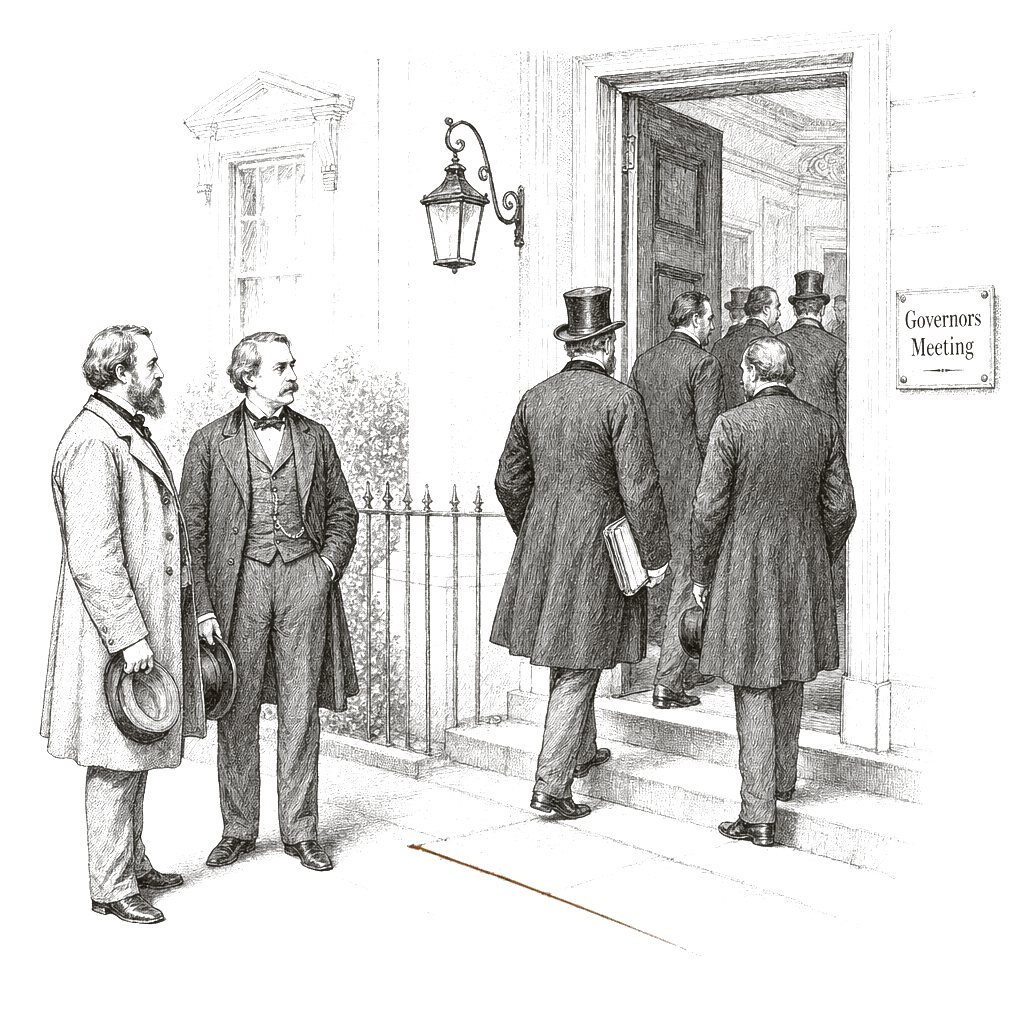
As President Donald Trump prepared to meet with governors at the White House, the National Governors Association said the group would step back from the annual gathering after the president declined to extend invitations to two Democratic governors, Jared Polis of Colorado and Wes Moore of Maryland. The NGA said it was pulling out of the White House event, even as Trump was still expected to meet with governors on Friday.
Polis told reporters he did not have “any ability to get in (Trump’s) head,” but he said he was meeting with governors from both parties while he was in Washington. He said the time spent with colleagues involved “learning from one another and taking best practices” that Republican or Democratic governors had launched in their states, adding that this is what such meetings are about.
Moore, the NGA vice chair, also spoke to the tenor of the moment. In interviews during the week’s gatherings, he said he had “no desire to have beef with the president of the United States,” describing the focus as on governance rather than confrontation. He said: “I didn’t run for governor like, man, I can’t wait so me and the president can go toe to toe,” and he added that he felt badly about Trump’s attention to him via social media.
Trump’s decision not to invite Polis and Moore followed weeks of public tension between the White House and state leaders. The AP report said Trump had refused to include the two Democrats and recently blasted Polis and Moore on social media as “not worthy of being there.” It also said the standoff underscored a confrontational approach Trump has taken toward state officials he dislikes during his second term.
Republican governors and NGA leadership also framed the decision as a departure from what they had sought as a bipartisan forum. Gov. Spencer Cox, R-Utah, said at an event sponsored by Politico that “Presidents aren’t supposed to do this stuff,” and argued Congress needed to step up, adding: “Congress needs to get their act together. And stop performing for TikTok and actually start doing stuff. That’s the flaw we’re dealing with right now.” Cox added that “it is up to the states to hold the line.”
Cox’s remarks came as governors began assembling in Washington, with some Republicans earlier seeking to show how the NGA could remain above partisan fighting. Moore and Oklahoma Gov. Kevin Stitt, a Republican who chairs the NGA, shared a stage several times this week and exchanged jokes and praise, according to the report. Stitt, speaking Thursday at the Politico event, said he had gotten “through the National Governors Association, a really good chance to know the heart of this man,” and he described his view of Trump as someone who “loves his country” and is trying “to do the best he can for Maryland.”
The dispute escalated further after Stitt tried to resolve the White House standoff with the Democratic governors, a step Trump responded to by blasting Stitt on social media as a “RINO” and accusing him of misrepresenting his position. Stitt struck a conciliatory tone Thursday, saying he would participate in White House events and telling reporters, “Politics has a way of just beating you down over time so I can’t imagine being president of the United States,” while adding, “He’s got a tough job to do.”
Former Maryland Gov. Larry Hogan, a Republican who has occasionally disagreed with Trump, said in an interview it was a “mistake” for the White House not to include all governors. Hogan said there “never was a huge amount of real work that got accomplished but it was a nice thing annually to bring all the governors — Republicans and Democrats — together,” arguing that even amid friction, “it can’t hurt to be in the same room together.”
While governors cycled through panels and interviews, another question hung over the conference: which of them might seek the presidency in 2028. The AP report said Moore and Pennsylvania Gov. Josh Shapiro were among potential Democratic presidential contenders in Washington this week, while other Democrats—including Govs. Gavin Newsom of California and J.B. Pritzker of Illinois—were not in town. On the question of whether they would run, both Stitt and Moore declined to rule out future bids and emphasized their focus on their home states, as the dispute over invitations reverberated through what was left of the gathering.